
Tools
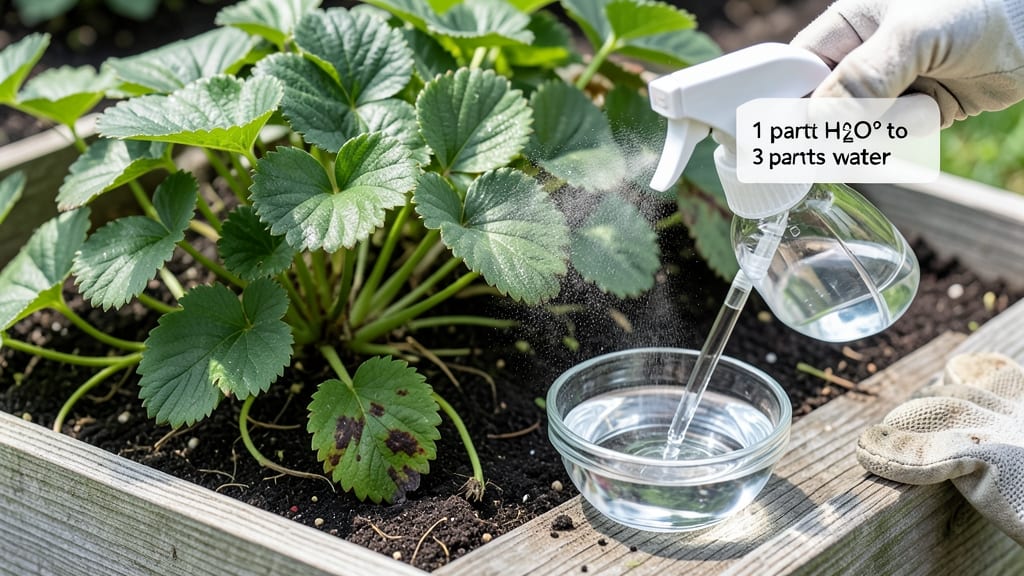
Using hydrogen peroxide in the garden safely boosts plant health by disinfecting soil, treating fungal diseases, and oxygenating roots—always dilute to 3% solution and test on small areas first to avoid harming plants or soil microbes.
Hydrogen peroxide works as a natural sanitizer because it releases oxygen when applied, which kills harmful bacteria and fungi while breaking down into harmless water and oxygen. 🌱 This makes it perfect for sterilizing garden tools, treating fungal infections like powdery mildew, or giving plant roots a nutrient boost.
Just remember: never use it on acid-loving plants or in high-concentration forms—always stick to the 3% solution and spot-test first to protect your garden's delicate balance.
For soil health, I've found that mixing 1 tablespoon of 3% hydrogen peroxide per gallon of water creates a gentle root soak that improves aeration without disrupting beneficial microbes. The key is moderation—overuse can strip away essential nutrients or harm sensitive plants, so always monitor your garden's response after application.
💡 In This Article
- How Hydrogen Peroxide Works as a Natural Garden Disinfectant
- Best Ways to Use Hydrogen Peroxide for Garden Pests and Soil
How hydrogen peroxide works as a natural garden disinfectant
Hydrogen peroxide acts as a powerful oxidizer, breaking down into water and oxygen gas when applied. This chemical reaction releases singlet oxygen, a highly reactive form that disrupts the cell membranes of bacteria, fungi, and viruses—essentially suffocating pathogens on contact.
For example, a 3% solution (the safest concentration for gardens) releases enough oxygen to eliminate up to 90% of surface bacteria within minutes, making it ideal for sterilizing tools or treating fungal infections like black spot on roses.
The oxygen release also improves soil aeration by loosening compacted particles, which helps roots absorb nutrients more efficiently. Think of it like giving your soil a gentle massage—oxygenated soil fosters beneficial microbial activity while reducing harmful anaerobic bacteria that thrive in waterlogged conditions.
A 1:10 dilution (1 part 3% H₂O₂ to 9 parts water) is perfect for root soaks, where the oxygen bubbles physically dislodge compacted soil and stimulate root growth.
What makes hydrogen peroxide unique is its dual role as both a sanitizer and a nutrient booster. When applied correctly, it doesn’t linger in the soil—it decomposes within 24-48 hours, leaving behind only water and a temporary oxygen boost.
This contrasts with synthetic fungicides, which can accumulate and harm soil ecosystems. For instance, treating powdery mildew on cucumber leaves with a 1:20 dilution (1 part 3% H₂O₂ to 19 parts water) can eliminate spores within 6-12 hours without toxic residue.
However, the effectiveness depends on pH levels. Hydrogen peroxide works best in neutral to slightly alkaline soils (pH 6.0-7.5). In acidic soils (like those for azaleas or blueberries), the solution breaks down too quickly, reducing its disinfectant power.
Always test your soil’s pH before applying—you can use a simple pH test kit or observe plant health (yellowing leaves often signal acidity).
For visual clarity, imagine this process: When you spray a diluted solution on fungal spots, you’ll see tiny oxygen bubbles forming—this is the active ingredient at work. The bubbles not only kill pathogens but also create micro-channels in the soil, allowing water and air to penetrate deeper.
This dual action explains why gardeners swear by hydrogen peroxide for both disease prevention and soil revitalization.
One common misconception is that higher concentrations are better. But higher than 3% can burn plant tissues and disrupt soil microbes. For example, a 10% solution (like what’s used for cleaning wounds) would bleach leaves and kill beneficial fungi like mycorrhizae, which help plants absorb nutrients.
Always stick to 3% food-grade hydrogen peroxide and dilute further for garden use.