
Plants
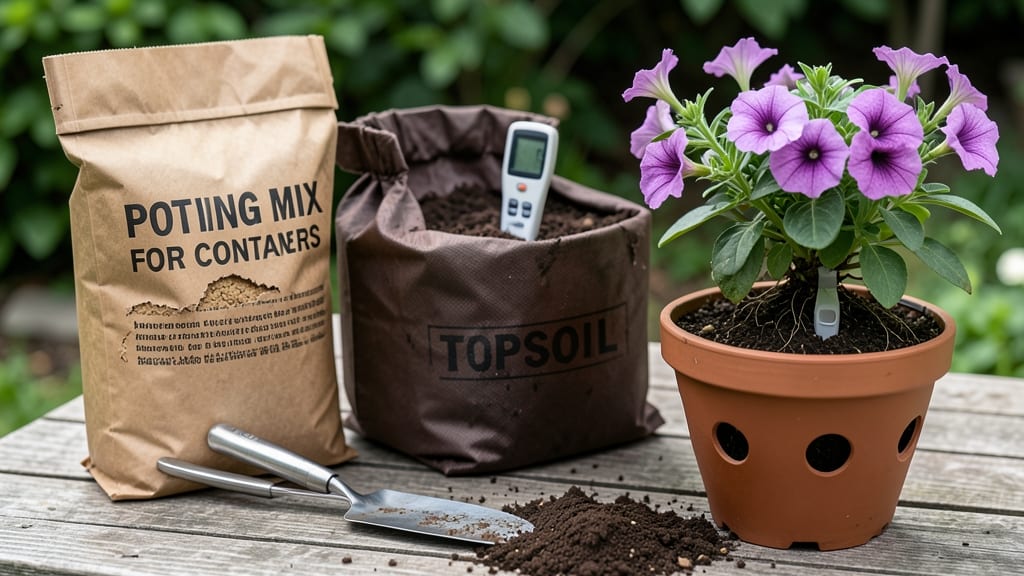
You shouldn't use garden soil for potted plants because it compacts easily, drains poorly, and may contain pests or diseases. Instead, opt for a lightweight potting mix with perlite or compost for better aeration and drainage.
Garden soil is heavy and dense, which means it doesn't allow excess water to escape quickly—leading to root rot in containers. Potted plants need soil that stays loose and breathable, which garden soil simply can't provide.
Plus, garden soil often contains weeds, pathogens, or pests that can harm your plants. Potting mixes are specifically designed with ingredients like perlite or coconut coir to prevent these issues while promoting healthy root growth. 🌱
For most container plants, a pre-mixed potting mix is the easiest solution, but you can also create your own blend by combining coconut coir, compost, and perlite for better drainage and nutrient balance.
If you're growing succulents or cacti, you'll want to add extra perlite or sand to mimic their natural, fast-draining environments.
That said, there are exceptions—like when repotting mature plants that need extra stability. In those cases, you can mix 20-30% garden soil with a high-quality potting mix to provide structure without sacrificing drainage. Always prioritize airflow and moisture control over convenience!
💡 In This Article
- Why Garden Soil Fails in Potted Plants
- Best Potting Mix Alternatives for Healthy Container Plants
Why garden soil fails in potted plants
Garden soil is designed for in-ground planting where roots can spread freely and excess moisture evaporates naturally. In containers, however, the confined space creates a completely different environment. When you pack garden soil into pots, the particles compress tightly, reducing the air pockets that roots need to breathe.
This compaction can cut oxygen levels by up to 70% compared to loose potting mixes, suffocating roots and limiting nutrient uptake. 🌱
The drainage issue is equally critical. Garden soil often contains high levels of clay or silt, which absorb water like a sponge but release it very slowly. In pots, this means water pools at the bottom, creating anaerobic conditions that promote root rot within 24-48 hours of overwatering.
Potting mixes, on the other hand, include ingredients like perlite or vermiculite that create 30-40% larger air spaces, allowing water to drain freely while still retaining enough moisture for roots.
Another hidden risk is the microbial and pest load in garden soil. Outdoor soil often harbors weed seeds, fungal spores, and soil-borne pathogens that can thrive in the warm, moist environment of a pot.
For example, Phytophthora fungi—common in garden soil—can wipe out container plants in as little as 10 days if conditions are right. Potting mixes are typically pasteurized or made from sterile components like coco coir, eliminating these risks entirely.
Nutrient imbalances also play a role. Garden soil's nutrient profile varies wildly depending on location, while potting mixes are formulated with consistent ratios of nitrogen, phosphorus, and potassium.
For instance, a typical potting mix might contain 1.5-2.5% organic matter, whereas garden soil can range from 1% to over 10%, creating unpredictable growing conditions for container plants.
Consider the texture difference: garden soil feels dense and gritty when dry, while good potting mix stays light and crumbly—almost like a fine, airy sponge. This structural difference directly impacts root health.
In containers, roots can't escape compacted soil, leading to girdling (roots growing in circles) that strangles the plant over time. 🌿
The science behind this isn't just about drainage—it's about physics. Soil particles in pots have nowhere to expand when wet, creating pressure that can crack container walls or damage delicate root structures.
Potting mixes use ingredients like peat moss or coconut coir that can swell 3-5 times their dry volume when wet, absorbing excess moisture without compacting.