
Tools
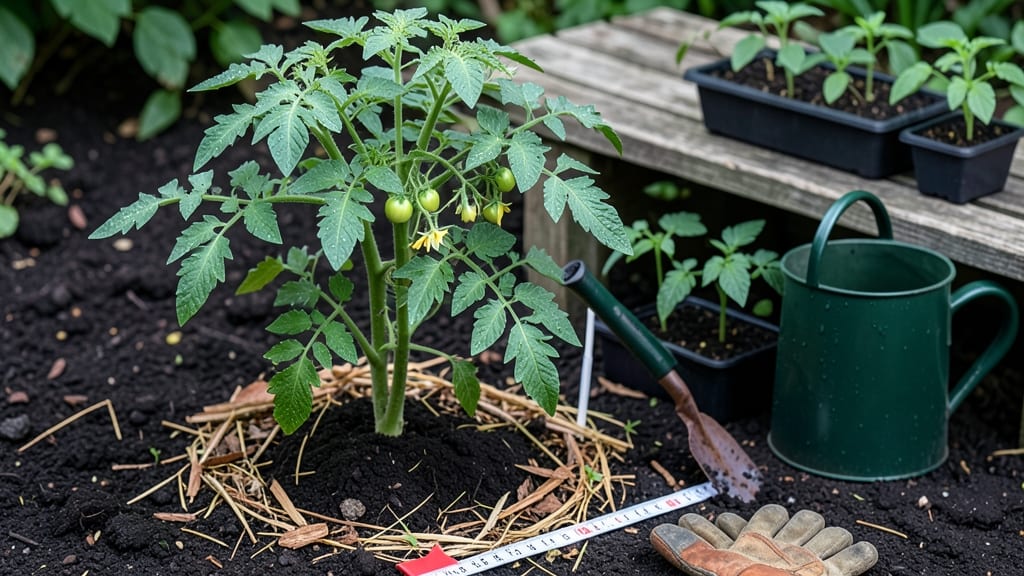
To start a garden in your backyard, begin by selecting a sunny location, testing your soil's quality, planting easy crops like herbs or lettuce, and enriching the soil with compost. Start with a small area, water regularly, and use natural pest control methods to protect your plants.
Starting small is the key to avoiding overwhelm—many beginners make the mistake of planting too much too soon. 🌱 A 4' x 8' raised bed is perfect for first-timers, giving you space for 16 plants while keeping maintenance manageable.
I always recommend starting with fast-growing plants like radishes or green onions, so you see quick results that keep you motivated.
The right tools—like a basic garden trowel and pruners—will make the process smoother and more enjoyable, while proper soil prep (adding compost or aged manure) ensures your plants thrive from day one.
One of the biggest mistakes is ignoring sunlight requirements—most vegetables need at least 6-8 hours of direct sun daily, while herbs like basil can tolerate partial shade.
Test your soil's pH with a simple kit (ideal range is 6.0-7.0 for most plants) and adjust with lime or sulfur if needed. Consistent watering is critical, but overwatering is just as harmful as underwatering—aim for 1 inch of water per week, delivered at the base of plants to prevent fungal diseases.
💡 In This Article
- Choosing the Right Location and Soil for a Backyard Garden
- Step-by-Step Backyard Garden Planning for Beginners
Choosing the right location and soil for a backyard garden
Sunlight is the single most critical factor for a thriving garden—most vegetables and herbs require at least 6-8 hours of direct sunlight daily. This is because photosynthesis, the process where plants convert light into energy, peaks under full sun exposure.
For example, tomatoes need 8+ hours to produce fruit, while leafy greens like spinach can tolerate 4-6 hours but grow more slowly. I recommend observing your yard between 10 AM and 2 PM—this is when sunlight is strongest and shadows shortest.
The soil's composition directly impacts plant health. Ideal garden soil should be a mix of 40% mineral particles (sand, silt, clay), 25% water, 25% air, and 10% organic matter.
You can test your soil's pH with a simple kit (available for under $10), as most vegetables prefer a slightly acidic to neutral range of 6.0-7.0. For instance, blueberries thrive in acidic soil (pH 4.5-5.5), while beans prefer neutral soil (pH 6.0-7.0).
Amending poor soil involves adding 2-4 inches of compost or aged manure to improve drainage and nutrient content.
Drainage is another often-overlooked factor—waterlogged soil starves roots of oxygen, leading to root rot. To test drainage, dig a 12-inch hole, fill it with water, and time how long it takes to drain.
If it takes longer than 4 hours, your soil is too dense and needs amending with sand or organic matter. Mulching with 2-3 inches of straw or wood chips helps retain moisture, regulate soil temperature, and suppress weeds while breaking down to enrich the soil over time.
Here's what you should avoid: planting in areas with competition from tree roots, which can steal nutrients and water, or spots where water pools after rain.
A simple way to improve poor soil is by creating a raised bed filled with a mix of 60% topsoil, 30% compost, and 10% perlite. This gives you complete control over soil quality while preventing compaction from foot traffic. 🌱
For beginners, I recommend starting with loose, well-draining soil that's rich in organic matter. You can create this by mixing equal parts garden soil, compost, and coconut coir (a sustainable alternative to peat moss).
This blend holds moisture without becoming waterlogged and provides essential nutrients for young plants. The texture should resemble crumbled cake—easy to work with but firm enough to support plant roots.
One pro tip: If your soil is heavy clay, mix in 20% sand or vermiculite to improve aeration. For sandy soil, add compost or peat moss to help retain moisture.
The goal is to create a balance where water drains freely but doesn't wash away nutrients. This balance is what turns a struggling garden into a productive one.