
Tools
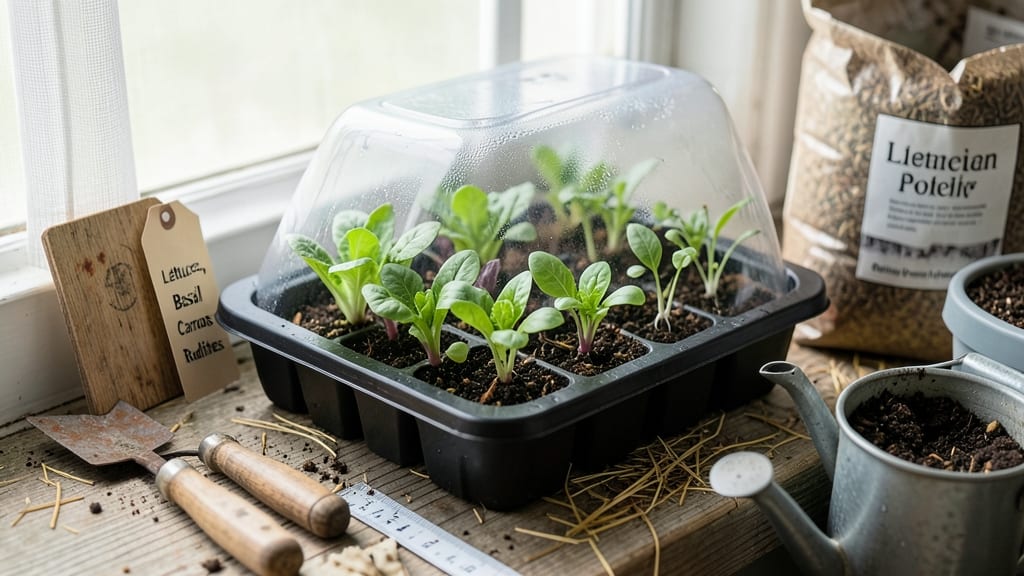
To start a garden from scratch, begin by selecting a sunny location, testing your soil's quality, picking easy plants for beginners, and designing a well-spaced layout. Essential tools, compost, and a consistent watering routine will set your garden up for thriving growth right from the start.
Starting a garden from scratch is all about smart planning and patience.
The first step is finding the right sunny spot—most vegetables and herbs need at least 6-8 hours of sunlight daily, while some shade-tolerant plants can thrive with less. 🌱 I recommend testing your soil's pH and nutrient levels with a simple DIY kit (available at garden centers) to determine if you need to add compost or fertilizer.
Many beginners overlook soil prep, but healthy soil is the foundation of a successful garden.
Once you've got your location and soil ready, focus on beginner-friendly plants like lettuce, tomatoes, or marigolds—these are hardy and forgiving. Design your layout with proper spacing in mind; crowding plants can lead to poor air circulation and disease.
I always sketch a rough map first to visualize the flow and make the most of available space.
💡 In This Article
- Essential Steps for Choosing the Right Garden Location and Soil
- Beginner-Friendly Plant Selection and Layout Tips
Essential steps for choosing the right garden location and soil
Sunlight is the single most critical factor for plant growth, and most vegetables need 6-8 hours of direct sunlight daily. To test your garden spot, use a simple trick: place a ruler or measuring tape vertically at midday and mark the shadow every hour.
If the shadow is shorter than the object itself, you likely have enough sunlight. 🌞 For example, tomatoes require full sun, while leafy greens like spinach can tolerate 4-6 hours. Poor sunlight leads to leggy, weak plants that struggle to produce fruit or flowers.
Soil quality determines how well your plants absorb water and nutrients. Start with a DIY soil test kit (costing around $10-$15) to check pH levels—most vegetables prefer a neutral 6.0-7.0 range. Sandy soil drains too quickly, while clay soil holds too much water.
The ideal texture is loamy, with a balance of sand, silt, and organic matter. You can improve drainage by mixing in compost or aged manure (about 2-3 inches worked into the top 6 inches of soil), which also adds essential microbes that break down nutrients for plants.
Drainage is often overlooked but crucial—waterlogged roots suffocate plants. Test drainage by digging a 12-inch deep hole and filling it with water. If it drains within 4-6 hours, your soil is good; if not, amend with coarse sand or perlite.
For containers, ensure pots have drainage holes and use a mix of 60% potting soil, 30% perlite, and 10% compost to prevent compaction. 🌱 Proper drainage prevents root rot, which is especially deadly for moisture-loving plants like basil or parsley.
Amending soil isn’t just about adding compost—it’s about creating a thriving ecosystem. Microorganisms in healthy soil break down organic matter into nutrients plants can absorb. For example, worms aerate the soil while bacteria fix nitrogen from the air.
To boost microbial activity, top-dress with 1-2 inches of compost annually and avoid synthetic fertilizers, which can disrupt this balance. Even a small garden benefits from this approach, as microbial diversity directly correlates with plant resilience to pests and diseases.
Consider your local climate when selecting amendments. In hot, dry regions, mulch with straw or wood chips to retain moisture and cool the soil. In cooler climates, a thick layer of leaves or grass clippings insulates roots during winter.
For instance, in Zone 5 (USDA hardiness)**, where winters dip below −20°F, mulching can protect perennials like asparagus or rhubarb from freeze damage. Always work amendments into the top 6-12 inches of soil to maximize root access to nutrients.