
Watering
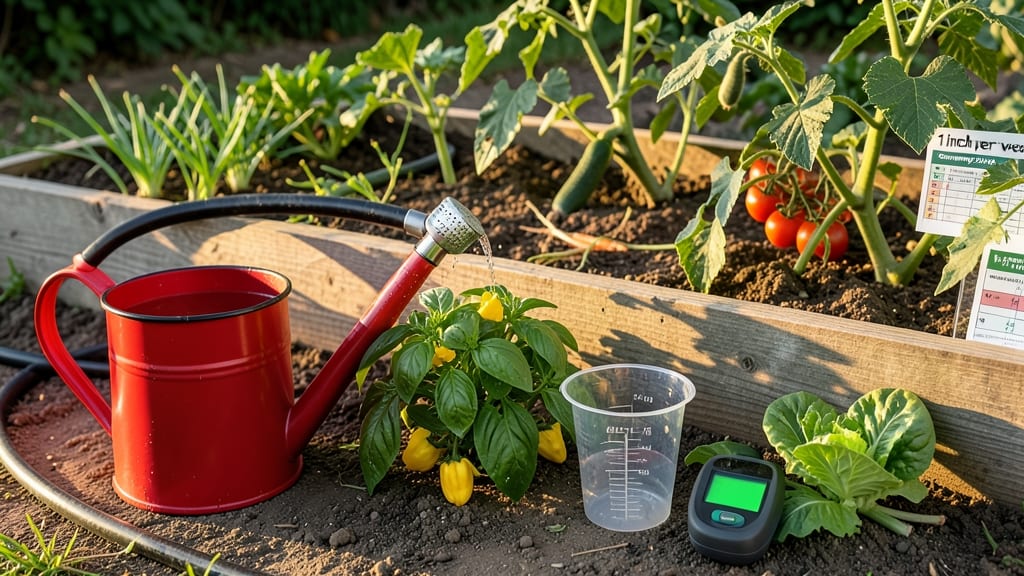
A vegetable garden needs about 1 to 2 inches of water per week—but getting that right is trickier than it sounds, especially when drought or heavy rain throws off your rhythm.
Struggling to keep your 🥬 thriving without overwatering or wasting precious time? The right watering schedule—measured in precise weekly inches—can mean the difference between a bountiful harvest and wilted disappointment.
Leafy greens like lettuce and spinach need consistent moisture, while root crops such as carrots and potatoes prefer deeper, less frequent watering. Fruiting plants like tomatoes and peppers demand extra attention during flowering and fruiting stages.
Below, I break down exactly how much water different vegetable types need, how to adjust for your climate, and the telltale signs you’re over- or under-watering—so you can water with confidence and watch your garden flourish.
Weekly water requirements for common vegetable plants by type
Understanding how much water your vegetable garden needs is the key to avoiding soggy roots or parched plants. Most vegetables thrive with 1 to 1.5 inches of water per week, but the exact amount depends on the plant type, soil, and climate.
Leafy greens, for example, need consistent moisture, while root vegetables like carrots prefer slightly drier conditions. Let’s break down the weekly water needs by plant category to help you tailor your watering schedule for a thriving garden.
Leafy greens such as lettuce, spinach, and kale require 1 to 1.5 inches of water weekly to stay crisp and productive. These plants prefer even moisture in the soil, so mulching helps retain water and prevent rapid drying.
On the other hand, root vegetables like carrots and potatoes need 0.75 to 1 inch of water per week—too much water can cause them to split or rot. Balancing moisture is crucial for their proper development.
| Plant Type | Weekly Water Needs (inches) | Soil Moisture Preference | Drought Tolerance |
|---|---|---|---|
| Leafy Greens (Lettuce, Spinach, Kale) | 1.0 - 1.5 | Consistently moist | Low |
| Root Vegetables (Carrots, Potatoes, Beets) | 0.75 - 1.0 | Moderately dry | Moderate |
| Fruiting Plants (Tomatoes, Peppers, Cucumbers) | 1.5 - 2.0 | Consistently moist | Low to Moderate |
| Herbs (Basil, Parsley, Cilantro) | 0.75 - 1.25 | Moderately moist | Moderate to High |
| Corn and Legumes (Beans, Peas) | 1.0 - 1.5 | Consistently moist | Moderate |
Fruiting plants like tomatoes, peppers, and cucumbers demand the most water, typically 1.5 to 2 inches per week. These plants are heavy feeders and need steady moisture to produce high-quality fruit. If you notice blossoms dropping or fruits cracking, it’s a sign they’re thirsty.
Herbs, on the other hand, are often more drought-tolerant. Basil and parsley prefer 0.75 to 1.25 inches of water weekly, while cilantro can handle slightly drier conditions.
Adjusting your watering schedule based on the plant type ensures you’re not over- or under-watering. For example, if you’re growing a mix of lettuce and carrots in the same bed, focus on keeping the soil evenly moist but not soggy.
Use a moisture meter or the finger test (stick your finger 1 inch into the soil—if it’s dry, it’s time to water) to monitor soil conditions accurately.
Drought-tolerant plants like beans and squash can handle slightly less water, especially once established. However, during extreme heat or dry spells, even these plants may need an extra drink.
Always prioritize watering in the early morning to reduce evaporation and fungal diseases. Avoid watering late in the day, as damp foliage can lead to mildew.
Soil type also plays a role in how often you need to water. Sandy soil drains quickly and may require daily watering in hot weather, while clay soil holds moisture longer and may only need watering every few days.
Amending your soil with organic matter like compost can improve water retention and reduce the frequency of watering.
Pay attention to the growth stage of your plants, too. Seedlings need frequent, light watering to keep the soil moist but not waterlogged. Once plants are established, deep watering encourages stronger root development.
For example, tomato plants benefit from deep soakings 2-3 times per week during fruiting to prevent blossom end rot.
Finally, don’t forget to mulch! A 2-3 inch layer of mulch helps retain soil moisture, suppresses weeds, and keeps roots cool. This simple step can reduce your watering needs by up to 30% while keeping your garden healthy and productive.
How to adjust watering based on climate, soil, and season
Adjusting your watering routine isn't just about guessing—it's about understanding your garden's unique needs. Climate, soil type, and seasonal changes dramatically impact how much water your vegetables need. For example, sandy soil drains quickly, requiring more frequent watering, while clay soil holds moisture longer.
Seasonal shifts also play a role: seedlings need gentle, consistent moisture, while mature plants can handle deeper, less frequent watering.
In hot, dry climates like the Southwest, I water my garden early in the morning to reduce evaporation and fungal risks. During heavy rainfall seasons, I rely on mulch and rain gauges to monitor soil saturation.
Even within the same garden, different plants have varying needs—leafy greens like lettuce prefer consistent moisture, while root vegetables like carrots thrive with deeper, less frequent watering.
- 🌡️ Hot/Dry Climates: Water deeply 2-3x/week (1-2 inches total) in early morning. Use drip irrigation to target roots directly.
- 🌧️ Heavy Rainfall: Reduce watering by 50% and check soil moisture with your finger. Avoid soggy soil to prevent root rot.
- 🏜️ Sandy Soil: Water frequently but lightly (3-4x/week) to prevent moisture loss. Add organic matter to retain water.
- 🏗️ Clay Soil: Water deeply 1-2x/week (1.5 inches). Improve drainage with compost or gypsum.
- 🌱 Seedlings: Keep soil consistently moist (1/4 inch water daily). Use shade cloth to reduce evaporation.
- 🌿 Mature Plants: Water deeply 1-2x/week (1-1.5 inches). Focus on root zones to encourage deeper growth.
Seasonal adjustments are just as critical. During spring and fall, when temperatures are moderate, I water my garden deeply 1-2 times per week. In summer heat, I increase frequency to daily or every other day, depending on the plant.
For example, tomatoes need consistent moisture, while onions are more drought-tolerant. Always water at the base of plants to avoid wetting foliage, which can lead to diseases like powdery mildew.
Don’t forget to monitor your garden’s response. If leaves are yellowing or wilting, it could signal overwatering or underwatering. Adjust based on soil moisture tests—stick your finger 1-2 inches into the soil.
If it’s dry, it’s time to water. If it’s damp, hold off. Mulching with straw or wood chips helps retain moisture and regulate soil temperature, reducing the need for frequent watering.
For container gardens, I water more frequently (sometimes daily) because pots dry out faster. Use self-watering containers or place a tray of water under pots to help maintain moisture levels.
In cooler months, reduce watering significantly—most vegetables enter dormancy and need minimal care. Always prioritize deep watering over light surface watering to encourage strong root development.
By tailoring your watering schedule to these factors, you’ll save time, conserve water, and keep your vegetable garden thriving all season long. Start with small adjustments, observe your plants’ responses, and fine-tune as needed. Your garden will thank you with a bountiful harvest! 🌱