
Size
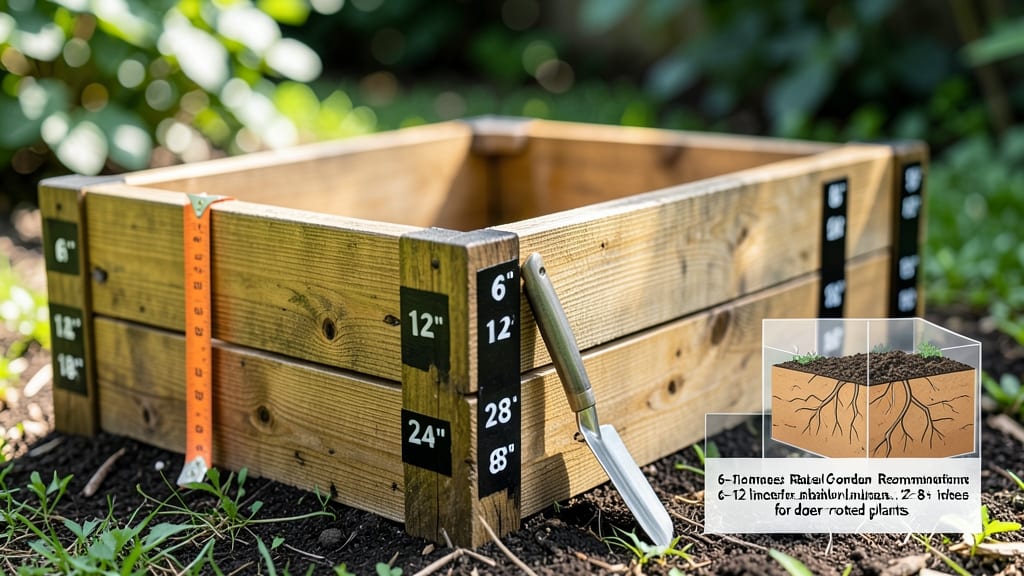
Determining how tall a raised garden bed should be depends on your plants' root needs and drainage goals—aim for 12 to 18 inches for most vegetables, though taller beds (up to 24 inches) are ideal for root crops like carrots or parsnips. Shorter beds (6–12 inches) work well for herbs and greens.
A raised garden bed's height directly impacts what you can grow. 🌱 The 12- to 18-inch range provides enough soil depth for most vegetables while preventing compaction, which improves root spread and water absorption.
For root vegetables, deeper beds (up to 24 inches) allow full root development, reducing breakage when harvesting. Shorter beds suit herbs and greens because their shallow roots don't need as much space—plus, they're easier to maintain for beginners.
Beyond plant needs, height affects accessibility and soil quality. Taller beds reduce knee strain for older gardeners but require more fill material, while shorter beds dry out faster in hot climates.
I always recommend layering compost-rich soil at the bottom for fertility, topped with topsoil—this creates a perfect balance of nutrients and drainage. For taller beds, adding gravel at the base helps prevent waterlogging.
💡 In This Article
- Root Depth Requirements for Different Plants in Raised Beds
- Building Your Raised Garden: Height Considerations for Accessibility and Soil Quality
Root depth requirements for different plants in raised beds
The height of your raised bed directly influences how well your plants grow, especially when it comes to root development. Most vegetables need at least 12 inches of soil to thrive because their roots require space to spread and access nutrients.
For example, tomatoes and peppers develop strong taproots that can reach 18 inches deep, while leafy greens like spinach only need about 6-12 inches of soil. The deeper the bed, the more room roots have to grow downward and outward, which improves stability and water uptake. 🌱
Root crops like carrots and parsnips are the exceptions—they need 18-24 inches of soil to prevent forked or stunted growth. These plants develop long, slender taproots that require ample space to grow straight and unobstructed.
In contrast, herbs like basil or thyme have shallow, fibrous root systems that don’t need deep soil. This is why shorter beds work perfectly for them. The key is matching the bed height to the plant’s natural root structure to maximize yield and minimize stress.
Soil aeration is another critical factor tied to bed height. Deeper beds allow roots to access oxygen more efficiently, especially in the lower layers where compaction can occur.
For instance, a 12-inch bed might compact at the bottom over time, restricting root growth, while a 18-inch bed provides better airflow throughout. This is particularly important for heavy feeders like corn or squash, which demand both depth and nutrients.
Without proper aeration, roots suffocate, leading to stunted plants and poor harvests.
Drainage also plays a role in why taller beds often outperform shorter ones. A 12- to 18-inch bed allows excess water to drain away from the root zone, preventing waterlogged soil that can suffocate roots.
In contrast, a 6-inch bed may dry out too quickly in hot climates, forcing plants to compete for moisture. The ideal height balances drainage and moisture retention, ensuring roots stay hydrated without becoming waterlogged.
This is why many gardeners opt for beds around 12-18 inches—it’s a sweet spot for most vegetables.
Consider the science of soil volume, too. A 12-inch bed provides roughly 1 cubic foot of soil per square foot of bed, while a 18-inch bed doubles that volume. This extra space means more nutrients, better root spread, and higher yields.
For example, a 12-inch bed might produce 30-40% fewer carrots than an 18-inch bed because the roots are restricted. The deeper the bed, the more potential for growth, provided the soil quality is consistent.
For herbs and greens, shorter beds (6-12 inches) are often sufficient because their roots don’t penetrate as deeply. However, even these plants benefit from slightly deeper beds in hot, dry climates to retain moisture.
The trade-off is accessibility—shorter beds are easier to maintain but may require more frequent watering. If you’re growing a mix of plants, a 12-inch bed is a versatile middle ground that accommodates most vegetables while keeping maintenance manageable. 🌿