
Size
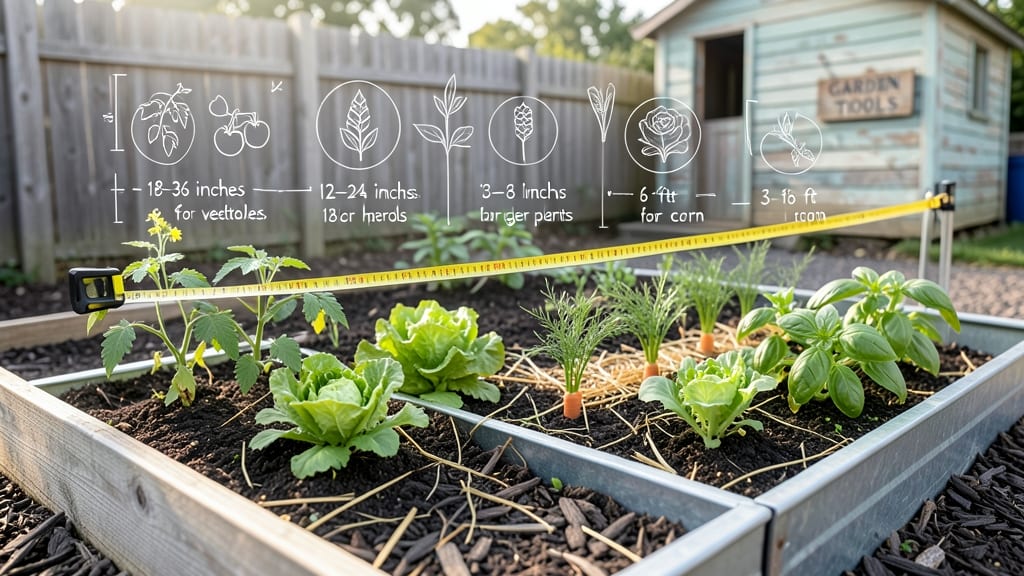
Determining the right distance between garden beds depends on your plant types and maintenance needs, with standard spacing ranging from 12 to 36 inches. Smaller gaps (12–18 inches) suit compact gardens or raised beds, while wider paths (24–36 inches) provide better access for tools and easier upkeep.
The spacing you choose directly impacts plant health and your gardening experience. 🌱 Narrower pathways (12–18 inches) work well for small gardens where you can reach plants easily by hand, while wider paths (24–36 inches) become essential when using wheelbarrows or larger tools.
For example, tomato plants need more room than lettuce, so adjust spacing based on mature plant width. This approach also improves airflow, reducing disease risk and making weeding more efficient.
Another key factor is your garden's layout. Uneven terrain or slopes may require wider paths for stability, while container gardens can sometimes use narrower gaps. Always consider how you'll move between beds—comfortable access makes gardening more enjoyable and sustainable in the long run.
💡 In This Article
- Factors Determining Garden Bed Spacing for Plant Growth
- Optimal Pathway Widths for Different Garden Types
Factors determining garden bed spacing for plant growth
Proper spacing between garden beds isn't just about convenience—it's a critical factor for plant health. Roots compete for nutrients and water, so insufficient space leads to stunted growth or disease. For example, a mature tomato plant spreads 18–24 inches wide, while a bush bean only needs 4–6 inches.
Planting them too close forces roots to compete for resources, reducing yields by up to 30% in crowded conditions.
Sunlight exposure is another key consideration. Tall plants like sunflowers or corn cast shadows that can smother nearby crops. A 24-inch gap ensures sunlight reaches all plants, while dwarf varieties (like 6-inch tall thyme) can thrive in tighter 12-inch spaces.
Airflow also matters—tight spacing traps moisture, creating ideal conditions for fungal diseases like powdery mildew, which thrives in humid environments.
Mature plant width is the most critical measurement. Always check seed packets or plant tags for recommended spacing—this is the distance between plants, not the pathway. For instance, carrots need 2–3 inches apart, while pumpkins require 3–5 feet of space.
Ignoring these guidelines can lead to overcrowding, where plants struggle to reach their full potential, often resulting in smaller fruits or flowers.
Soil type affects spacing needs too. Sandy soils drain quickly, allowing roots to spread wider, while clay soils may require slightly tighter spacing to prevent waterlogging. For example, in heavy clay, you might reduce spacing by 10–15% compared to sandy loam.
Always adjust based on your local soil conditions—amending soil with compost can help bridge the gap if spacing is tight.
Consider the growth habit of your plants. Vining plants like cucumbers or squash need trellises or wide pathways (36 inches) to sprawl, while upright plants like peas or beans can share space more efficiently.
Even within the same species, varieties differ—determinate tomatoes stay compact, while indeterminate types grow continuously, needing more room.
Finally, think about your long-term goals. If you plan to grow large crops like corn or sunflowers, wider pathways (30–36 inches) make harvesting easier. For small-scale herb gardens, 12-inch gaps suffice. The right spacing ensures your garden remains productive and manageable for years to come. 🌿