
Fertilization
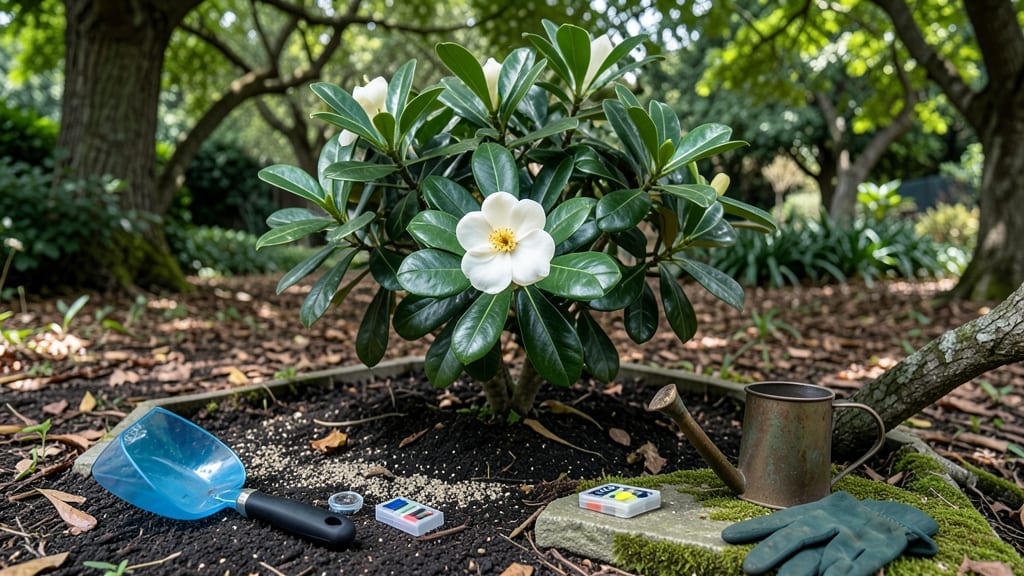
To fertilize gardenias properly, you’ll want to feed them every 4–6 weeks during their active growing season—spring through early summer—when they’re hungry for nutrients to produce those fragrant blooms.
Struggling to keep your gardenias blooming as beautifully as they did when you first planted them? The secret isn’t just water or sunlight—it’s a precise fertilization schedule tailored to their seasonal needs.
Gardenias 🌸 thrive when given the right nutrients at the right time, but overdoing it can lead to burnt roots or sparse blooms. In this guide, I’ll walk you through the exact schedule, from light spring feeds to when to skip fertilizer entirely in fall and winter.
You’ll also learn how to read your plant’s signals—yellowing leaves, slow growth, or even too many buds—to adjust your routine and keep your gardenias looking their best year-round.

Optimal fertilization frequency for gardenias by season
Gardenias reward careful gardeners with glossy foliage and fragrant blooms, but their success hinges on a seasonal fertilization schedule. Unlike hardy shrubs, gardenias thrive when fed strategically—too much fertilizer burns roots, while too little stunts growth.
The key? Matching their needs to nature’s rhythm. Let’s break down exactly when, how often, and what to feed your gardenias for peak performance.
Gardenias are heavy feeders during their active growing months (spring through summer), but they dormant in winter. Their acid-loving nature means standard fertilizers can harm them—always choose acid-based formulas or organic amendments.
For example, a balanced 8-4-8 NPK fertilizer (with added iron) works wonders, but so does composted pine needles for organic gardeners.
| Season | Fertilization Frequency | Recommended Fertilizer | Key Notes |
|---|---|---|---|
| Spring (March–May) | Every 4 weeks | Acid-based 8-4-8 NPK or composted pine needles | Stimulate new growth; avoid high nitrogen |
| Summer (June–August) | Every 6 weeks | Low-nitrogen 10-5-10 or fish emulsion | Support blooms; reduce frequency in heat |
| Fall (September–November) | None | N/A | Plant slows; focus on mulching |
| Winter (December–February) | None | N/A | Dormant period; no feeding |
Let’s start with spring, when gardenias wake from dormancy. In March and April, apply a light feed of acid-based fertilizer (like 8-4-8 NPK) to jumpstart growth.
Think of it as a gentle wake-up call—too much nitrogen now can lead to leafy growth at the expense of blooms. For organic gardeners, composted pine needles or cottonseed meal are excellent choices. Always water thoroughly after fertilizing to prevent root burn.
As summer arrives, June through August is prime blooming time, so feed every 6 weeks with a low-nitrogen formula (like 10-5-10). This balance ensures vibrant flowers without overstimulating foliage.
Pro tip: Fish emulsion is a favorite among gardeners for its quick nutrient boost, but dilute it to half-strength to avoid shocking the roots. If your gardenia is container-grown, halve the fertilizer amount since roots are more concentrated.
By late summer, gardenias often signal fatigue—yellowing leaves or dropping buds can mean it’s time to pause fertilizing. This is your cue to switch to fall care: No fertilizer in September through November.
Instead, focus on mulching with pine bark to maintain soil acidity and reduce watering as temperatures drop. The goal is to prepare the plant for dormancy, not stress it further.
Winter is non-negotiable downtime for gardenias. From December through February, skip fertilization entirely. Cold weather slows root activity, and feeding now can lead to salt buildup or fungal issues. Instead, protect your gardenia with a light mulch layer (2–3 inches) and minimal watering.
If you’re in a warmer climate (USDA Zone 9+), you might see occasional blooms, but even then, hold off on fertilizer until early spring.
One of the biggest mistakes gardeners make is over-fertilizing in summer, which can burn roots and attract pests. Always follow the "less is more" rule: 1 tablespoon per plant (or per square foot for beds) is plenty.
For container gardenias, use half the recommended dose since pots drain faster. If you notice crispy leaf edges or stunted growth, flush the soil with water for 10 minutes to leach excess salts.
For organic gardeners, composted leaves and worm castings are excellent slow-release options. Mix these into the soil every spring to build soil health long-term. Synthetic fertilizers, while faster-acting, can disrupt soil pH over time, so alternate between organic and synthetic if you prefer
Signs your gardenias need fertilizer (and when to skip it)
If your gardenias are struggling to produce those fragrant blooms or their leaves look less vibrant, it might be time to reassess your fertilization routine. Gardenias are heavy feeders, but they don’t need constant attention—just the right timing and balance.
The key is recognizing the difference between nutrient deficiencies and over-fertilization, which can both harm your plants if ignored.
Start by observing your gardenias closely. Yellowing leaves, especially on older growth, often signal a need for nutrients like nitrogen or iron. Meanwhile, slow growth or sparse blooms can mean your plant is craving phosphorus and potassium to fuel flowering.
But here’s the catch: these signs can also mimic underwatering or disease, so don’t jump to conclusions without checking other factors first.
⚠️ callout warning
Gardenias thrive on a consistent but moderate feeding schedule. Fertilizing more than every 4-6 weeks during the growing season (spring to early summer) can lead to burnt roots and leaf drop. Always follow the 1 tbsp per plant rule and water thoroughly after applying fertilizer to help nutrients reach the roots.
✅ Pro Tip: If your gardenias show brown leaf edges or crispy foliage, flush the soil with water to dilute excess salts from fertilizer.
One of the most telling signs your gardenias need fertilizer is pale or yellowing new growth. This often indicates a lack of nitrogen or micronutrients like magnesium. To test this, gently scratch the soil surface—if it looks pale or lacks organic matter, it’s time to feed.
However, if the yellowing is paired with blackened stems or mushy roots, you might be overdoing it with water or fertilizer.
Don’t forget to check the soil pH—gardenias prefer acidic soil (5.0–6.0). If your soil is too alkaline, nutrients like iron and manganese become unavailable, even if you’re fertilizing regularly.
A simple soil test kit can save you from guessing. If the pH is off, amend the soil with peat moss or sulfur before adding more fertilizer.
Adjust your fertilization schedule based on your gardenia’s response. If you notice new buds forming and leaves regaining color within 2–3 weeks of feeding, you’re on the right track.
But if the plant wilts or drops leaves after fertilizing, cut back immediately and focus on hydration and shade to help it recover.
Remember, gardenias are dormant in fall and winter, so skip fertilization entirely during these months. The goal is to support healthy growth in spring and prolonged blooming in summer, not to force them into overproduction. Listen to your plants—they’ll tell you exactly what they need!