
Watering
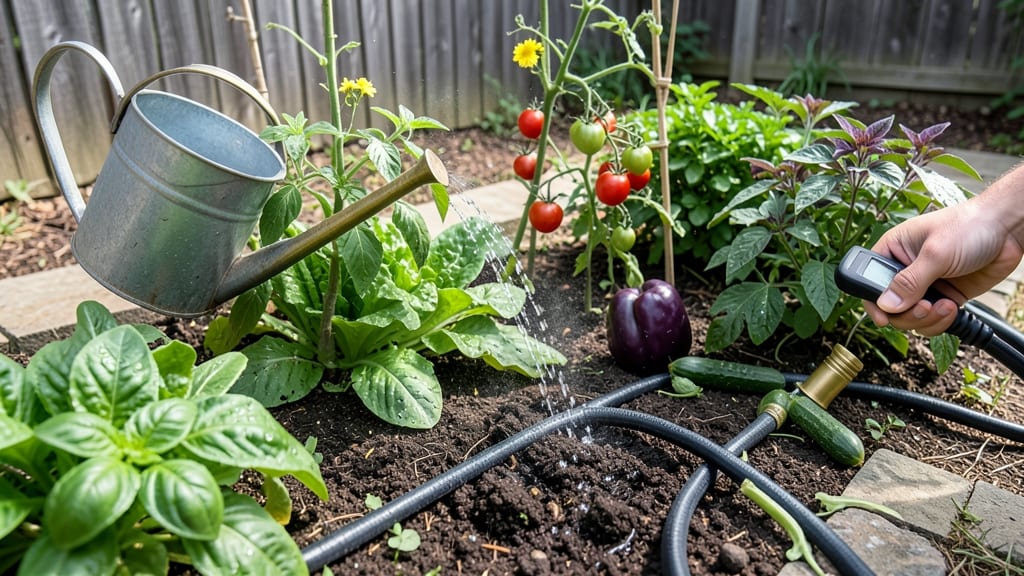
Watering your vegetable garden the right amount keeps your plants thriving and your harvest bountiful—but most gardeners either drown their roots or leave them parched without realizing it.
The key isn’t just how often you water; it’s how deep and when. Too much, and you risk root rot and wasted water. Too little, and your plants bolt or wilt before they even set fruit.
I’ve learned the hard way that a 1-inch rule (watering until soil is moist an inch deep) is a great start, but it’s not enough for heavy clay or sandy soil.
Different vegetables need different care: leafy greens like lettuce want frequent, shallow drinks, while tomatoes and peppers demand deep, infrequent watering to encourage strong roots. Season matters too—summer heat means more frequent watering, while spring and fall can be more forgiving.
In this guide, I’ll break down the science of soil moisture, show you how to adjust for your garden’s unique conditions, and share the signs that tell you when to water—and when to hold back.
How deep to water vegetable plants based on root depth
When watering your vegetable garden, depth matters just as much as frequency. The root depth of your plants determines how far water must penetrate to reach their thirstiest parts.
Shallow-rooted leafy greens like lettuce need only 1 inch of moisture, while deep-rooted tomatoes or carrots require watering up to 12 inches down. Understanding these differences prevents wasted water and ensures your plants thrive.
Most gardeners follow the "1-inch rule", which means watering enough to moisten the soil to a depth of 1 inch below the plant's root zone. For young seedlings, this might mean just ½ inch of water, while mature plants need deeper saturation.
The key is matching your watering depth to the plant's natural root structure to avoid stress or disease.
Soil type plays a critical role in how water behaves. In sandy soil, water drains quickly, so you may need to water more frequently but shallower to avoid runoff.
Conversely, clay soil holds moisture longer, allowing you to water less often but deeper to reach roots. Always adjust based on your garden's specific conditions.
Here’s a quick reference for common vegetable types and their ideal watering depths:
| Plant Type | Root Depth | Watering Depth | Frequency | Notes |
|---|---|---|---|---|
| Leafy Greens (lettuce, spinach, kale) | 1-3 inches | 1 inch | Every 1-2 days | Keep soil moist; avoid soggy roots |
| Root Crops (carrots, radishes, beets) | 6-12 inches | 4-6 inches | Every 2-3 days | Deep watering prevents cracking |
| Fruiting Plants (tomatoes, peppers, cucumbers) | 12-18 inches | 6-12 inches | Every 2-4 days | Consistent moisture boosts yield |
| Herbs (basil, parsley, cilantro) | 3-6 inches | 1-2 inches | Every 1-3 days | Drought-tolerant; avoid overwatering |
| Corn, Potatoes, Onions | 12-24 inches | 8-12 inches | Every 3-5 days | Deep roots need thorough saturation |
To test if you’re watering deeply enough, use a screwdriver or soil probe to check moisture levels after watering. If the soil is dry at the depth of your plant’s roots, water again.
For container-grown vegetables, ensure water reaches the bottom of the pot—this often means watering until it drains from the holes.
Adjust your watering depth as plants mature. A seedling might only need ½ inch of water, but the same plant as a mature tomato will require 6-12 inches of moisture. Pay attention to weather conditions too: water deeper during hot, dry spells and reduce depth in cooler, humid weather.
Mulching can help maintain consistent moisture levels. Apply a 2-3 inch layer of mulch around plants to slow evaporation and keep roots cool. Organic mulches like straw or wood chips also improve soil structure over time, making it easier for water to penetrate deeply where it’s needed most.
Overwatering is just as harmful as underwatering. If your soil feels soggy or water pools on the surface, you’re likely overdoing it. Adjust by watering less frequently but ensuring each session reaches the target depth.
Watering schedules for different vegetable types (drought-tolerant vs. water-loving)
Not all vegetables have the same thirst—some like tomatoes and peppers prefer deep, infrequent drinks, while lettuce and spinach need frequent, shallow sips. Understanding these differences prevents wasted water and keeps your plants thriving. The key is matching your watering routine to each plant’s root depth and growth stage.
For example, drought-tolerant plants like zucchini and beans can handle 3-4 days between waterings once established, while water-loving crops like cucumbers and celery need consistent moisture. Seasonal shifts also play a role—summer heat demands more frequent watering, while cooler months allow for longer gaps.
| Vegetable Type | Watering Frequency | Depth | Seasonal Adjustments |
|---|---|---|---|
| Drought-Tolerant (Tomatoes, Peppers, Zucchini) | Every 3-4 days | 6-8 inches deep | Reduce in spring/fall; increase in summer |
| Moderate (Carrots, Onions, Green Beans) | Every 2-3 days | 4-6 inches deep | Consistent in summer; reduce in fall |
| Water-Loving (Lettuce, Spinach, Cucumbers) | Daily (shallow) | 1-2 inches deep | Increase in summer; reduce in cooler months |
Start your watering routine by checking the soil moisture 1-2 inches below the surface. Stick your finger in—if it feels dry, it’s time to water. For deep-rooted plants like tomatoes, water until moisture reaches 6-8 inches deep. Shallow-rooted leafy greens only need 1-2 inches of moisture.
Adjust your schedule based on weather conditions. During hot, dry summers, increase frequency by 25-50% and water early in the morning to reduce evaporation.
In spring or fall, you can stretch watering intervals to 4-5 days for most vegetables. Always mulch to retain moisture and regulate soil temperature.
Pro tip: Use a soil moisture meter for accuracy, especially for container gardens where water drains faster. Group plants with similar needs together to simplify your routine. For example, plant tomatoes and peppers near each other but keep lettuce in a separate bed with its own watering schedule.
Remember, overwatering is just as harmful as underwatering. Yellowing leaves or wilting despite damp soil often signal root rot from excess moisture. Always prioritize deep, infrequent watering over light, frequent sprinkles to encourage strong root growth.