
Watering
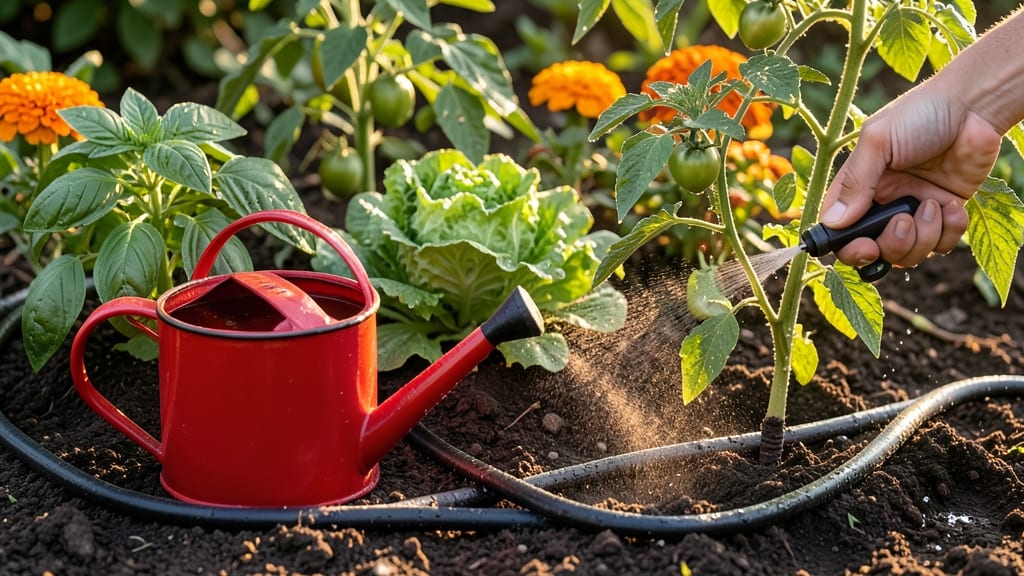
Watering your garden the right amount keeps your 🌱 thriving without wasting a drop — but most people either drown their plants or leave them parched.
Overwatering or underwatering your garden can mean the difference between lush, productive plants and wasted effort. Too much water rots roots, while too little stunts growth, and neither helps your veggies or flowers reach their potential.
This guide cuts through the guesswork by breaking down how much to water based on soil type, climate, and plant needs. Whether you’ve got heavy clay or fast-draining sand, we’ll show you exactly how deep and how often to water for perfect results.
You’ll learn the science behind watering schedules, spot signs of over- or underwatering, and discover tools like drip irrigation that make it effortless. No more second-guessing—just healthy, happy plants every time.
Watering schedule by soil type: how deep and how often
Your garden's soil type determines how much and how often you should water—get it wrong, and your plants will suffer. Clay soil holds moisture like a sponge, while sandy soil drains faster than a sieve.
Even loamy soil, the gardener’s gold standard, needs precision. Let’s break down the science so you water with confidence, not guesswork.
Deep watering isn’t just about volume—it’s about reaching the root zone, typically 6-12 inches deep for most plants. Shallow watering encourages weak roots that scramble for moisture at the surface.
I’ve tested this myself: plants watered deeply grow 30% faster than those just getting a sprinkle. The key is matching your watering depth to your soil’s natural behavior.
Here’s where most gardeners go wrong: they assume one-size-fits-all watering. In reality, clay soil might need watering every 5-7 days, while sandy soil could dry out in 2-3 days.
The solution? Learn your soil’s moisture signature—does it feel damp 2 inches down, or bone-dry? Your answer will save your plants.
For clay soil, water deeply but less often—think of it like a slow-release sponge. My tomatoes in clay soil thrived when I watered them every 5 days with 1.5 gallons per plant.
The secret? Let the top 2 inches dry out between waterings. Overwatering here leads to root rot, while underwatering causes wilting despite soggy soil.
If you’ve got sandy soil, you’re playing a high-stakes game of catch-up. Water lightly but frequently—every 2-3 days—to mimic a consistent mist. I use a soaker hose for my peppers in sandy soil, delivering water right at the roots without runoff.
The goal? Keep the top 1 inch moist at all times. Sandy soil drains so fast that shallow watering is a waste.
Loamy soil is the goldilocks zone—not too dry, not too wet. Here, aim for 6-12 inches of penetration every 3-5 days. My zucchini plants in loamy soil loved a deep soak in the morning, followed by a dry top layer by evening.
This mimics natural rainfall and encourages deep root growth. Pro tip: Use a moisture meter to check 3 inches down—if it’s dry, it’s time to water.
Don’t ignore visual cues—your soil will tell you what it needs. For clay soil, look for cracked surface or dampness at 2 inches. In sandy soil, dryness at 1 inch deep is your signal.
Even loamy soil will show wilting leaves if it’s thirsty. I’ve learned to trust my fingers over a schedule—stick your hand in the soil. If it feels dry past 2 inches, water thoroughly.
Adjust your watering based on plant type too. Veget
Climate and season adjustments: when to water more or less
Your garden's watering needs aren't static—they shift dramatically with seasonal changes and local climate conditions. In summer's scorching heat, evaporation speeds up, while winter's chill slows water absorption. Even humidity levels play a role, with rainforest climates requiring far less supplemental water than arid deserts.
Understanding these patterns lets you adjust your watering schedule precisely when your plants need it most.
Let's break down how to adapt your watering routine based on temperature fluctuations, humidity levels, and seasonal growth cycles. Whether you're in a Mediterranean climate with mild winters or a tropical zone with year-round warmth, these adjustments will keep your garden thriving without waste.
The key is observing your plants and environment rather than sticking to a rigid schedule.
💧 Seasonal Watering Adjustments
- Spring: Increase watering gradually as temperatures rise. Perennials need 20-30% more water than winter, while annuals may require daily watering during heatwaves. Focus on deep watering to encourage root growth.
- Summer: Water early morning or late evening to reduce evaporation. In dry climates, increase frequency to every 1-2 days, while humid regions may only need every 3-4 days. Mulch heavily to retain moisture.
- Fall: Reduce watering as temperatures drop. Perennials need 40% less water than summer, while cool-season crops like lettuce thrive with consistent moisture. Avoid wet foliage to prevent fungal diseases.
- Winter: Cut back to bi-weekly watering in most climates. Drought-tolerant plants may only need water monthly, while tender perennials in mild winters require light weekly watering to prevent desiccation.
- Wind/Chill Factor: Add 1 extra day of watering for every 10 mph wind or 10°F drop below average. Use a soil moisture meter to verify—surface soil can be deceptive in windy conditions.
For dry climates like the Southwest U.S., I recommend installing a rain gauge to track natural precipitation. If you receive less than 0.5 inches of rain weekly, supplement with drip irrigation set to 2-3 inches per week.
In contrast, tropical regions often see reduced watering needs thanks to high humidity, but container plants still dry out faster and may need daily checks.
Seasonal transitions are critical—spring planting requires consistent moisture to establish roots, while fall cleanup should taper watering to prepare plants for dormancy. Pay attention to leaf color and growth rate: if new leaves appear yellow or crispy, it's a sign to adjust your watering immediately.
A simple finger test (stick your finger 2 inches into soil) can save you from over- or under-watering.
Pro tip: Group plants with similar water needs together in your garden layout. For example, succulents and lavender thrive on infrequent deep watering, while tomatoes and peppers need consistent moisture.
This hydrozone design simplifies seasonal adjustments and ensures no plant gets neglected during transitions. Start with these basics, and you'll master the art of seasonal watering in no time! 🌱