
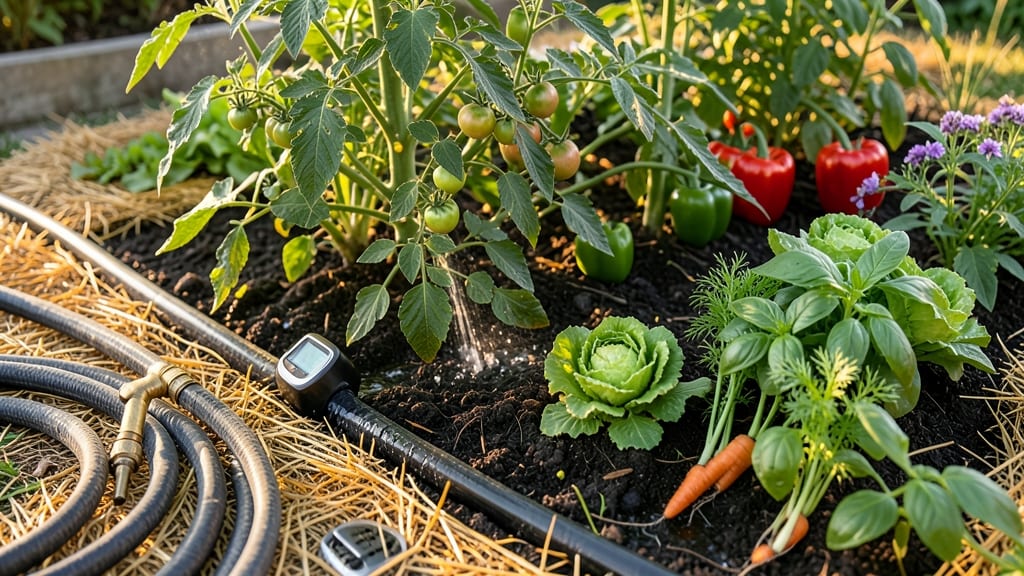
How Long to Leave Soaker Hose on Vegetable Garden: Watering Schedule by Plant Type

How To

How Long to Leave Soaker Hose on Vegetable Garden: Watering Schedule by Plant Type

Leaving a soaker hose on your vegetable garden 🄬 for the right length of time keeps roots happy without drowning them—most plants need between 30 minutes and 2 hours, but that changes with soil, weather, and what you’re growing.

Struggling to find the perfect balance can mean overwatering or underwatering your vegetable garden—both of which can ruin your harvest. The right timing depends on soil type, plant needs, and weather conditions, but most gardeners get it wrong without a clear guide.

Too little water stresses plants, while too much suffocates roots and invites disease. I’ll break down how long to run your hose for different crops, how to adjust for rain or heat, and the telltale signs your garden is getting it just right.

By the end, you’ll know exactly when to turn off that hose—no guesswork, no wasted water, and a thriving vegetable garden all season long.

Soaker hose watering times by vegetable type: expert schedule guide

Mastering soaker hose watering times for your vegetable garden means the difference between lush, productive plants and wilted disappointment. Unlike overhead sprinklers, soaker hoses deliver water directly to the root zone, but timing varies dramatically between leafy greens, root crops, and fruit-bearing plants.

Even soil type changes the equation—sandy soil drains quickly, while clay holds moisture for days.

For most vegetables, I recommend running your soaker hose for 1-2 hours daily, but this changes based on growth stage and weather conditions. Seedlings need gentle, frequent watering, while mature plants can handle deeper, less frequent sessions.

Below, I’ve broken down the exact watering durations for your most common garden vegetables, including adjustments for sandy vs. clay soil.

Pro Tip: Always water in the early morning (before 10 AM) to minimize evaporation and fungal risks like blight or powdery mildew. Avoid evening watering—wet foliage overnight invites pests and diseases.

Vegetable Type Growth Stage Soaker Hose Time (Sandy Soil) Soaker Hose Time (Clay Soil) Frequency Notes
Leafy Greens (Lettuce, Spinach, Kale) Seedlings 30-45 mins 45-60 mins Daily Keep soil consistently moist; avoid soggy roots.
Leafy Greens Mature 1-1.5 hours 1.5-2 hours Every 2 days Reduce watering if rainfall exceeds 0.5".
Tomatoes & Peppers Seedlings 45-60 mins 60-75 mins Daily Focus on root zone to prevent blossom end rot.
Tomatoes & Peppers Fruiting Stage 2-3 hours 1.5-2 hours Every 2-3 days Deep watering encourages root growth and fruit development.
Root Crops (Carrots, Radishes, Beets) All Stages 30-45 mins 45-60 mins Every 2-3 days Avoid overwatering—root crops need well-draining soil.
Corn & Beans Vegetative Growth 1.5-2 hours

How to adjust soaker hose runtime for weather and soil conditions

Your vegetable garden thrives when you match soaker hose runtime to real-time conditions. Heatwaves, sudden rains, or heavy clay soil can drastically change how long you should run your hose—yet most gardeners stick to a rigid schedule.

For example, tomatoes need 1-2 hours in summer heat but only 30-45 minutes after a downpour. The key is flexibility based on three factors: weather, soil type, and plant moisture needs.

Start by testing your soil’s moisture retention. Stick your finger 2 inches deep—if it feels dry, extend your watering by 30-50%. Sandy soil drains quickly, so you may need 10-15 minutes longer than clay soil, which holds moisture better.

For instance, carrots in sandy soil might need 45 minutes, while the same crop in clay could thrive with just 20 minutes. Always water in the early morning to minimize evaporation and fungal risks.

āš ļø Warning: Overwatering is just as deadly as underwatering!

Running your soaker hose too long can suffocate roots by cutting off oxygen. Signs of overwatering: Yellowing leaves, mold on soil, or plants leaning away from the hose. Signs of underwatering: Wilting despite moist soil or crispy leaf edges. Adjust runtime by 10-15 minute increments and monitor plants daily.

šŸ’” Pro Tip: Use a moisture meter ($15) for precise readings—aim for 40-60% moisture in the root zone.

Extreme temperatures demand quick adjustments. During 90°F+ days, increase runtime by 50% to combat evaporation—peppers might need 2 hours instead of 1.5. Conversely, on cool (<60°F) or rainy days, reduce time by 30-40%.

For example, lettuce usually gets 30 minutes but may only need 15 minutes after 0.5 inches of rain. Always check the weather forecast and adjust the night before.

Rainfall is the wild card. After 0.25 inches of rain, skip watering entirely for 24 hours. For 0.5-1 inch, reduce runtime by 50% the next day. Use a rain gauge to track accumulation—most gardeners overestimate rainfall by 30%.

For instance, if your hose normally runs 1 hour for zucchini, cut it to 30 minutes after a 0.75-inch downpour.

Soil type dictates how often you need to adjust. Sandy soil drains in 30 minutes, so you’ll need shorter but more frequent sessions (e.g., 20 minutes every 2 days). Clay soil holds moisture for 3-4 days, so longer, less frequent watering works (e.g., 1 hour every 4 days). Loamy soil (ideal for veggies) balances both—aim for 30-45 minutes every 2-3 days.

Fine-tune your schedule with a weekly check-in. Weigh your plants’ leaves—heavy, turgid leaves mean adequate moisture; light, limp leaves signal a need for more water. For container-grown veggies, reduce runtime by 20% since pots dry out faster.

Always place your soaker hose 2-3 inches from plant stems to avoid fungal diseases like blight or root rot.

With these adjustments, your vegetable garden will stay consistently hydrated without waste. Start with small changes—like reducing runtime by 10 minutes after rain—and observe your plants’ response. Over time, you’ll develop a customized watering rhythm that keeps your harvest thriving year-round. 🌱

ā˜…ā˜…ā˜…ā˜…ā˜…4.6(7 reviews)
Categories How To