
Light Requirements
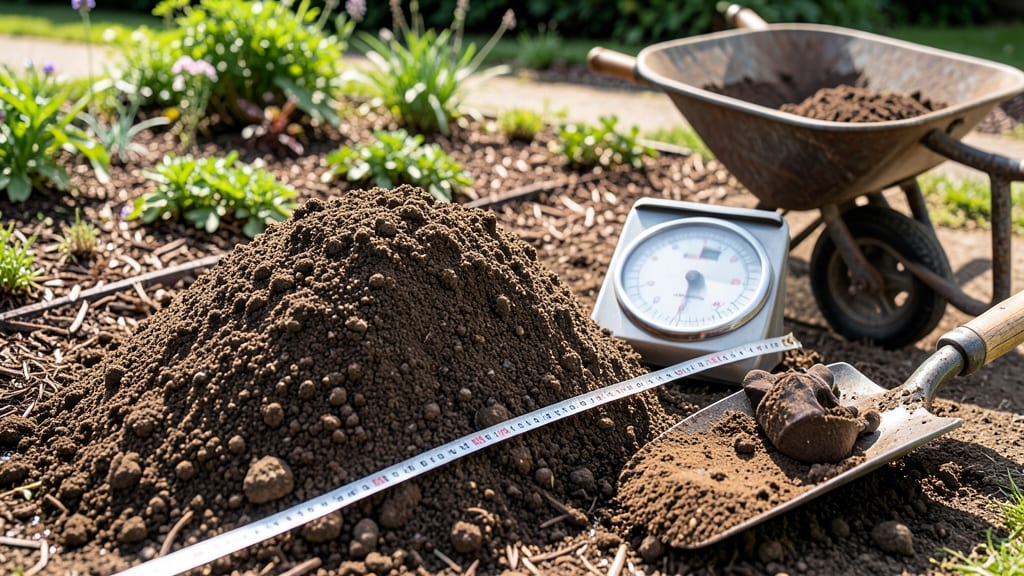
A yard of garden soil weighs 2,000 to 2,700 pounds on average, with variations based on moisture levels, organic content, and how tightly it's packed. Loose topsoil usually lands around 2,200 pounds, while dense clay or saturated soil can push past 3,000 pounds. Always verify supplier specs before planning transport or projects.
A yard of garden soil isn't just dirt—its weight shifts dramatically based on what's mixed in. 🌱 For example, freshly tilled topsoil with high organic matter might weigh closer to 2,000 pounds, while clay-heavy soil after rain can exceed 3,000 pounds.
This matters when estimating delivery costs or truck capacity, since even a small garden project could require multiple trips. I always recommend testing a small batch first by weighing a shovelful to adjust expectations before buying in bulk.
What's surprising is how moisture plays the biggest role—just adding water can increase weight by 300-500 pounds per cubic yard. That's why suppliers often specify "dry weight" or "as-is" measurements.
For heavy projects, consider renting a front loader or scheduling multiple smaller deliveries to avoid overloading your vehicle or straining your back.
💡 In This Article
- Factors Affecting Garden Soil Weight per Cubic Yard
- Practical Tips for Estimating and Handling Soil Weight
Factors affecting garden soil weight per cubic yard
Soil weight isn't static—it's a dynamic interplay of moisture, organic material, and particle composition. Moisture content alone can swing weight by 300-500 pounds per cubic yard between dry and saturated conditions.
For example, sandy loam at 10% moisture might weigh 2,000 pounds, but after heavy rain (30% moisture), it jumps to 2,800 pounds. This happens because water fills pore spaces between particles, adding significant mass without changing volume. 💧
The organic matter content creates another major variation. Topsoil with 5-10% organic material (like decomposed leaves or compost) typically weighs 2,200-2,500 pounds per yard due to lighter, airy humus particles.
In contrast, clay soils with minimal organic content can exceed 3,000 pounds because clay particles are densely packed and absorb less water. Particle size matters too—fine silt holds more moisture than coarse sand, creating heavier mixtures.
Compaction plays a critical role in weight differences. Loose, freshly tilled soil weighs less because it contains more air pockets, while compacted soil (like in a truck bed) can be 20-30% heavier per cubic yard.
I've seen gardeners underestimate this by assuming all soil weighs the same—only to discover their wheelbarrow is dangerously overloaded. The key is understanding that what looks like "just dirt" can vary by 1,000 pounds per yard depending on these factors.
Let's compare three common soil types to see the practical differences:
- Loose topsoil: 2,000-2,300 pounds (high organic matter, low compaction)
- Sandy loam: 2,300-2,600 pounds (moderate moisture retention, balanced particle size)
- Clay soil: 2,700-3,200 pounds (high density, poor drainage, heavy when wet)
What's fascinating is how these variations affect gardening practices. For instance, clay soil's weight means it requires more effort to till and move, while lighter topsoil spreads more easily but may lack nutrients.
The weight differences also impact how much you can safely transport—something I learned the hard way when my first attempt at moving a cubic yard of clay soil nearly tipped my pickup! 🚛
Understanding these factors helps explain why soil suppliers often specify "dry weight" or "as-is" measurements. A cubic yard of soil isn't just a fixed volume—it's a variable weight that changes with the seasons and weather conditions.
This is why professional gardeners always recommend testing a small batch first to get accurate measurements for their specific project needs.