
Watering
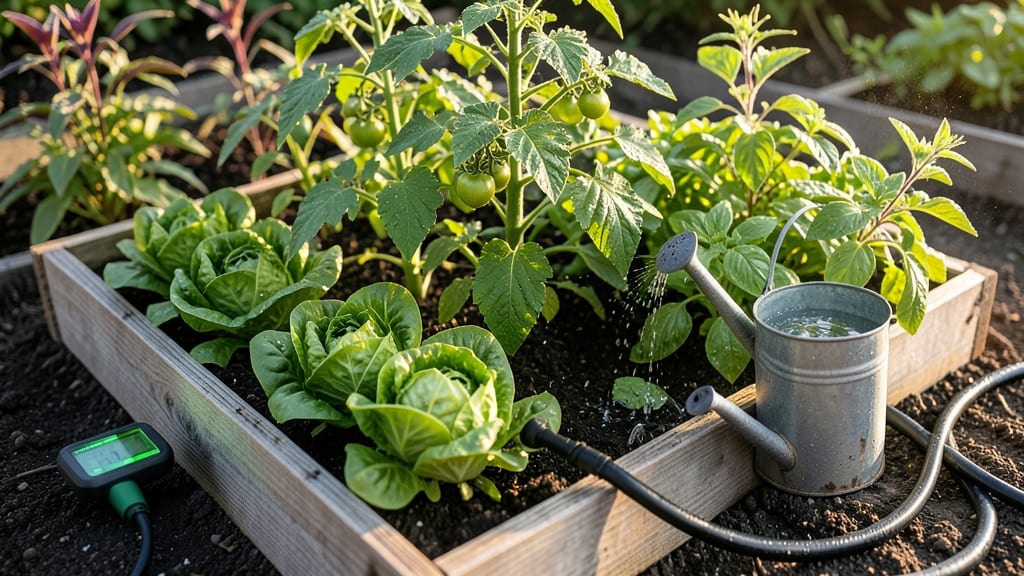
Watering your vegetable garden the right frequency keeps 🌱 thriving and your harvest bountiful—but most gardeners either drown or starve their plants by guessing.
Overwatering or underwatering your vegetable garden can mean the difference between a bountiful harvest and wasted effort—yet most gardeners guess rather than follow science-backed schedules.
Leafy greens like spinach need frequent, shallow watering, while root crops like carrots prefer deep, infrequent soaks. Soil type, climate, and even the time of day you water all play a role in keeping your plants happy.
In this guide, I’ll break down the exact watering frequency for 15+ common vegetables, how to tell if you’re over- or under-watering, and pro tips like mulching and morning watering to save time and boost growth.
How often to water vegetables: exact frequency by plant type and growth stage
Watering your vegetable garden isn't a one-size-fits-all task—different plants crave different hydration levels, and their needs shift dramatically from seedling to maturity. Leafy greens like lettuce and spinach prefer consistent moisture, while root vegetables such as carrots and potatoes need deeper, less frequent watering.
Even within the same plant family, tomatoes at the seedling stage require gentle care, but mature plants with heavy fruit loads demand 1-2 inches of water weekly.
The key to success lies in understanding your soil type and climate conditions. Sandy soils dry out faster, requiring more frequent watering, while clay holds moisture longer.
In hot climates, you might need to water daily, whereas cooler regions can stretch watering to every 2-3 days. Deep watering—soaking the soil until it's moist 6-8 inches down—encourages robust root systems, preventing shallow roots that stress easily.
Here’s a science-backed breakdown of watering frequencies for 15+ common vegetables, tailored to their growth stages and needs:
| Plant Type | Seedling Stage | Mature Stage | Deep Watering Depth | Signs of Stress |
|---|---|---|---|---|
| Leafy Greens (Lettuce, Spinach, Kale) | Every 1-2 days (keep soil moist) | Every 2-3 days (1 inch/week) | 4-6 inches | Wilting, bitter taste, yellowing leaves |
| Root Crops (Carrots, Potatoes, Beets) | Every 2-3 days (light water) | Every 3-5 days (1-2 inches/week) | 8-10 inches | Cracked soil, stunted growth, hollow roots |
| Fruiting Plants (Tomatoes, Peppers, Cucumbers) | Every 1-2 days (gentle water) | Every 2-3 days (1.5 inches/week) | 6-8 inches | Blossom end rot, cracked fruit, leaf drop |
| Onions & Garlic | Every 2-3 days (keep soil even) | Every 4-5 days (1 inch/week) | 4-6 inches | Flattened tops, small bulbs, yellowing |
| Corn | Every 1-2 days (shallow water) | Every 2-3 days (1-2 inches/week) | 6-8 inches | Drooping leaves, poor ear development |
| Herbs (Basil, Parsley, Cilantro) | Every 1-2 days (keep moist) | Every 2-3 days (0.5-1 inch/week) | 3-4 inches | Wilting, bitter flavor, yellow stems |
| Peas & Beans | Every 2 days (consistent moisture) | Every 3-4 days (1 inch/week) | 4-6 inches | Stunted pods, yellowing leaves, poor yield |
| Broccoli & Cauliflower | Every 1-2 days (even moisture) | Every 2-3 days (1-1.5 inches/week) | 6-8 inches | Bolting, small heads, yellowing |
For seedlings, the rule is simple: keep the soil consistently moist but never soggy. Use a spray bottle or gentle watering can to avoid disturbing delicate roots. Once plants reach maturity, deep watering becomes critical.
For example, tomatoes and peppers need their roots soaked to encourage strong stems and fruit development. Root crops like carrots and beets benefit from infrequent, deep watering to prevent splitting or forked shapes.
Adjust your watering schedule based on weather conditions. During heatwaves, increase frequency to daily watering in the early morning to reduce evaporation and fungal risks.
Conversely, during cooler or rainy periods, reduce watering to avoid root rot or nutrient leaching. Mulching with straw or shredded leaves helps retain moisture and regulate soil temperature, cutting water needs by up to 30%.
Pay attention to your plants' visual cues. Yellowing leaves often signal overwatering, while crispy edges or wilting indicate
Signs of overwatering vs. underwatering: how to adjust your vegetable garden watering schedule
Your vegetable garden thrives on a balanced watering schedule, but too much or too little water can stifle growth. Overwatering suffocates roots by cutting off oxygen, while underwatering stresses plants, leading to stunted growth. Learning the visual and tactile clues helps you adjust before damage occurs.
Start by checking the soil moisture with your finger. Stick it 1-2 inches deep—if it feels damp, hold off on watering. Yellowing leaves or mushy stems are classic overwatering signs, while crispy edges or drooping foliage signal dehydration. Each plant reacts differently, so observe closely.
Leaf texture is your first clue. Wilting leaves that don’t bounce back after watering often mean underwatering, but soft, spongy leaves suggest root rot from overwatering. Mold or fungus on soil or plants is another red flag—it thrives in soggy conditions. Adjust your schedule based on these visual cues.
Watering Frequency: Pros & Cons
- Pros: Keeps soil moist, prevents wilting
- Cons: Encourages shallow roots, fungal growth
- Pros: Promotes deep roots, reduces waste
- Cons: Risk of overwatering if soil doesn’t drain
- Pros: Reduces evaporation, prevents disease
- Cons: Requires early schedule adjustments
- Pros: Cools plants in heat
- Cons: Increases fungal risk, slows drying
💧 Best Practice: Water deeply 1-2x weekly, early in the day
Adjust your watering schedule based on soil type and plant needs. Sandy soil drains fast, so water more frequently, while clay holds moisture longer. Leafy greens like lettuce need consistent moisture, while root crops such as carrots prefer slightly drier conditions.
Always water at the base to avoid wetting foliage.
For container gardens, check soil daily—pots dry out faster. If the top inch feels dry, it’s time to water. Mulching helps retain moisture and regulate soil temperature, reducing the need for frequent watering. Use organic mulch like straw or wood chips to keep roots cool and hydrated.
When in doubt, observe your plants and adjust gradually. Overwatering is easier to fix than underwatering—let the soil dry slightly between waterings. With practice, you’ll develop a routine that keeps your vegetable garden thriving without guesswork. 🌱