
How To
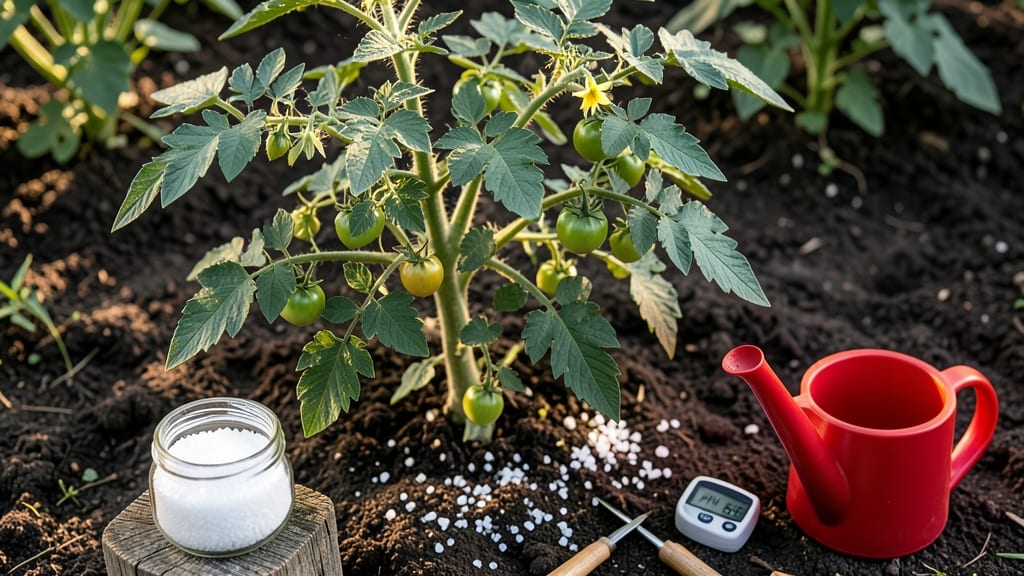
Epsom salt is used in gardening to supply essential magnesium and sulfur, which strengthen roots, improve soil structure, and promote vibrant blooms. For best results, dissolve 1 tablespoon per gallon of water and apply as a foliar spray or soil treatment every 4-6 weeks.
How is Epsom salt used in gardening? It works like a natural fertilizer by addressing common nutrient deficiencies that cause yellowing leaves or stunted growth. 🌱 I’ve seen dramatic improvements in flowering plants like roses and tomatoes after just one application, thanks to its ability to boost chlorophyll production. The key is consistency: too little won’t help, but overusing it can harm soil microbes or create salt buildup over time.
For vegetables, I recommend mixing the solution and spraying it directly on leaves during the growing season, especially when plants show signs of stress. Roses benefit from a soil drench in early spring to encourage lush blooms, while lawns can get a boost by sprinkling it lightly before watering.
Always test your soil first—if it’s already rich in magnesium, you might not need it at all.
💡 In This Article
- Magnesium and Sulfur: How Epsom Salt Enhances Plant Health
- Best Epsom Salt Gardening Applications for Different Plants
Magnesium and sulfur: how Epsom salt enhances plant health
Epsom salt—chemically known as magnesium sulfate—works as a plant nutrient booster because it delivers two essential minerals in a highly available form. Magnesium, the central atom in chlorophyll, acts as the backbone for photosynthesis, where plants convert sunlight into energy.
When magnesium levels drop, leaves often show yellowing between veins, a classic sign of deficiency.
Sulfur, meanwhile, plays a role in protein synthesis and enzyme activation, helping plants develop strong cell structures. 🌿 The beauty of Epsom salt is that its dissolved form allows roots to absorb these nutrients quickly, bypassing the slow-release process of organic matter decomposition.
Most garden soils contain magnesium, but it often binds tightly to clay particles or leaches away with water, leaving plants starved. Epsom salt's solubility means you can deliver magnesium directly to roots or even through leaves (foliar feeding).
For example, tomatoes struggling with blossom-end rot—a calcium deficiency—often respond well to magnesium because it helps regulate calcium uptake.
The recommended 1 tablespoon per gallon ratio dissolves enough magnesium sulfate to raise soil levels by about 0.5-1.0 grams per liter, which is enough to correct mild deficiencies without overloading the soil.
What makes this particularly effective is how magnesium moves within plants. Once absorbed, it travels through the phloem (the plant's food transport system) to areas where it's needed most, like new leaves or developing fruits.
This mobility is why you'll see rapid greening in yellowing foliage within 3-5 days of application. However, the effect isn't permanent—plants continuously use and lose magnesium, so regular applications (every 4-6 weeks) maintain optimal levels. 💚 For container gardens, where nutrients deplete faster, monthly applications can prevent deficiency entirely.
Sulfur's role is equally critical but often overlooked. It's a building block for amino acids and vitamins, and plants need it for proper enzyme function. In soils with high pH (alkaline conditions), sulfur becomes even more scarce because it binds to calcium and iron compounds.
Epsom salt provides sulfur in a form that plants can use immediately, supporting root development and overall vigor.
The sulfur content in Epsom salt is about 13% by weight, which is why it's particularly valuable for plants like peppers and brassicas (like kale) that require higher sulfur levels for strong growth.
One common misconception is that Epsom salt replaces all fertilizer needs. While it addresses magnesium and sulfur deficiencies, it lacks other essential nutrients like nitrogen or phosphorus. Think of it as a supplement rather than a complete meal.
For instance, roses benefit from Epsom salt for vibrant blooms, but they still need regular feeding with a balanced fertilizer to produce those flowers in the first place. The key is using it strategically—when plants show deficiency symptoms or during critical growth phases like flowering or fruiting.