
Trees
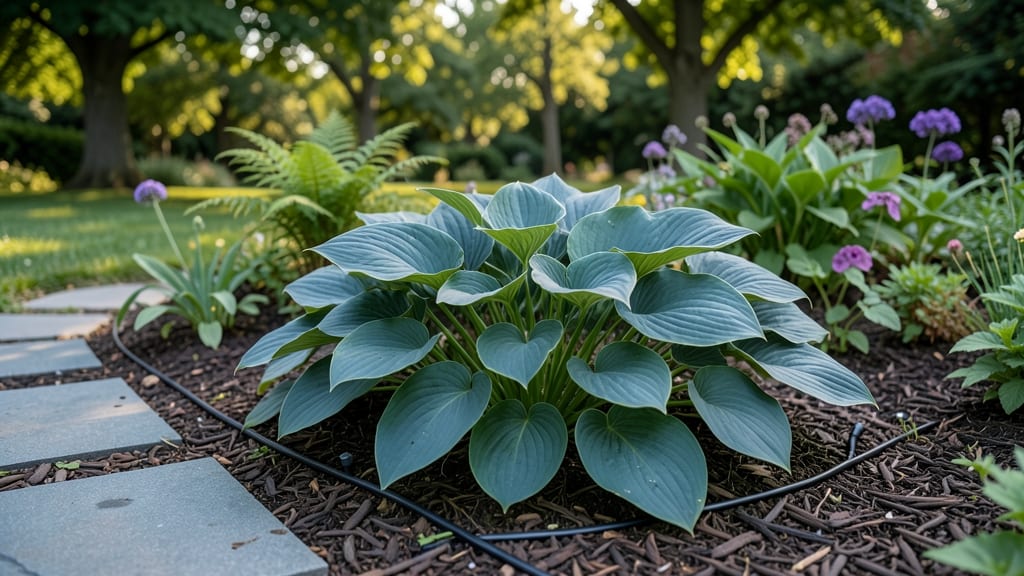
Hosta gardens pictures reveal stunning displays of lush foliage in vibrant greens, blues, and golds, with foliage that transforms dramatically through seasons. These gardens create depth by layering hostas of different sizes and variegation patterns, while pairing them with contrasting textures like ferns or ornamental grasses for maximum visual impact.
When you see hosta gardens pictures in full bloom, what stands out is how these shade-loving plants create living tapestries of color. 🌿 The secret lies in their foliage diversity—some varieties develop striking blue-gray hues in summer, while others turn fiery bronze in fall.
I've noticed that the most striking gardens use height variation, placing taller hostas like 'Blue Angel' at the back and smaller ones like 'Halcyon' in front. This creates natural movement in the landscape, especially when combined with delicate ferns or spiky grasses for contrast.
What makes these gardens truly magical is their ability to evolve with the seasons. In spring, expect delicate lavender blooms peeking through fresh green leaves, while summer brings out the boldest foliage colors. By autumn, many varieties develop rich copper or gold tones that glow in dappled shade.
For real-life inspiration, look for gardens that group hostas by color families—like all blues together or all golds—rather than scattering them randomly. This intentional grouping makes the seasonal transformations even more dramatic when viewed from a distance.
💡 In This Article
- Designing Stunning Hosta Garden Layouts
- Seasonal Hosta Color Transformations Explained
Designing stunning hosta garden layouts
The foundation of any striking hosta garden lies in understanding each variety's mature height and spread.
Tall hostas like 'Sum and Substance' (up to 3 feet tall and 5 feet wide) make perfect backdrops, while smaller varieties such as 'Patriot' (1 foot tall and 2 feet wide) work beautifully in front borders.
This vertical layering creates depth that transforms flat landscapes into dynamic scenes. 🌿 The key is to place taller varieties against dark backgrounds like evergreen shrubs or stone walls, which makes their foliage colors pop against the contrast.
Color coordination is where hosta gardens truly shine. Grouping plants with similar foliage hues creates visual harmony, while strategic placement of contrasting colors draws the eye. For example, pairing the blue-gray 'Blue Angel' with chartreuse 'Francee' creates a striking two-tone effect that's especially dramatic in summer.
I've found that using the 60-30-10 rule works well: 60% dominant color, 30% secondary, and 10% accent colors. This creates balance while maintaining visual interest throughout the season.
Growth habits matter just as much as size and color. Hostas with upright growth patterns like 'Guacamole' work well in the center of borders, while trailing varieties such as 'Blue Mouse Ears' spill beautifully over container edges or rock gardens.
The secret to natural-looking arrangements is to mimic how hostas grow in the wild—clustered in loose groups rather than perfectly aligned rows. This creates a more organic, flowing appearance that feels intentional rather than forced. 🌱
Seasonal progression planning prevents summer slump. Many hostas develop their most vibrant colors in late summer when other plants may be fading. By selecting varieties that bloom at different times—like early spring bloomers 'Blue Cadet' alongside summer-flowering 'Halcyon'—you create continuous interest.
The foliage itself changes too: some varieties like 'June' develop golden centers in summer that intensify in autumn, while others like 'Francee' maintains its chartreuse hue year-round.
Texture contrast elevates hosta gardens from simple foliage displays to true landscape masterpieces. Pairing hostas with ferns (like 'Autumn Fern') adds delicate, lacy contrast, while ornamental grasses such as 'Karl Foerster' provide vertical movement.
The key is to choose plants with opposite textures—hostas' broad leaves against ferns' fine fronds or grasses' rigid blades. This creates visual tension that makes the garden feel more dynamic and less static. 💫
Don't overlook the power of focal points. A single large hosta like 'Empress Wu' (with 4-foot diameter leaves) placed strategically can anchor an entire garden design. These varieties should be positioned where they'll be seen from multiple viewpoints—near seating areas, along pathways, or at the end of a border.
The contrast between their massive leaves and surrounding plants creates immediate visual impact that draws visitors deeper into the garden.