
Tools
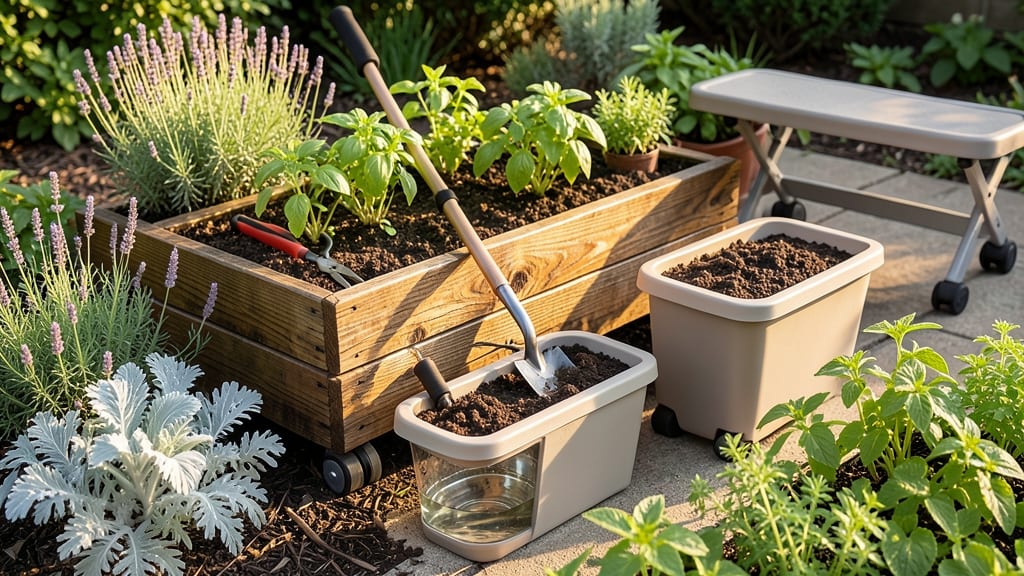
Gardening for people with disabilities becomes fully accessible through adaptive solutions like raised beds, ergonomic tools, and specialized seating options. These innovations create inclusive spaces that support mobility, sensory needs, and hands-free operation, making gardening enjoyable and empowering for everyone.
Adaptive gardening transforms traditional challenges into opportunities for independence. 🌱 Raised beds eliminate bending while allowing customizable heights, while lightweight tools reduce strain for those with limited grip strength.
Sensory-friendly plants like fragrant herbs or textured foliage create engaging experiences for gardeners with visual impairments, while automated systems let users control watering with simple voice commands or smartphone apps. The key is designing spaces that work with individual abilities rather than against them.
Many adaptive solutions are surprisingly affordable—simple modifications like adding handles to tools or installing knee pads can make a big difference. Community gardens often provide shared adaptive equipment, and organizations like the National Gardening Association offer grants for accessibility upgrades.
The goal isn't just functionality, but reclaiming the joy of connecting with nature on your own terms.
💡 In This Article
- Adaptive Gardening Tools That Make Planting Easier
- Designing Accessible Garden Layouts for All Abilities
Adaptive gardening tools that make planting easier
Adaptive gardening tools are designed to address specific physical challenges by reducing strain and increasing precision. Take long-handled reachers, for example—their extended shafts (typically 24-36 inches) allow gardeners with limited mobility or wheelchair users to easily pick up tools, plants, or debris without bending or stretching.
The ergonomic grips, often made from foam or rubberized materials, distribute pressure evenly to prevent hand fatigue, a critical feature for those with arthritis or grip weakness.
Studies show that tools with angled or contoured handles reduce wrist strain by 30-40%, making them ideal for repetitive tasks like weeding or planting.
For gardeners with limited hand dexterity, one-handed pruners and lever-action tools are game-changers. These tools use a single-lever mechanism that requires only 5-10 pounds of pressure to operate—far less than traditional pruners, which often demand 20+ pounds of force.
The non-slip grips and adjustable finger loops accommodate various hand sizes and strengths. Voice-activated sprinklers and smart irrigation systems further simplify gardening by allowing hands-free control via smartphone apps or voice commands, eliminating the need for manual watering entirely.
Sensory adaptations also play a key role. Tools with weighted handles or vibrating alerts help gardeners with visual impairments locate equipment more easily, while high-contrast colors (like bright yellow or orange) improve visibility.
The National Center on Health, Physical Activity and Disability recommends tools with textured grips for tactile feedback, ensuring users can feel their grip even with limited vision. These small but thoughtful designs transform gardening from a physically demanding task into an accessible, enjoyable activity.
Beyond physical adaptations, some tools incorporate universal design principles that benefit everyone. For instance, lightweight aluminum or composite materials reduce tool weight by 30-50% compared to traditional steel tools, making them easier to maneuver for all gardeners.
The adjustable height handles on many adaptive tools allow customization based on the user's seated or standing position, further enhancing usability. This versatility means these tools aren’t just for those with disabilities—they’re practical upgrades for anyone looking to garden with less strain.
Consider the ergonomic trowel, for example. Its D-shaped handle fits naturally in the palm, reducing wrist torque by 25% during digging. The blade’s angled design minimizes resistance, making it easier to insert into soil without excessive force.
These features aren’t just theoretical—they’re backed by biomechanics research showing how tool design impacts joint stress. For gardeners with carpal tunnel syndrome or shoulder injuries, such tools can mean the difference between painful gardening sessions and effortless ones.
Finally, the rise of smart gardening tech has opened new possibilities. Robot lawn mowers and automated planters eliminate the need for manual labor, while app-controlled soil sensors provide real-time moisture and nutrient data without requiring physical interaction.
These innovations are making gardening more inclusive by removing barriers entirely. The message is clear: with the right tools, gardening can be a joyful, empowering activity for everyone, regardless of physical ability.