
Propagation
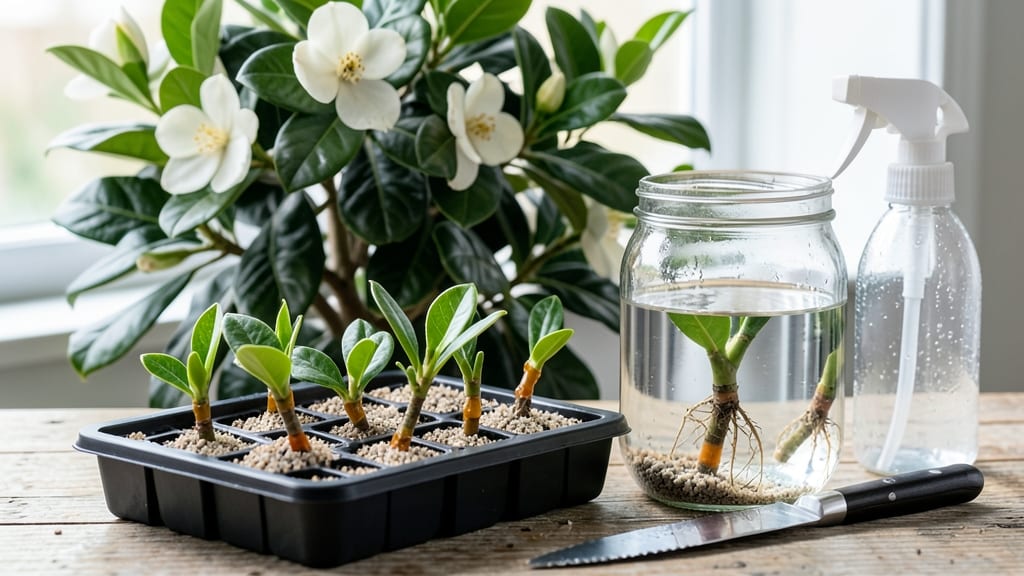
Propagating gardenia from cuttings works best with semi-hardwood stems, rooting hormone, and a humid environment that maintains consistent moisture. With the right timing and care, you can expect roots to form in 4-8 weeks under ideal conditions.
Gardenias thrive when you time your cuttings right—spring and early summer are prime seasons because the plant's natural growth hormones are most active. 🌱 The key is using semi-hardwood stems (neither too soft nor woody) and keeping the humidity above 70% to prevent dehydration.
I've found that a mix of perlite and sand works best for drainage while retaining enough moisture to encourage root development.
Rooting hormone is your secret weapon here, as it mimics the plant's natural auxin levels, which are crucial for cell division at the stem's base. Without it, your success rate drops significantly.
Once you've dipped your cuttings, place them in a propagation tray or small pots with the medium, then cover with a plastic bag to trap humidity—just remember to ventilate occasionally to prevent mold.
💡 In This Article
- Best Time and Conditions for Gardenia Cuttings Root Growth
- Step-by-Step Gardenia Cutting Propagation Guide with Success Tips
Best time and conditions for gardenia cuttings root growth
Gardenias enter their most active growth phase during spring and early summer, making these seasons ideal for propagation.
This timing aligns with the plant's natural hormonal cycles, particularly the production of auxins—plant hormones that stimulate root growth. 🌿 During these months, gardenias produce semi-hardwood stems, which are neither too soft (like new growth) nor too woody (like mature branches).
These stems strike the perfect balance between flexibility and structural integrity, allowing them to root more effectively.
The ideal temperature range for rooting gardenia cuttings is between 70-75°F during the day and 60-65°F at night. Gardenias are tropical plants, so they thrive in warm, stable conditions. Humidity is equally critical—maintaining levels above 70% prevents the cuttings from drying out, which can stunt root development.
You can achieve this by placing a humidity dome over your propagation tray or using a misting bottle to keep the air moist. Light exposure should be bright but indirect, mimicking the dappled sunlight gardenias receive under their native canopy.
Rooting hormone plays a pivotal role in accelerating success rates by boosting auxin levels at the stem's base.
When you dip your cuttings into a powdered or gel-based rooting hormone, you're essentially giving them a hormonal jumpstart. 🔬 Studies show that using rooting hormone can increase rooting success rates by up to 30-40% compared to untreated cuttings.
The hormone triggers cell division and elongation in the root initials, which are the precursor cells that will develop into actual roots. Without this hormonal stimulation, gardenia cuttings often struggle to produce roots consistently.
Another critical factor is the propagation medium's composition. A mix of 50% perlite and 50% coarse sand provides the perfect balance of aeration and moisture retention. Perlite creates air pockets that prevent the roots from suffocating, while the sand helps retain moisture without becoming waterlogged.
This combination also mimics the well-draining, slightly acidic soil conditions that gardenias prefer in their natural habitat. Avoid using pure peat moss or soil, as these can compact and hinder root growth.
Monitoring your cuttings' progress is essential, but be patient—roots typically take 4-8 weeks to form under ideal conditions. During this time, check for signs of new growth, such as small bumps along the stem where roots are emerging.
If you notice the leaves wilting or turning yellow, it's a sign of overwatering or poor drainage. Conversely, if the cuttings appear dry or crispy, they need more humidity. Adjusting these conditions promptly can make the difference between success and failure. 🌱
Finally, gardenias are sensitive to sudden changes in their environment, so consistency is key. Maintain stable temperature and humidity levels, and avoid exposing the cuttings to drafts or direct sunlight.
With these conditions in place, your gardenia cuttings will have the best chance of developing a strong root system, setting the stage for healthy, blooming plants in the future.