
Tools
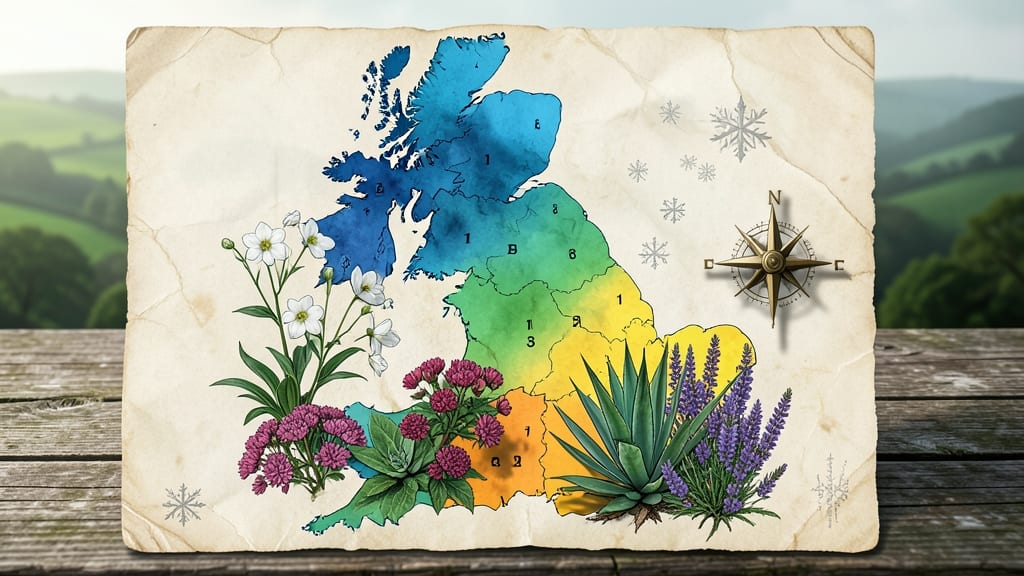
UK garden zones categorize regions by frost risk and climate to determine which plants thrive in each area, using a system from 1 (hardiest) to 10 (mildest). Checking your zone ensures proper plant selection for year-round success.
The UK's 10-zone system differs from the USDA's because it focuses on average annual minimum temperatures rather than frost-free days. Zone 1 covers Scotland's coldest areas where winters drop below -5°C, while Zone 10 includes Cornwall's milder climate with rare frosts.
Microclimates—like urban heat islands or sheltered valleys—can shift your effective zone by up to 2 levels, so always verify with the Royal Horticultural Society's zone map.
Cold snaps can push Zone 8 plants into survival mode, so choosing hardy varieties (like heathers or lavender) is key for colder areas.
To find your zone, use the RHS Plant Finder or the Met Office's frost risk tool, then adjust for local conditions. For example, Zone 7 gardens in London might need frost blankets, while Zone 9's Mediterranean plants thrive in Cornwall.
Extend growing seasons in colder zones with cloches or cold frames—this trick lets you grow tomatoes in Zone 5! Always check plant labels for zone ranges, as some varieties tolerate one zone lower than their label suggests.
💡 In This Article
- Understanding the UK's Climate-Based Plant Hardiness Zones
- How to Find Your UK Garden Zone and Choose Plants
Understanding the UK's climate-based plant hardiness zones
The UK's plant hardiness zones differ fundamentally from the USDA system by focusing on average annual minimum temperatures rather than frost-free days. While the USDA system ranges from 1-13 based on coldest winter temperatures, the UK's 1-10 scale measures the number of frost-free days and cumulative winter chill hours.
Zone 1 covers Scotland's harshest areas where temperatures can plunge to -10°C, while Zone 10 includes Cornwall's subtropical microclimate where frosts are rare and winters rarely drop below 2°C.
This gradient explains why a Zone 1 plant like a hardy rhododendron thrives in the Highlands but would struggle in Zone 8 London.
Microclimates create dramatic variations within zones—urban areas like Manchester (Zone 7) can be 2-3°C warmer than rural areas just 10 miles away due to concrete heat absorption. Elevation also plays a role: a garden at 500 meters in Wales might experience 5-7°C colder winters than sea-level areas.
Cold snaps, like the 2018 "Beast from the East", can push Zone 8 temperatures to -12°C, forcing gardeners to protect tender plants with fleece covers or move them indoors.
These extremes mean plants labeled for Zone 6 might survive in Zone 5 with proper winter protection, but Zone 9's Mediterranean species (like olive trees) will perish without shelter in Zone 7.
What makes the UK system unique is its emphasis on cumulative winter chill—plants like apple trees need 800-1,200 hours below 7°C to set fruit properly. Zone 1's short growing season (just 120-140 days) contrasts sharply with Zone 10's 220+ days, where subtropical plants like bougainvillea flourish.
This chill requirement explains why Zone 3's traditional apple varieties (like Bramley's Seedling) won't thrive in Zone 8 without careful selection of low-chill cultivars like Egremont Russet. The system also accounts for spring frost risk, which is higher in Zone 4-5 than in milder coastal zones.
Here's how the zones break down by region and key characteristics:
- Zone 1 (Scotland, Northern Isles): Winters below -5°C, 100-120 frost-free days, ideal for heathers, junipers, and hardy perennials
- Zone 5 (Midlands, Yorkshire): 5-7°C winter lows, 140-160 frost-free days, supports apple trees, roses, and herbaceous borders
- Zone 8 (London, Southeast): 0 to -3°C winters, 180-200 frost-free days, perfect for lavender, wisteria, and Mediterranean herbs
- Zone 10 (Cornwall, Isles of Scilly): Rare frosts, 220+ frost-free days, grows citrus, palm trees, and subtropical shrubs
The zones also account for soil temperature—Zone 1's peaty soils stay colder longer than Zone 9's sandy coastal soils, which warm quickly in spring.
This difference affects planting times: Zone 1 gardeners might wait until mid-May to plant tender annuals, while Zone 9 growers can start in early April.
The system's precision helps explain why a Zone 6 plant like hydrangeas can survive in Zone 5 with mulch but will struggle in Zone 4 without extra winter insulation. 🌿
Understanding these nuances is critical for gardeners—it's not just about the zone number but how local topography, urban heat, and microclimates modify the baseline conditions.
For example, a south-facing wall in Zone 6 can create a Zone 8 microclimate, allowing you to grow jasmine or fuchsias that wouldn't survive in the open garden. This is why professional gardeners always test soil temperature and observe frost patterns for at least 3 years before finalizing plant choices.