
Planting
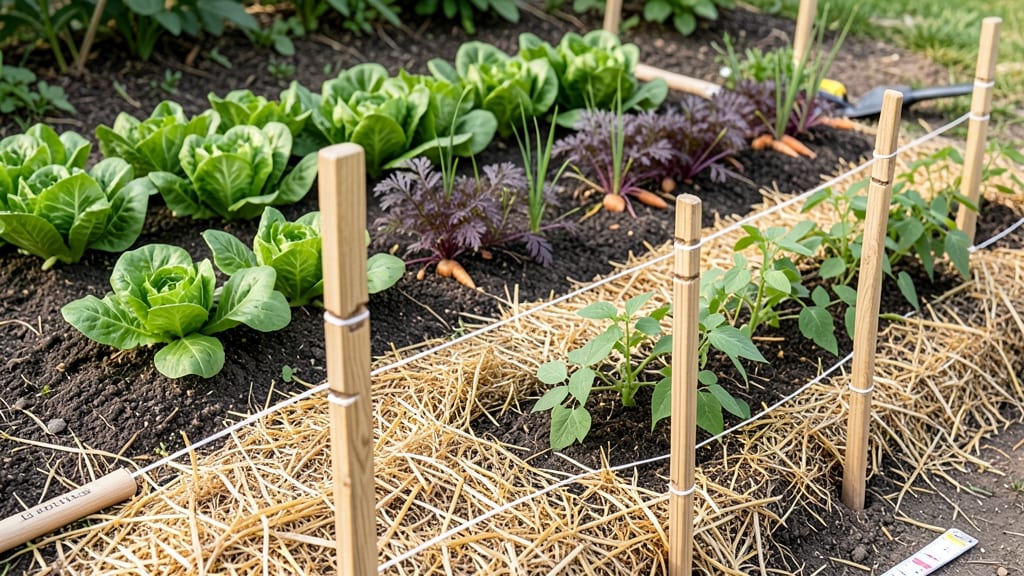
Proper garden row spacing—typically 12 to 36 inches apart—creates the ideal environment for healthy plants by ensuring adequate airflow, sunlight penetration, and root expansion while preventing competition for nutrients.
Spacing isn't just about fitting more plants in—it's about giving each one room to thrive. 🌱 Leafy greens like lettuce or spinach need just 12 inches between rows, while larger plants such as tomatoes or corn require 24-36 inches to prevent overcrowding.
The key is matching spacing to the plant's mature size and growth habits. For instance, vining plants like cucumbers need wider rows to sprawl horizontally, while bush beans can handle closer spacing since they grow more compactly.
When planning your garden layout, consider your climate and soil conditions too. In hotter regions, slightly wider spacing helps reduce competition for water, while in cooler areas, you might get away with closer rows since plants grow slower.
Always measure from the center of one row to the center of the next—this ensures consistent spacing throughout your garden.
💡 In This Article
- How Plant Type Determines Ideal Garden Row Spacing
- Best Practices for Measuring and Adjusting Row Spacing
How plant type determines ideal garden row spacing
Leafy greens like lettuce or spinach thrive in tight rows—typically 12 inches apart—because their shallow roots and quick growth cycle don't require much horizontal space.
The science here is simple: these plants prioritize rapid leaf production over vertical expansion, so they compete less for sunlight when planted closely. 🌿 However, if you pack them too tightly, you risk fungal diseases like powdery mildew, which spreads faster in humid conditions when leaves brush against each other.
The ideal spacing ensures each plant gets 6-8 hours of direct sunlight daily, preventing leggy growth or bitter flavors.
Root vegetables such as carrots or radishes need 2-3 inches between seeds but 3-4 inches between plants at maturity to avoid stunted growth from root competition.
The soil mechanics come into play here: roots grow outward in search of nutrients and water, and crowding forces them to twist or fork—resulting in misshapen produce.
For example, a carrot planted 1 inch too close may develop a sharp bend where roots collide, while proper spacing lets them grow straight and crisp. 🥕 The rule of thumb is to space roots at least 1.5 times their mature width apart.
Vining plants like cucumbers or pole beans present a different challenge—they need 36-48 inches between rows to sprawl horizontally or climb vertically without smothering nearby plants. These plants rely on extensive foliage to maximize photosynthesis, and cramped conditions lead to weaker stems, fewer flowers, and lower yields.
The airflow between vines is critical too: stagnant air traps moisture, creating the perfect environment for powdery mildew or bacterial leaf spot. 🌿 For trellised plants, wider spacing also makes harvesting easier and reduces the risk of breaking stems under the weight of heavy fruit.
Herbaceous perennials like asparagus or rhubarb require even more thought—they establish slowly but live for years, so initial spacing must account for their eventual size. Asparagus crowns need 12-18 inches between plants and 36 inches between rows to prevent overcrowding as ferns spread.
The key here is root expansion: asparagus roots can spread 2-3 feet wide over time, so tighter spacing leads to competition for water and nutrients, stunting spear production. Perennials also benefit from permanent spacing because transplanting them later is nearly impossible without damaging their extensive root systems.
Finally, consider the plant's growth habit—some, like tomatoes, grow bushy while others, like peppers, stay compact.
A determinate tomato (like Roma) tops out at 3-4 feet tall and wide, so 24 inches between plants works, while an indeterminate variety (like Sungold) can reach 6-8 feet tall and needs 36 inches to avoid shading lower leaves.
This vertical growth affects sunlight penetration: taller plants in the middle of a row can cast shadows on shorter ones, reducing yields by up to 30% in extreme cases.
What most gardeners overlook is how spacing affects soil health too. Wider rows allow for easier weeding and mulching, which improves soil structure and moisture retention.
For instance, a 36-inch row for corn lets you mulch between plants without smothering them, while a 12-inch row for lettuce requires more frequent thinning to prevent soil compaction. The right spacing isn’t just about the plants—it’s about the ecosystem around them. ✨