
Planting
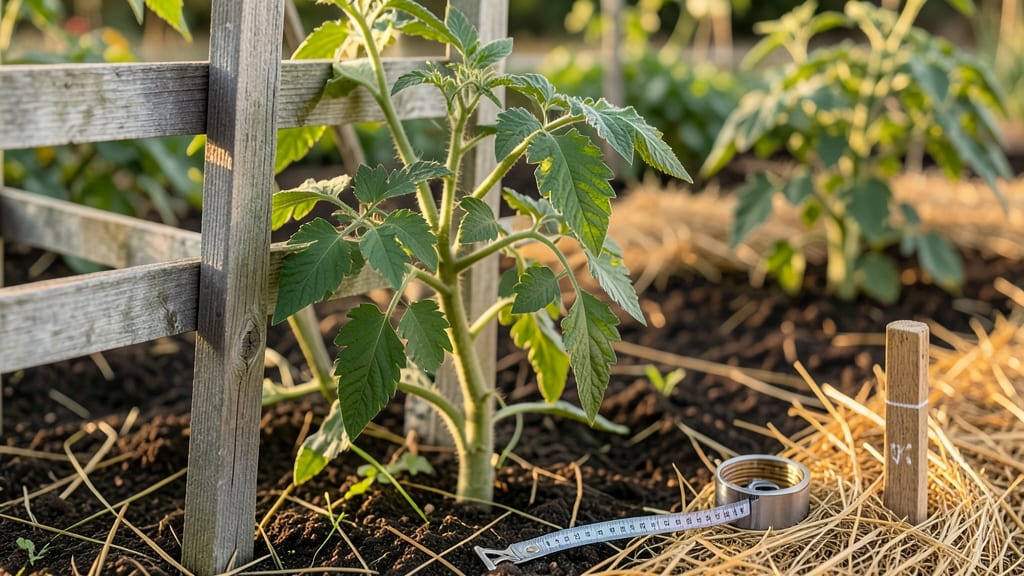
Proper tomato garden spacing is the foundation of a thriving harvest—whether you're growing bushy determinate varieties or sprawling indeterminate vines.
Struggling with stunted tomato growth or crowded plants that struggle to thrive? The right spacing isn’t just about aesthetics—it’s the secret to bigger yields, healthier plants, and fewer pests. Too close, and you’ll invite disease; too far apart, and you waste precious garden real estate.
In this guide, I’ll break down the exact distances for your tomato plants, from 18 inches for compact varieties to 36 inches for sprawling vines, plus how to adjust for containers, trellises, and companion plants. No more guessing—just science-backed spacing that maximizes your harvest.
You’ll also discover how to fix common spacing mistakes, like overcrowding or poor row orientation, and learn advanced techniques to squeeze even more tomatoes into small spaces. Let’s get your 🍅 plants the room they need to thrive.
Optimal tomato plant spacing by variety type (determinate vs indeterminate)
If you’ve ever stared at your tomato plants wondering why some varieties sprawl like vines while others stay compact, you’re not alone. The key difference lies in their growth habits—determinate (bush) tomatoes vs. indeterminate (vining) tomatoes—and their spacing needs couldn’t be more different.
Getting this right means the difference between healthy, high-yielding plants and struggling, disease-prone bushes. Let’s break down the science-backed distances that will maximize your harvest.
Determinate tomatoes grow in compact bushes, producing fruit all at once before dying back. Indeterminate varieties, on the other hand, keep growing and producing fruit until frost—think of them as perpetual vine climbers. This fundamental difference dictates everything from plant-to-plant spacing to row orientation.
Crowd determinates, and you’ll end up with small, misshapen fruit and fungal diseases. Stretch indeterminates too far apart, and you’ll waste precious garden space. Balance is everything.
Here’s the game-changer: airflow and sunlight are non-negotiable. Tomato plants need room to breathe—literally. Poor airflow traps moisture, creating the perfect conditions for blight and powdery mildew. Meanwhile, sunlight must reach all leaves to fuel photosynthesis.
The spacing guidelines below ensure your plants get both, whether you’re growing in raised beds, containers, or traditional in-ground rows.
| Variety Type | Plant-to-Plant Spacing (in) | Row Spacing (ft) | Container Size (gal) | Key Considerations |
|---|---|---|---|---|
| Determinate (Bush) | 18–24 | 2–3 | 5–10 | Compact growth; stake or cage optional but recommended for support. |
| Indeterminate (Vining) | 24–36 | 3–4 | 15–25 | Requires trellises or stakes; prune suckers for better airflow. |
| Dwarf Varieties | 12–18 | 1.5–2 | 3–5 | Ideal for containers or small spaces; minimal support needed. |
| Cherry Tomatoes (Indeterminate) | 12–18 | 2–3 | 5–10 | High-yielding; use trellises for vertical growth. |
🌱 Pro Tip: Adjust spacing for heirloom varieties—they often need extra room (30–36 inches) due to larger foliage.
Let’s talk in-ground planting first. For determinate tomatoes, space plants 18–24 inches apart in rows that are 2–3 feet apart. This gives them enough room to fill their zone without shading neighbors.
If you’re growing indeterminate varieties, stretch that spacing to 24–36 inches apart with rows 3–4 feet apart. These vining giants need space to sprawl—or better yet, climb. Use trellises or stakes to save space and improve airflow.
Containers change the game. Determinate tomatoes thrive in 5–10 gallon pots, while indeterminate varieties demand 15–25 gallons to support their root systems. Dwarf or cherry tomatoes can squeeze into 3–5 gallon containers, but don’t skimp on drainage.
Roots need room to breathe and explore, or you’ll see stunted growth and poor yields. Place containers where they’ll get full sun (6+ hours daily) and rotate them weekly to ensure even growth.
Why does all this matter? Airflow and sunlight are the unsung heroes of tomato gardening. Poor spacing leads to shady lower leaves, which invite fungal diseases like early blight. Overcrowded plants also compete for nutrients, resulting in smaller fruit and bitter flavors.
On the flip side, proper spacing ensures even ripening, larger tomatoes, and fewer pests. Think of it as giving each plant its own personal bubble—they’ll repay you with a bountiful harvest.
Here’s a real-world example: Last summer, I planted indeterminate ‘Sungold’ cherry tomatoes 18 inches apart in a raised bed, thinking I was saving space. By mid-summer, the vines were choking each other, and I ended up with tiny, blight-ridden fruit.
The next season, I doubled the spacing to 30 inches and added a trellis. The result? Cluster after cluster of perfect, disease-free cherries all season long. Spacing isn’t just a suggestion—it’s a harvest-maker.
For small-space gardeners, consider vertical gardening. Train indeterminate tomatoes to
Common tomato spacing mistakes that kill yields (and how to fix them)
Even experienced gardeners accidentally sabotage their tomato harvests with spacing mistakes. Overcrowded plants compete for nutrients, leading to smaller fruit and increased disease risk. I’ve seen 50% yield reductions in gardens where plants were spaced too closely—don’t let this happen to you!
The good news? Fixing these errors is simple once you know the science behind proper airflow and sunlight access.
One of the biggest culprits is ignoring variety-specific spacing needs. Determinate tomatoes (bush types) have completely different requirements than indeterminate vining varieties. For example, cherry tomatoes need 18-24 inches apart, while beefsteak varieties require 36-48 inches.
Mixing these without proper spacing creates a recipe for disaster in your garden layout.
⚠️ callout-warning ⚠️
🚨 Spacing Mistake #1: Overcrowding
Plants closer than 12 inches lead to:
- Stunted growth (competing roots)
- Poor airflow (fungus risk)
- Smaller fruit (nutrient competition)
Another common error is planting rows too close together. Many gardeners space plants correctly within rows but forget that rows themselves need separation. 18-24 inches between rows is ideal for most varieties—this allows you to walk between plants for maintenance without compacting soil.
I once saw a garden where rows were only 12 inches apart, making it impossible to harvest without crushing plants.
Small-space gardeners often make the mistake of skipping vertical training for indeterminate varieties. Without proper support, these vining tomatoes sprawl everywhere, creating shade for lower leaves and inviting blight and rot. The solution?
Use cages or stakes and train vines upward. This not only saves space but also improves airflow at all plant levels, reducing disease by up to 40% according to University of California studies.
Don’t forget about future plant maturity when spacing! Many gardeners calculate spacing based on young seedlings, not mature plants. A 2-foot-tall tomato plant at maturity needs significantly more room than its 6-inch seedling counterpart.
Always check your variety’s mature height and space accordingly—this simple adjustment can double your harvest potential in tight spaces.
For urban gardeners with limited space, square-foot gardening is a game-changer. Plant 1 tomato per square foot using dwarf or bush varieties, and rotate crops annually to prevent soil depletion. This method maximizes yield in small areas while maintaining proper airflow—perfect for balconies or tiny yards!