
Container Gardens
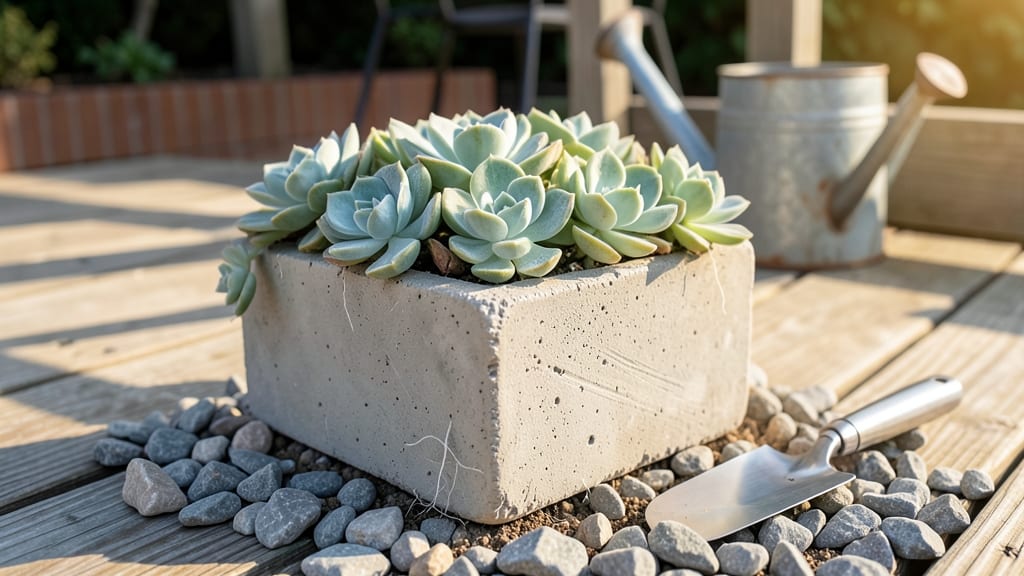
Creating garden pots from cement gives you customizable, long-lasting planters that resist weather and pests by combining Portland cement with sand and water in a 1:3 ratio, forming molds, and letting them cure for at least 7 days. Adding wire mesh boosts durability, while sealing with a waterproofing agent prevents cracks.
Cement-based garden pots offer unmatched durability compared to plastic or ceramic options.
The 1:3 cement-to-sand ratio creates a balanced mix that cures properly without becoming brittle. 🔥 For extra strength, I always embed chicken wire or fiber mesh before pouring—this prevents cracking during curing and adds structural support for larger pots.
The curing process is critical: keeping pots in a humid environment for the first 72 hours ensures even hardening, while gradual drying over the next week prevents surface cracks.
One common mistake is rushing the curing process. If you remove pots from molds too soon, they may warp or develop weak spots. For best results, use flexible molds like silicone or plastic that won't stick to the curing cement.
After demolding, I recommend storing pots in a shaded area for 24 hours before exposing them to direct sunlight, which helps prevent thermal stress cracks.
💡 In This Article
- Cement Mix Ratios and Materials for Strong Garden Pots
- Step-by-Step Molding and Curing Techniques for Cement Pots
Cement mix ratios and materials for strong garden pots
The 1:3 cement-to-sand ratio is the gold standard for garden pots because it balances strength and workability. Portland cement (Type I or II) provides the binding properties through hydration—the chemical reaction where cement particles react with water to form calcium silicate hydrates.
Sand acts as an aggregate, filling gaps between cement particles to reduce shrinkage during curing. Using coarse sand (20-30 mesh size) creates a rougher texture that improves adhesion to plant roots, while fine sand (50-70 mesh) produces smoother pots but requires more water.
Water content is critical—too little makes the mix dry and difficult to work with, while too much weakens the structure by creating air pockets. The ideal water-to-cement ratio is 0.45-0.50 (about 1 pint of water per 5-pound bag of cement).
This ratio ensures proper hydration without excess water that could cause surface cracks. For extra durability, add 1% fiber reinforcement (like chopped polypropylene fibers) or embed 1/4-inch chicken wire at the bottom of molds before pouring. This reinforcement prevents cracking by distributing stress evenly.
The science behind curing explains why patience pays off. During the first 24 hours, cement develops initial strength through hydration, but the real hardening occurs over 7-28 days as the mix gains compressive strength.
Humidity is key—keeping pots covered with plastic sheeting for the first 72 hours prevents rapid drying, which creates weak spots. After demolding, store pots in 50-70°F temperatures with moderate humidity to avoid thermal shock, which can cause surface cracks.
Material choices extend beyond the basic mix. For larger pots (12+ inches), consider adding 10% perlite to reduce weight while maintaining strength. Perlite also improves drainage, which is essential for root health. Avoid using river sand, as its smooth particles don't bind as well as crushed stone sand.
For aesthetic appeal, mix in 10% colored cement or natural pigments like ochre or umber, but test small batches first—some pigments can interfere with curing.
One common mistake is skipping the waterproofing step. After curing, apply a sealing agent like acrylic sealer or diluted white vinegar (1:3 ratio with water) to prevent moisture absorption. This step is especially important for pots in rainy climates, where water absorption can lead to cracking over time.
The sealant also makes pots easier to clean and extends their lifespan by 30-50% compared to unsealed cement.
For those working in extreme conditions, consider adding 5% latex modifier to the mix. This flexible additive improves resistance to freeze-thaw cycles, making pots last longer in colder climates.
Latex also enhances adhesion to molds, reducing the risk of tearing during demolding—especially useful for intricate designs like hanging pots or tiered planters.