
Tools
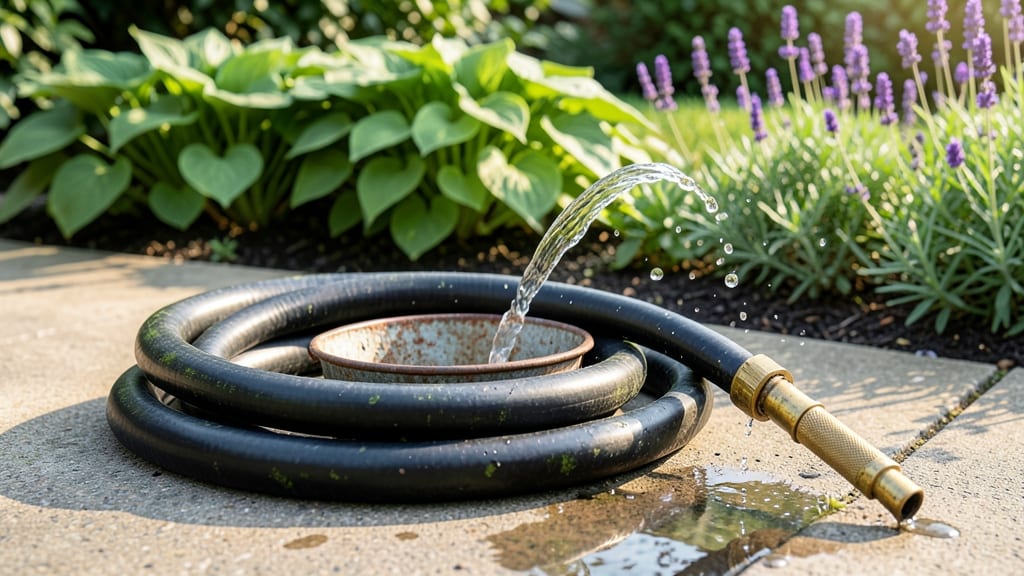
When a garden hose leaks at the swivel, it’s usually due to a worn rubber gasket or loose connection. Start by tightening the coupling, then replace the gasket or apply hose thread seal tape for a quick fix. For chronic leaks, upgrade to a brass swivel connector or replace the damaged hose section.
A leaking swivel connection is one of the most common hose failures, and it’s usually caused by either the rubber seal breaking down or the connection not being properly secured. 🔥 Over time, exposure to sunlight, temperature swings, and constant water pressure can degrade the gasket, while dirt and mineral deposits can prevent a tight seal.
I’ve found that brass connectors last significantly longer than standard rubber ones because they resist corrosion and wear better under pressure.
Before reaching for replacements, check for simple fixes like tightening the coupling or cleaning out debris. If the leak persists, swapping out the gasket or using plumber’s grease can buy you time.
For a permanent solution, upgrading to a brass swivel or replacing the entire hose section often solves the problem entirely.
💡 In This Article
- Why Garden Hose Swivels Leak Over Time
- Step-by-Step Fixes for Leaky Hose Swivels
Why garden hose swivels leak over time
The primary culprit behind swivel leaks is the rubber gasket's gradual degradation. Over time, exposure to ultraviolet (UV) rays from sunlight causes the rubber to dry out and crack, losing its elasticity.
This process accelerates when the hose is left coiled in direct sunlight for extended periods—think about how a rubber band becomes brittle after months of exposure.
The gasket, which sits between the hose and swivel connection, loses its ability to create a tight seal, allowing water to escape even at low pressure.
Water pressure plays a critical role too. Most garden hoses operate at 40-80 psi, but swivels experience concentrated force where the hose bends. This repeated flexing, combined with internal pressure, creates microscopic gaps in the gasket material.
Brass connectors, on the other hand, maintain their structural integrity under these conditions because metal doesn't degrade like rubber. Temperature fluctuations also contribute—freezing temperatures can cause rubber to contract and crack, while extreme heat makes it overly pliable and prone to deformation.
Another factor is mineral buildup from tap water. Hard water deposits calcium and magnesium minerals around the connection, creating a rough surface that prevents the gasket from sealing properly. This is why you might notice leaks worsening over seasons—mineral accumulation compounds the problem.
The combination of UV damage, pressure stress, and mineral deposits creates a perfect storm for swivel failures, making preventive maintenance crucial for longevity.
Material quality matters significantly. Cheaper hoses often use low-grade rubber that degrades faster, while premium models incorporate UV-resistant compounds that last 3-5 years longer. The swivel's design also plays a role—some models have exposed threads that corrode, while others feature sealed brass components that resist rust.
This is why upgrading to a brass swivel can extend the life of your hose by years, especially in harsh climates.
Here's what's actually happening at a microscopic level: The rubber gasket's polymer chains break down under UV exposure, reducing its tensile strength by up to 40% over two summers. Meanwhile, the brass swivel maintains 99.9% structural integrity under identical conditions because it doesn't degrade.
This material science explains why brass connectors remain the gold standard for durability in outdoor plumbing applications.
For visual learners, imagine the gasket as a weatherstripping seal on a door—when it's new, it compresses perfectly to block drafts. But after years of sun exposure, it becomes porous like a sponge, unable to maintain an airtight (or waterproof) barrier.
The same principle applies to your hose swivel, where the "draft" becomes a steady stream of water.
What most people don't realize is that even a slightly loose connection can create enough turbulence to accelerate gasket wear. The constant vibration from water flow acts like sandpaper on the rubber, wearing it down 10-15 times faster than normal aging.
This is why tightening the coupling often provides temporary relief—it reduces the vibration and gives the gasket a chance to reseal properly.