
Landscaping
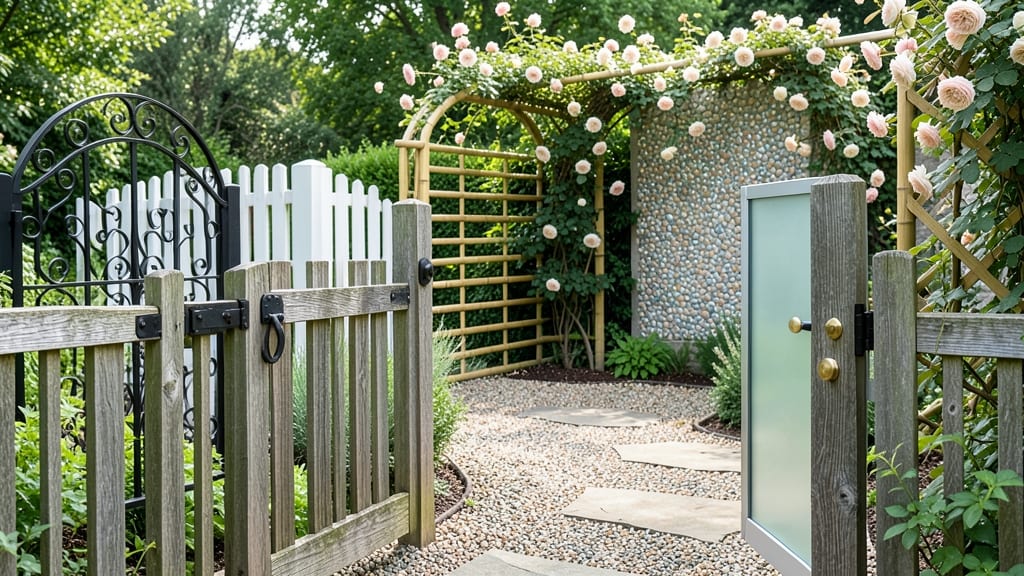
Garden fence gate ideas combine security and style by using materials like wood, metal, or wrought iron with decorative accents such as lattice panels, glass inserts, or arched designs. Select a look that complements your fence while keeping functionality and weatherproofing in mind.
Your garden fence gate isn't just a functional entry point—it's a statement piece that ties your yard's design together. 🌿 Whether you're going for a rustic wood gate with carved details or a sleek black iron design with geometric patterns, the right choice enhances curb appeal while serving its purpose.
I always recommend testing how the gate swings in your space before finalizing—nothing ruins a beautiful gate faster than a hinge that sticks or a latch that jams. Plus, consider adding subtle lighting or a decorative knocker to elevate the look further.
For example, a double-arched gate works beautifully with traditional picket fences, while a modern minimalist gate with clean lines pairs perfectly with contemporary vinyl fences. The key is balancing aesthetics with practical needs—like ensuring the gate's width accommodates wheelbarrows or strollers.
Don't overlook weather-resistant finishes either; a gate that looks stunning today may need costly repairs in a few years if it's not built to handle rain or sun.
💡 In This Article
- How to Match Garden Gate Designs to Your Fence Style
- Top 5 Functional Garden Gate Features for Security and Accessibility
How to match garden gate designs to your fence style
Material harmony is the foundation of cohesive fence and gate design. For example, a cedar gate with natural wood grain pairs seamlessly with traditional wooden fences, while a powder-coated steel gate in black or gray complements modern vinyl or aluminum fences perfectly.
The key is matching not just colors but textures—rough-hewn wood gates look stunning against rustic wooden fences, while smooth metal gates elevate contemporary styles. Climate matters too: cedar resists moisture but needs sealing, while wrought iron handles humidity but may rust without proper coating.
Color coordination extends beyond simple matching. Consider the architectural theme of your home and yard. A white picket fence with a black wrought iron gate creates a classic contrast, while a natural wood gate with earthy stains blends beautifully with stone pathways and garden beds.
For modern homes, gates with matte black finishes or brushed aluminum offer sleek, low-maintenance options that won't clash with glass or steel accents. Pro tip: Test paint samples in different lighting conditions—what looks perfect in daylight may appear stark under porch lights.
Architectural harmony goes beyond materials to include shape and scale. A double-arched gate works beautifully with traditional picket fences, creating a grand entrance that feels inviting. In contrast, a flat-panel gate with clean lines suits contemporary fences, maintaining a minimalist aesthetic.
Pay attention to proportions: a gate that's too wide or tall relative to your fence can overwhelm the space, while one that's too small may look out of place.
For example, a 4-foot-wide gate typically works well with standard 6-foot fences, but wider gates (up to 6 feet) can create dramatic entries for larger properties.
Decorative elements can bridge the gap between fence and gate. Lattice panels on a wooden gate mirror the look of lattice-topped fences, while glass inserts add a modern touch that pairs well with both traditional and contemporary styles.
For rustic charm, consider a gate with carved wooden details or blacksmith-style metalwork, which complement fences with similar textures. Even small touches like decorative finials or wrought iron scrollwork can elevate a gate from functional to focal point while maintaining visual continuity with your fence.
Don't overlook the practical aspects of material pairing. A wooden gate may require more maintenance than a metal one, especially in humid climates where rot can be an issue. Metal gates, while durable, may need periodic repainting or powder coating to prevent rust.
For example, in coastal areas, stainless steel or aluminum gates resist salt corrosion better than traditional iron. Always check the weight-bearing capacity of your gate hinges—heavy wrought iron gates need reinforced hardware to swing smoothly over time. 🔨
Seasonal considerations also play a role. Gates with weather-resistant finishes (like galvanized steel or treated wood) hold up better in rainy climates, while those with UV-protective coatings are ideal for sunny areas where fading is a concern.
For example, a polyurethane-sealed cedar gate can last 10-15 years with minimal upkeep, while an unprotected wood gate may need refinishing every 2-3 years**. Plan ahead by choosing materials that align with your local climate and maintenance tolerance.
Ultimately, the best gate design feels like a natural extension of your fence. Take time to visualize how the gate will look in all seasons and lighting conditions—what appears cohesive in daylight may reveal mismatches at dusk.
Start with your fence's dominant material and color, then select a gate that complements rather than competes. The result? A unified entryway that enhances both security and curb appeal. ✨