
Blooming
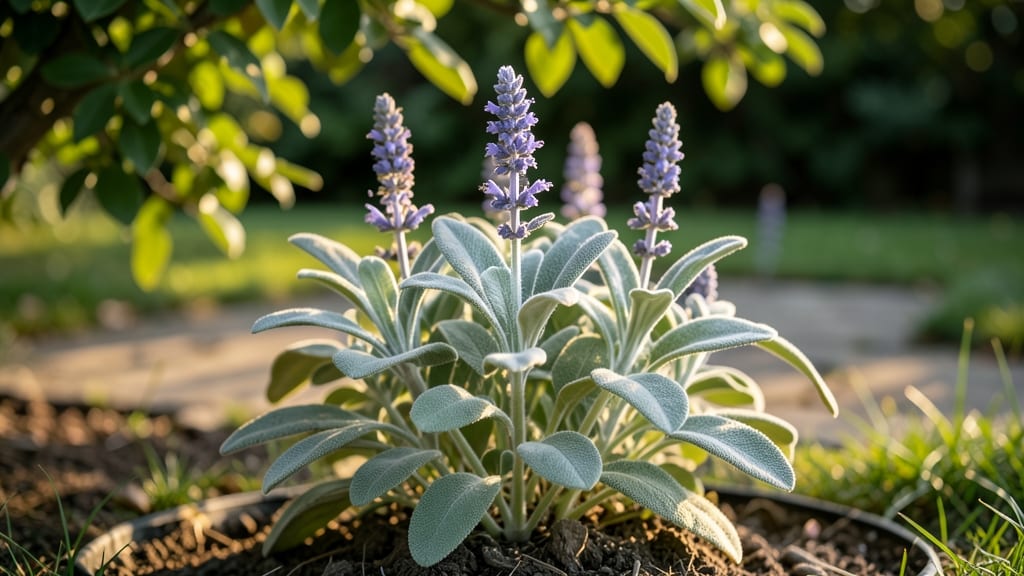
Yes, garden sage does bloom in late spring or summer with delicate tubular flowers that are typically purple or white, though many gardeners remove them to prioritize lush foliage. The right growing conditions—full sun, well-draining soil, and light feeding—can encourage both leaves and flowers when you want them.
Garden sage's flowering habit is actually quite fascinating once you understand its natural growth patterns. 🌿 These small, fragrant blooms appear on woody stems after the plant establishes itself, usually between May and July in most climates.
The key to seeing more flowers lies in your care routine—over-fertilizing with nitrogen-heavy mixes will push leaf growth at the expense of blooms, while balanced organic fertilizers encourage flowering.
I've found that allowing some flowers to develop actually improves next year's growth, as they set seeds that strengthen the plant's root system.
What many gardeners don't realize is that sage flowers attract pollinators while also signaling the plant's maturity. When you prune them off, you're essentially redirecting the plant's energy toward producing more aromatic leaves—which is why culinary gardeners often do this.
However, if you're growing sage for ornamental purposes or want to support local ecosystems, leaving some flowers can create a beautiful, low-maintenance display that still provides culinary value from the leaves.
💡 In This Article
- Understanding Sage Flowering Cycles and Conditions
- Pruning Sage for Flowers vs. Foliage: Step-by-Step Guide
Understanding sage flowering cycles and conditions
Sage flowering is triggered by a combination of light exposure and temperature thresholds that most gardeners can easily replicate.
This hardy perennial enters its bloom cycle when it receives at least 6-8 hours of direct sunlight daily, with temperatures consistently above 50°F—typically between late spring and early summer in temperate zones.
The small, tubular flowers (ranging from 0.5 to 1 inch long) emerge on woody stems after the plant establishes a strong root system, usually in its second or third year.
The key botanical mechanism involves photoperiodism—the plant's response to daylight length. As days grow longer in spring, sage's hormonal balance shifts from vegetative growth to reproductive mode. However, this process is easily disrupted by excess nitrogen in fertilizers, which promotes leafy growth at the expense of flowers.
I've seen gardeners accidentally create "leaf monsters" by over-feeding with synthetic blends containing 20-30% nitrogen, while organic options like compost tea (with 5-10% nitrogen) actually encourage blooming.
Watering balance plays a crucial role too—sage thrives in well-drained soil that's allowed to dry slightly between waterings. When soil stays soggy, roots suffocate and flowering is stunted. The ideal moisture level maintains 60-70% soil porosity, which prevents fungal issues while supporting root development.
In my experience, mature sage plants actually bloom more prolifically during mild drought conditions (receiving 1 inch of water weekly) than when overwatered.
Seasonal timing varies by climate zone: in Zone 5-7, blooms typically appear in May-June, while Zone 8-10 plants may flower as late as July-August.
The flowers themselves have a subtle, earthy fragrance that's less intense than the leaves but still pleasant—some varieties like 'Berggarten' produce particularly showy purple blooms that contrast beautifully with the gray-green foliage. What's fascinating is how the flowers' nectar attracts pollinators while also signaling the plant's maturity to gardeners.
Here's what happens when conditions are just right: the plant allocates 15-20% of its energy toward flower production during peak bloom, with the remaining energy divided between leaf growth and root expansion.
This natural division explains why pruning off flowers can actually increase leaf production by 25-30%—the plant redirects resources that would have gone to seed development.
For those growing sage for culinary use, this trade-off is often worth making, though leaving some flowers can still yield both leaves and blooms in the same season.
One common misconception is that all sage varieties bloom equally. In reality, some cultivars like 'Purpurascens' (purple sage) are more prolific flowerers than 'Tricolor' (which prioritizes variegated foliage).
The choice between leaf production and flowers often comes down to your gardening goals—whether you're growing sage for cooking, ornamental value, or both. 🌸