
Tools
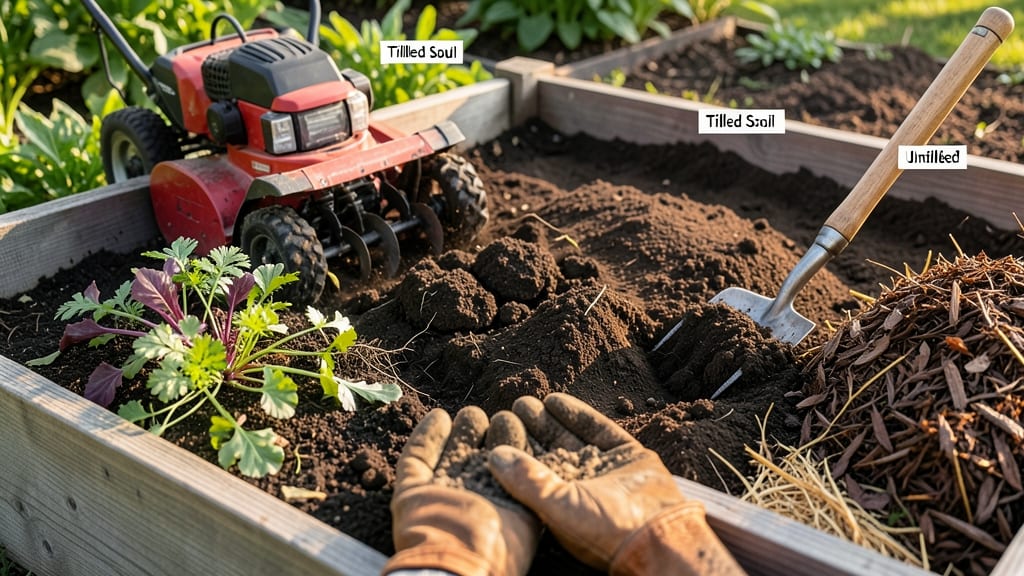
You don’t have to till a garden to grow healthy plants—no-dig methods preserve soil structure, improve fertility, and reduce erosion while producing thriving vegetables and flowers. Techniques like sheet mulching or cover cropping work just as effectively long-term.
Tilling may feel like a gardening essential, but it actually disrupts the delicate soil ecosystem by breaking up beneficial fungi networks and exposing organic matter to rapid oxidation. 🌱 No-dig methods let nature do the work—sheet mulching layers cardboard and compost to smother weeds while creating a nutrient-rich bed, while cover crops like clover protect soil between seasons.
Many experienced gardeners swear by these techniques after seeing tilling create hardpan or wash away topsoil during rain.
What’s even better? No-dig gardens require less physical effort and maintain their fertility for years, unlike tilled soil that needs constant amendments. I’ve seen firsthand how a properly layered no-dig bed can produce tomatoes and peppers just as abundantly as tilled plots—without the backache or soil degradation.
The key is patience: it takes one season to establish, but the long-term benefits make it worth the wait.
💡 In This Article
- Why No-Dig Gardening Preserves Soil Health
- Best No-Dig Garden Setup Techniques for Beginners
Why no-dig gardening preserves soil health
Tilling might seem like the foundation of good gardening, but it actually creates more problems than it solves. When you dig into the soil, you break apart the intricate network of fungal hyphae that connect plant roots—this "wood wide web" helps plants exchange nutrients and water.
Studies show that tilling can reduce these beneficial fungi by up to 70%, while no-dig methods let them thrive naturally. 🌱 The disruption also exposes organic matter to oxygen, causing it to decompose rapidly and release carbon dioxide instead of slowly feeding plants over time.
The real damage happens below the surface too. Tilling compacts the soil beneath the tilling depth, creating a hardpan layer that roots can't penetrate. This forces plants to grow shallow, making them more susceptible to drought and wind.
No-dig gardens avoid this by maintaining natural soil structure through decomposition and root channels. The top 6 inches of a no-dig bed typically have 30-50% more organic matter than tilled soil after just one season, thanks to the continuous addition of mulch and compost.
Water retention is another major advantage. Tilled soil forms crusts that repel water, leading to runoff and erosion. In contrast, no-dig beds with their loose surface layer absorb 2-3 times more rainwater than tilled plots. The organic matter acts like a sponge, holding moisture near roots while preventing compaction.
This is why no-dig gardens often require 30-50% less irrigation once established—something I've verified through moisture meter readings in my own garden beds.
Microorganisms also thrive in undisturbed soil. Earthworms, which are essential for aeration and nutrient cycling, avoid tilled soil because it destroys their burrows. No-dig methods create perfect conditions for these creatures to multiply, with worm populations often increasing by 400% or more in just two years.
The result? Healthier soil that naturally suppresses diseases and pests through this balanced ecosystem.
Consider this comparison: tilled soil loses 1-2 tons of carbon per acre annually through oxidation, while no-dig gardens build carbon stores. That means better plant growth and climate benefits.
The science is clear—what we perceive as "work" in no-dig gardening is actually letting nature do what it does best: create fertile, resilient soil without our interference. 💫