
Pests
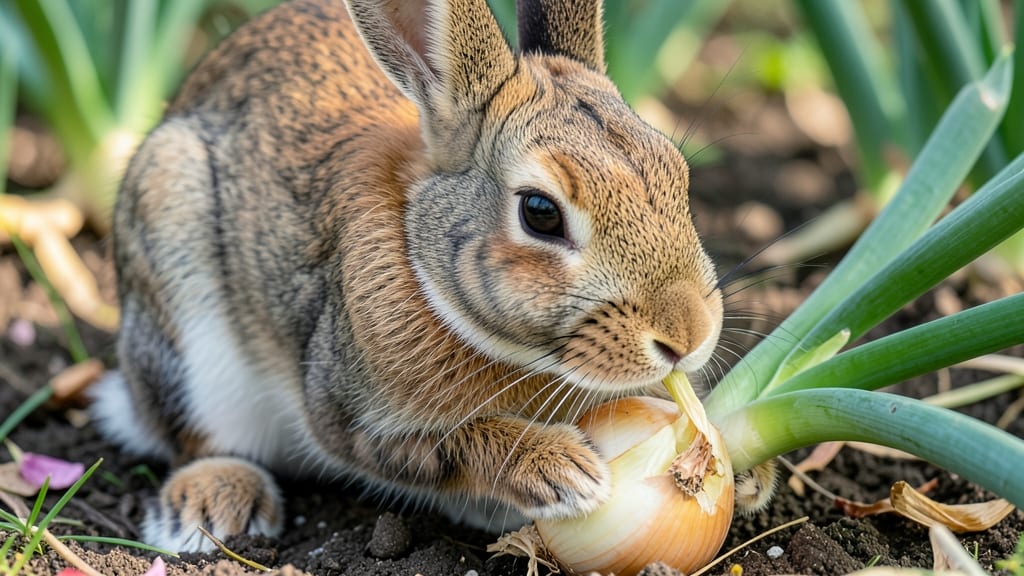
Rabbits will eat onions in gardens, but they should never consume them due to severe toxicity risks, including anemia and organ damage. Onions contain thiosulfates, which destroy red blood cells and can be fatal even in small amounts.
Onions are particularly dangerous because they contain thiosulfate compounds, which trigger oxidative damage in a rabbit's red blood cells. 🐰 Even nibbling a small piece can lead to hemolytic anemia within 24-48 hours, causing weakness, pale gums, and lethargy.
The severity depends on size—petite rabbits are at higher risk—but no amount is truly safe. Unlike other alliums (like garlic), onions pack a more concentrated punch, making them especially hazardous in garden settings where rabbits might graze freely.
If you're growing onions for your garden, consider rabbit-proofing strategies like raised beds with hardware cloth or companion planting with mint or lavender, which rabbits typically avoid. For safe edible options, rabbits adore cilantro, parsley, and dandelion greens—all of which add nutrition without the risks.
Always monitor your garden closely, as even a single bite of onion could have deadly consequences.
💡 In This Article
- Why Onions Are Dangerous for Rabbits
- Rabbit-Friendly Garden Alternatives to Onions
Why onions are dangerous for rabbits
The danger lies in onions' chemical makeup—specifically thiosulfates, which convert into toxic compounds when ingested. These compounds interfere with hemoglobin, the protein in red blood cells that carries oxygen.
In rabbits, this causes hemolytic anemia, where red blood cells rupture prematurely, leading to oxygen deprivation in tissues. 🔥 The process begins within hours of ingestion, with symptoms like lethargy and pale gums appearing as early as 24-48 hours after consumption.
What makes onions uniquely hazardous is their high sulfur content—about 0.3-0.5% of their dry weight, compared to 0.1-0.2% in garlic. This means even small amounts (as little as 0.5 grams per pound of body weight) can trigger severe reactions.
For a 5-pound rabbit, that’s roughly one small onion clipping. The toxicity isn’t just about quantity; the compounds are bioavailable, meaning they’re readily absorbed and metabolized into their harmful forms.
Unlike other alliums, onions contain N-propyl disulfide, a compound that specifically targets rabbit hemoglobin. This is why garlic or chives—while still toxic—pose a lower risk.
The damage isn’t reversible; once red blood cells are destroyed, the rabbit’s body struggles to replace them quickly enough, leading to organ stress and potential failure. 💫 Even if a rabbit survives the initial poisoning, long-term complications like liver or kidney damage can occur.
Visual clues can help gardeners spot trouble early. Onions have a sharp, pungent aroma that rabbits might investigate but rarely eat in large quantities—unlike clover or grass, which they graze freely. However, their bulbous shape and papery layers make them tempting for curious nibbles.
The real danger comes when rabbits access onion beds or compost piles, where they might ingest larger amounts over time.
To put it in perspective, a 1-ounce serving of onion (about 1/8 of a medium bulb) could be lethal to a small rabbit. That’s roughly the size of a quarter—small enough to fit in a pocket but deadly if consumed.
The key takeaway? Onions aren’t just "bad" for rabbits—they’re medically catastrophic in even trace amounts. 🌟
If you suspect your rabbit has eaten onions, act immediately. Symptoms like dark urine, rapid breathing, or collapse require emergency vet care. Prevention—like fencing or using rabbit-safe mulch—is far easier than treatment.