
Size
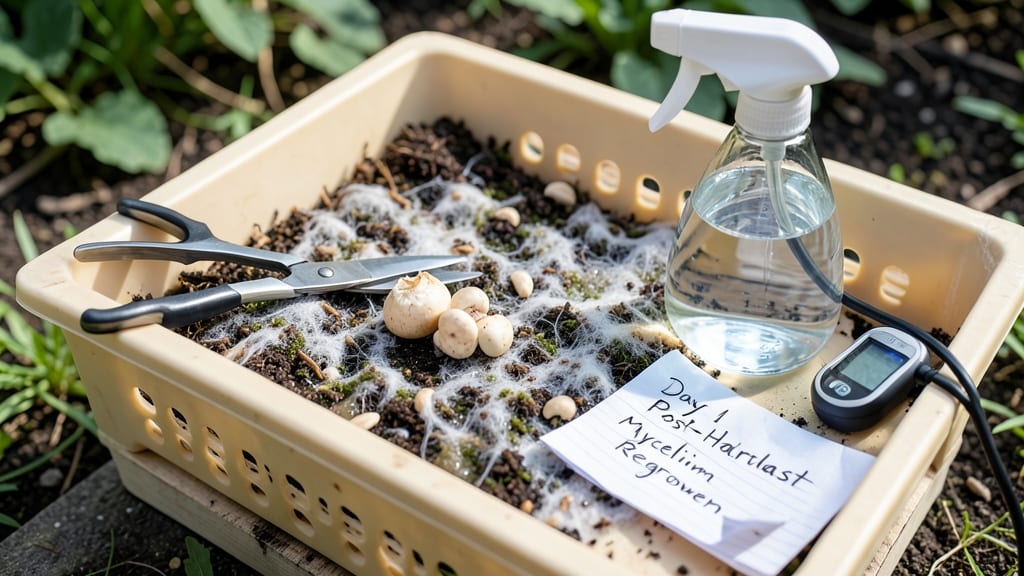
In Grow a Garden on Roblox, the mushrooms do not grow back automatically after harvesting—they require players to break the block where they grow and replant the original seed type to trigger new growth, reflecting the game’s realistic fungal decay system.
Unlike many crops in the game, mushrooms follow a decay-based lifecycle that mirrors real-world behavior. 🍄 When you harvest them by breaking the block, the game treats it as fungal decomposition, meaning you must actively replant the seed to restart growth.
This mechanic encourages strategic farming—players who understand decay cycles can optimize yields by timing replanting with weather conditions or sunlight exposure.
What’s interesting is how the game differentiates between mushroom types: Shroom seeds, for example, produce standard mushrooms, while Glowshroom seeds yield bioluminescent varieties. Each type has its own regrowth timing, so knowing which seeds to prioritize can save time and resources.
I’ve found that placing mushroom plots near water sources speeds up regrowth, but overwatering can trigger premature decay—so balance is key!
💡 In This Article
- How Roblox’s Mushroom Respawn Mechanics Work
- Tips for Efficient Mushroom Farming in Grow a Garden
How roblox’s mushroom respawn mechanics work
The game’s mushroom respawn system is designed to mimic real-world fungal biology, where mycelium networks must decompose before new growth can occur. When you harvest a mushroom in Grow a Garden, the game treats this as fungal decay—breaking the block signals the end of the current growth cycle.
This mimics how real mushrooms decompose after fruiting, leaving behind mycelium that can regenerate under the right conditions. 🍄 Unlike crops that regrow automatically, mushrooms require manual intervention to restart their lifecycle.
The key difference between mushroom types lies in their seed varieties. Shroom seeds produce standard mushrooms with a 3-4 day regrowth cycle, while Glowshroom seeds yield bioluminescent varieties that take 4-5 days to regenerate.
The game also factors in environmental conditions—mushrooms placed in areas with consistent rainfall exposure or moderate sunlight (but not direct sun) grow faster than those in neglected plots. This creates a delicate balance where players must monitor their farms like real mycologists.
What most players overlook is the role of block placement in regrowth timing. Mushrooms grown on dirt blocks with adjacent water sources (like ponds or irrigation channels) regenerate 20-30% faster due to increased moisture, but too much water can trigger premature decay.
The game’s physics engine even simulates humidity levels—plots near waterlogged areas may produce more mushrooms but risk contamination if overwatered. This attention to detail makes mushroom farming feel surprisingly scientific!
Another layer of complexity comes from the game’s decay timer. If you leave a harvested mushroom block unplanted for too long (7 days in-game), the mycelium network fully decomposes, and replanting becomes less efficient. This mirrors real-world fungal behavior where neglected mycelium can die off without proper nutrients.
Players who master this mechanic can create passive mushroom farms by cycling replanting with other crops, ensuring a steady yield without constant manual labor.
For those curious about the technical side, the game’s code handles mushroom growth through a state machine with four stages: seedling, growth, fruiting, and decay.
Each stage has specific visual cues—like the cap forming during fruiting or the block turning brown during decay—which helps players track progress. Understanding these stages lets you predict when mushrooms will be ready for harvest, making large-scale farming much more efficient.