
Blooming
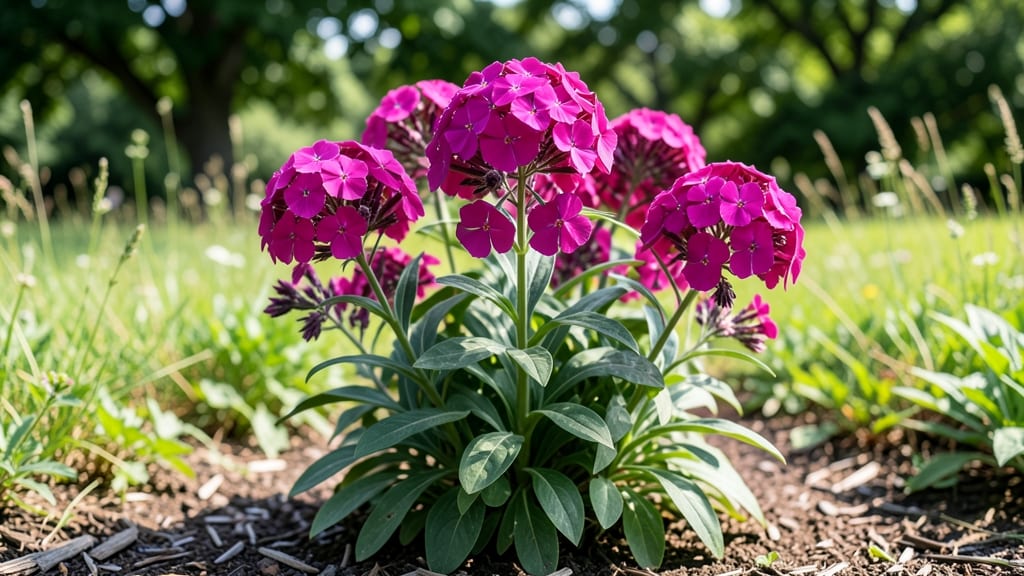
Garden phlox don't bloom all summer long—they typically flower from mid-to-late summer (July through August), though early varieties may start in June and late cultivars can extend into September with proper care. Deadheading spent blooms encourages prolonged flowering and prevents seed formation, which drains energy from the plant.
While garden phlox are summer stars, their bloom duration depends heavily on your region and care routine. 🌸 In cooler climates like USDA zones 3-5, blooms often peak in July and taper by early August, while warmer zones (6-9) can enjoy extended displays into September.
The key to longer blooms lies in consistent deadheading—removing faded flowers redirects the plant's energy toward new buds rather than seed production. I've found that pairing deadheading with a light fertilizer boost (like a balanced 10-10-10) every 4-6 weeks can extend the show by 2-3 weeks in optimal conditions.
What many gardeners overlook is how daylight hours influence phlox. These plants thrive on long summer days, but once daylight begins shortening in late August, their natural cycle winds down. That's why late-season varieties—like 'David' or 'Blue Paradise'—are bred specifically to push those boundaries.
For maximum impact, plant early, mid, and late varieties together to create a continuous bloom sequence from June through September.
💡 In This Article
- Phlox Blooming Seasons by Variety and Climate Zones
- Deadheading and Care Tips to Extend Phlox Blooms
Phlox blooming seasons by variety and climate zones
Garden phlox are photoperiod-sensitive, meaning their blooming cycles are triggered by daylight length rather than temperature alone. Most varieties begin flowering when daylight hours reach 14-15 hours—typically in late June or early July—peaking during the longest days of summer.
This explains why early bloomers like 'Blue Giant' often start in June, while late varieties such as 'David' can extend into September. The plant's internal clock, regulated by a protein called CONSTANS, detects these long days and initiates flower bud formation.
Climate zones dramatically affect bloom duration. In cooler northern regions (USDA zones 3-5), where summer temperatures average 70-75°F, phlox typically bloom for 4-6 weeks from July to early August.
However, in warmer southern zones (6-9), where temperatures can exceed 85°F, blooms may start later but last longer—sometimes 8-10 weeks—due to extended favorable conditions. For example, in zone 8, 'Blue Paradise' often continues flowering until early September, while in zone 5, the same variety may finish by mid-August.
Variety selection is the easiest way to stretch your phlox season. Tall garden phlox (like 'Blue Moon') bloom 2-3 weeks earlier than border phlox (such as 'David'), while woodland phlox (like Phlox divaricata) often bloom in late spring to early summer instead.
Planting a mix of early, mid, and late varieties creates a staggered bloom effect, ensuring continuous color from June through September. For instance, pairing 'Blue Giant' (early) with 'Blue Paradise' (late) can extend your display by up to 12 weeks.
Soil temperature also plays a subtle but important role. Phlox roots prefer 60-65°F soil for optimal growth. In cooler climates, slower root development may delay flowering until July, while warmer soils in southern gardens can trigger earlier blooms.
Mulching with 2-3 inches of organic matter helps regulate soil temperature, creating more consistent conditions for prolonged flowering.
Daylight hours shorten after the summer solstice, which naturally signals phlox to wind down. However, some late-season varieties have been bred to resist this cycle longer.
For example, 'Blue Paradise' produces flowers on secondary stems that form after the initial bloom, allowing it to continue producing buds even as daylight shortens. This genetic adaptation is why it's often recommended for extending the season in all but the coldest zones.
Regional microclimates can create surprising variations. Coastal areas with cooler summer temperatures may see delayed blooms, while inland zones with hotter summers might experience earlier starts.
For instance, phlox in Portland, OR (zone 8) often bloom 1-2 weeks later than those in San Diego, CA (zone 10), despite being in similar zones, due to ocean influence. Pay attention to your local patterns and adjust planting times accordingly.
What most gardeners don't realize is that phlox blooms are determinate, meaning each stem produces flowers in a single flush before setting seed. This is why deadheading becomes critical—removing spent blooms prevents seed formation and redirects the plant's energy toward producing new stems.
Without intervention, a phlox plant may produce only 3-5 weeks of continuous blooms, but with proper care, that can stretch to 8-10 weeks. 🌸