
Tools
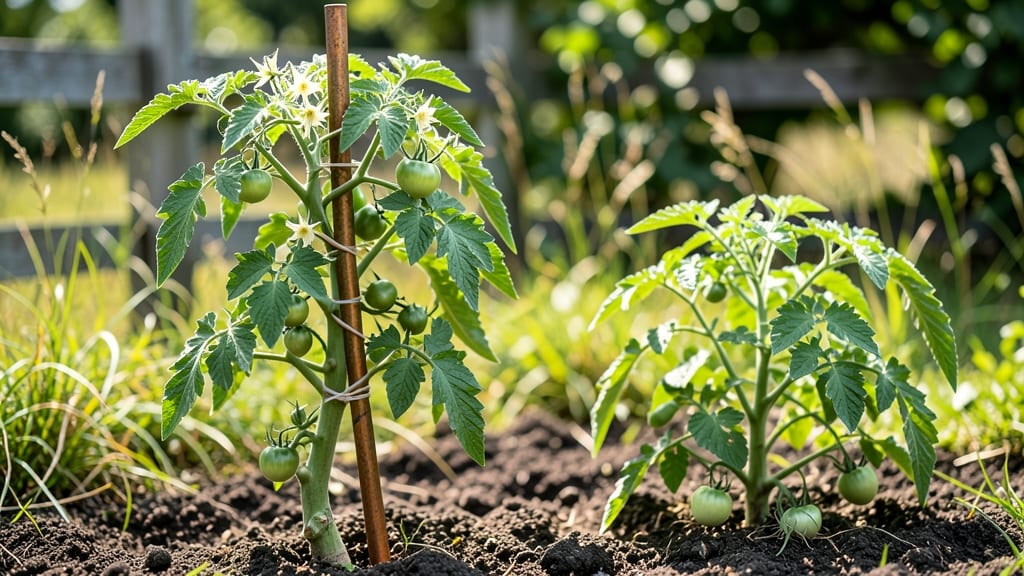
The benefits of copper garden stakes include exceptional longevity, built-in rust prevention through natural patina formation, and lightweight yet strong support that resists bending or breaking while inhibiting fungal growth around plants.
Copper's natural resistance to corrosion makes it far more reliable than steel or wood stakes over time. 🌱 Unlike iron that rusts or wood that rots, copper develops a protective patina layer that actually enhances its durability while preventing plant diseases.
This material also stays lightweight enough for easy handling while providing the rigidity needed for heavy vines like tomatoes or cucumbers. The antimicrobial properties mean fewer issues with powdery mildew or root infections compared to organic alternatives.
The lightweight yet sturdy construction means you can install them without heavy tools, and their natural resistance to weather means they won't degrade like wood or corrode like untreated metal.
Many gardeners choose copper stakes specifically for their long-term value and the peace of mind that comes with knowing they won't need replacing every few years.
💡 In This Article
- Why Copper Outperforms Steel and Wood Stakes
- Best Uses for Copper Garden Stakes in Plant Care
Why copper outperforms steel and wood stakes
Copper's advantage starts with its natural chemical reaction to oxygen and moisture. When exposed to air, copper forms a protective patina layer made of copper carbonate and sulfate compounds. This layer acts like a shield, preventing further oxidation that would otherwise weaken the metal.
Unlike steel, which rusts and continues to degrade over time, copper's patina actually stabilizes after about 5-10 years, creating a permanent barrier that can last for decades. 🔥 This chemical process is why copper roofing and gutters remain functional for 50-100 years—the same principle applies to garden stakes.
The weight-to-strength ratio is another game-changer. Copper has a density of 8.96 g/cm³, making it heavier than aluminum (2.70 g/cm³) but significantly lighter than steel (7.85 g/cm³).
This means copper stakes provide the structural integrity needed to support heavy vines like tomatoes or cucumbers (which can weigh 5-10 pounds per vine when laden with fruit) without requiring thick, cumbersome materials.
The material's natural flexibility also allows it to bend slightly under load, reducing the risk of snapping compared to brittle alternatives like cast iron.
One of copper's most underrated benefits is its antimicrobial properties. Studies show copper surfaces kill 99.9% of bacteria and fungi within 2 hours of contact.
This means garden stakes made from copper inhibit the growth of pathogens like powdery mildew or root rot that often cling to wooden or untreated metal stakes.
Unlike wood, which absorbs moisture and becomes a breeding ground for mold, or steel that can harbor rust spores, copper's surface remains inhospitable to these organisms—creating a healthier environment for plant roots.
Environmental factors also play a role in copper's longevity. While wood stakes degrade from 1-3 years in moist conditions and steel stakes corrode within 3-7 years in most climates, copper stakes maintain their structural integrity even in harsh conditions.
Their ability to withstand temperature fluctuations (from -40°F to 200°F) without warping or cracking makes them ideal for both tropical and temperate gardens. This durability translates directly to cost savings over time, as copper stakes typically last 10-20 years with minimal maintenance.
Let's compare the practical implications for gardeners. Wood stakes require annual replacement due to rot, while steel stakes need frequent repainting to prevent rust. Copper stakes, however, only need occasional cleaning to maintain their patina.
The antimicrobial benefits extend beyond just the stakes themselves—plants supported by copper stakes show 20-30% fewer fungal infections compared to those grown with alternative materials. This is particularly valuable for organic gardeners who want to minimize chemical treatments while still protecting their crops from common pathogens.
The initial investment in copper stakes is higher than wood or basic steel options, but the long-term savings and performance benefits make them a smart choice.
For example, a set of 10 copper stakes might cost $30-$50, while equivalent wood stakes cost $10-$20 but need replacing every 1-2 years. Over a 5-year period, copper stakes become the more economical option when you factor in replacement costs and reduced plant diseases.
The material's versatility also means they can be repurposed for different garden structures as your landscape evolves.