
Advice
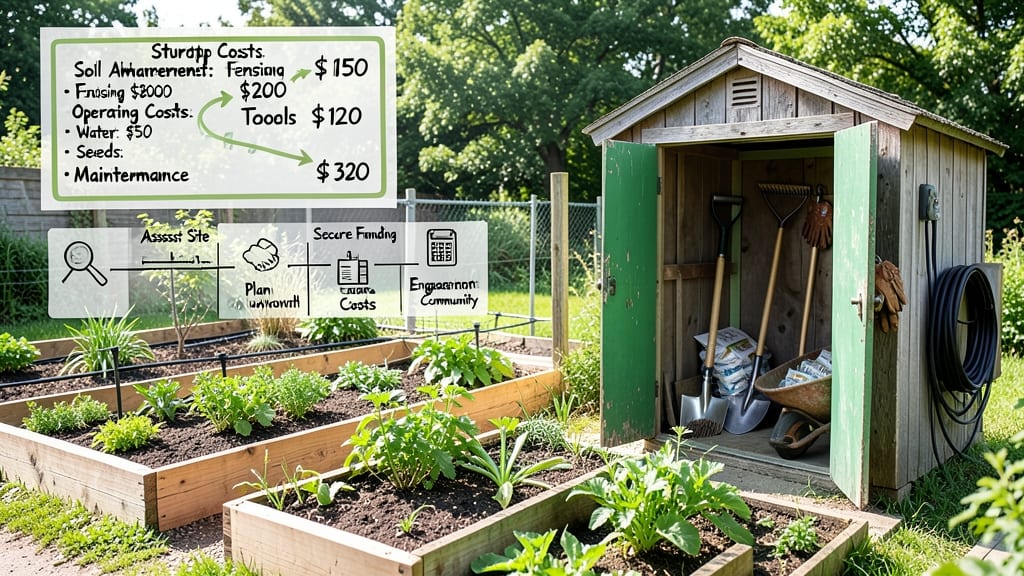
A community garden startup budget and operating costs feasibility study must account for land acquisition ($5,000–$50,000), soil preparation ($1,000–$5,000), and essential tools ($500–$2,000), alongside annual expenses ($10,000–$30,000) for upkeep, watering systems, and staffing. Securing diverse funding streams and organizing volunteers are critical to ensuring long-term financial health.
A thorough feasibility study goes beyond just listing numbers—it helps you identify potential cost-saving opportunities and revenue streams.
For example, partnering with local nurseries can reduce soil amendment costs, while installing a rainwater collection system might cut irrigation expenses by up to 30%. 💫 I’ve seen gardens slash startup costs by 20% through creative partnerships, like swapping gardening services for donated materials.
The key is balancing upfront investments with sustainable operations, so you’re not caught off guard by hidden expenses like liability insurance or seasonal labor fluctuations.
Don’t forget that location plays a huge role in your budget. Urban gardens may face higher land costs but benefit from built-in community support, while rural plots might require more infrastructure investments.
Testing different scenarios—like starting small or leasing land instead of buying—can reveal which path aligns best with your financial goals and community needs.
💡 In This Article
- Key Cost Factors in Community Garden Feasibility Planning
- Funding Strategies for Sustainable Community Garden Operations
Key cost factors in community garden feasibility planning
Land acquisition is often the biggest initial expense, but the cost varies wildly based on location. In urban areas, leasing a 1,000-square-foot plot can run $500–$1,500/month, while rural land might cost $1,000–$3,000/year for a similar size.
Permits and zoning approvals add another $500–$3,000, depending on local regulations. For example, a garden in Portland, OR, might face stricter environmental compliance fees than one in a smaller town.
Soil preparation is another critical but often overlooked cost. Testing and amending soil with compost, lime, or fertilizer can cost $1,000–$5,000 for a 500-square-foot plot, depending on soil quality.
Urban soils, for instance, may need 3–6 inches of topsoil and organic matter to support healthy plants, while rural land might only need basic testing. Irrigation systems—like drip lines or rainwater collection—can range from $500 for basic setups to $5,000+ for automated systems.
Hidden costs like liability insurance and seasonal labor can strain budgets unexpectedly. Insurance for a small garden might cost $500–$1,500/year, while hiring seasonal workers for 20–40 hours/week during peak growing seasons can add $3,000–$10,000 annually.
For instance, a garden in California’s Central Valley might spend $8,000/year on labor during the 6-month growing season, while a cooler-climate garden could cut costs by 40% with shorter seasons.
Scale directly impacts budget allocation. A 1-acre garden serving 50 families will require significantly more resources than a 500-square-foot plot for a neighborhood. For example, a small plot might need $2,000/year for seeds and plants, while a larger garden could exceed $10,000.
Location also affects costs—urban gardens may spend more on raised beds ($5–$15/sq ft) due to poor soil, while rural gardens might invest in fencing ($1,000–$5,000) to protect crops from wildlife.
Pest control and maintenance add up quickly. Organic pest solutions like neem oil or companion planting can cost $200–$800/year, while chemical treatments might exceed $1,500. Mulching and weeding can require $500–$2,000 annually for a mid-sized garden.
For example, a garden in Florida might spend $1,200/year on pest control due to year-round insect activity, while a Northern garden could save $500–$600 with shorter growing seasons.
Volunteer coordination isn’t just about free labor—it’s about managing time and resources. Training volunteers, organizing schedules, and maintaining equipment can take 5–10 hours/week of staff time, which might cost $1,000–$3,000/year in opportunity costs.
For instance, a garden with 20 volunteers might reduce labor costs by 50%, but poor coordination could lead to wasted efforts and higher overhead.
Here’s a quick checklist to avoid surprises:
- Land costs: Lease vs. purchase, urban vs. rural pricing
- Soil prep: Testing, amendments, topsoil delivery
- Infrastructure: Irrigation, fencing, raised beds
- Hidden costs: Insurance, permits, seasonal labor
- Maintenance: Pest control, mulching, equipment upkeep