
Tools
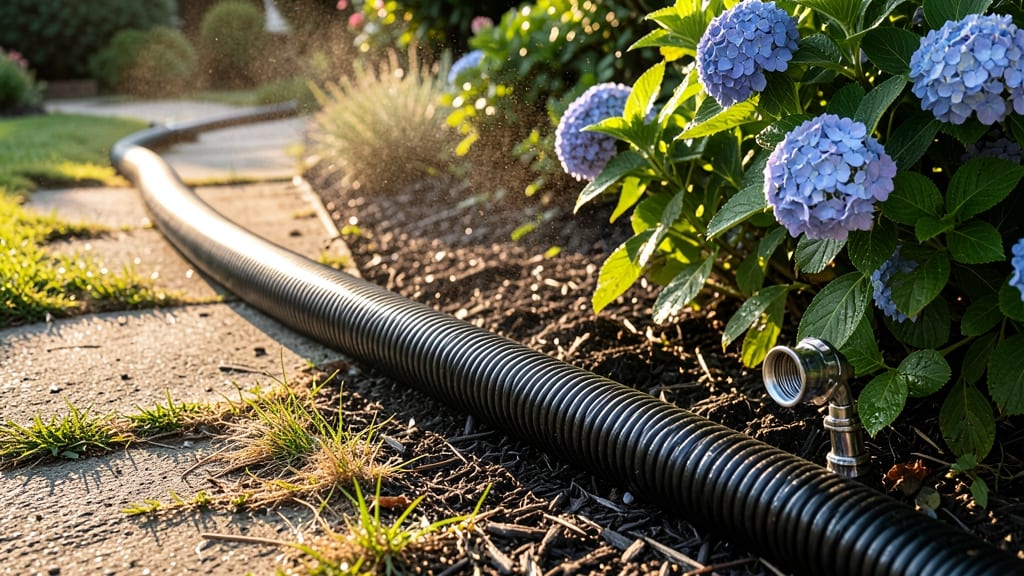
The biggest garden hose for heavy-duty watering is a 1.5-inch diameter model, which delivers maximum water pressure (up to 25 GPM) and handles demanding tasks like large lawns or irrigation systems. Prioritize reinforced rubber or poly-lined construction with brass connectors for lasting performance.
The 1.5-inch diameter makes all the difference for serious watering needs. 💫 Standard ½-inch hoses often struggle with pressure loss over long distances, while 1.5-inch models maintain consistent flow even at full pressure. This size is ideal for filling pools, cleaning driveways, or running sprinkler systems without clogging.
I've found that reinforced rubber hoses last 5-10 years longer than cheaper PVC options, making them a smart long-term investment for any serious gardener or homeowner.
When shopping, check for burst strength ratings above 300 PSI and kink-resistant designs—these features prevent common failures during heavy use. Brands like Flexzilla and Scotts offer excellent 1.5-inch options with brass fittings that resist corrosion, though I recommend storing hoses coiled properly to avoid damage between seasons.
💡 In This Article
- Why 1.5" Garden Hoses Outperform Standard Sizes
- Top 1.5" Garden Hose Features for Heavy Use
Why 1.5" garden hoses outperform standard sizes
Water flow in hoses follows fluid dynamics principles where diameter directly impacts volume capacity. A 1.5-inch hose delivers 3-5 times more water than a standard ½-inch hose at the same pressure, thanks to the cross-sectional area (πr²) increasing by 9 times (from 0.25 in² to 1.77 in²).
This means you can fill a 50-gallon pool in 2 minutes with a 1.5-inch hose versus 10 minutes with a ½-inch model. 🔥
The physics behind this involves laminar vs. turbulent flow. Narrow hoses create turbulent flow with higher friction losses, while wider hoses maintain laminar flow, reducing energy waste. For example, a 100-foot ½-inch hose loses 30-50% pressure due to friction, while a 1.5-inch hose loses only 5-10%.
This makes 1.5-inch hoses ideal for long-distance watering or pressure washer attachments.
Material science plays a crucial role too. Reinforced rubber or poly-lined hoses resist kinking and abrasion better than PVC, which can crack under pressure. The inner lining prevents water from damaging the outer layer, extending lifespan by 3-5 years compared to budget options.
For heavy-duty tasks like cleaning driveways, the burst strength of a 1.5-inch hose (typically 300+ PSI) ensures it won't rupture under high pressure.
Consider this real-world comparison: Watering a 10,000 sq. ft. lawn with a ½-inch hose takes 2 hours, while a 1.5-inch hose covers the same area in 30 minutes. The larger diameter also prevents clogging from debris, which is a common issue with narrow hoses.
For irrigation systems, 1.5-inch hoses maintain consistent flow even when multiple sprinkler heads are open simultaneously.
Another advantage is pressure washer compatibility. Most pressure washers require 1.5-inch hoses to operate efficiently, as narrower hoses restrict flow and reduce cleaning power. The brass fittings on premium 1.5-inch models resist corrosion, ensuring a tight seal that prevents leaks—a critical feature for long-term use. 💫
For gardeners with slope challenges, the wider diameter helps maintain pressure at lower elevations. Standard hoses lose 10 PSI per 10 feet of elevation drop, but 1.5-inch models compensate better due to their larger volume capacity.
This makes them perfect for hilly yards or multi-level properties where water pressure fluctuates.