
How To
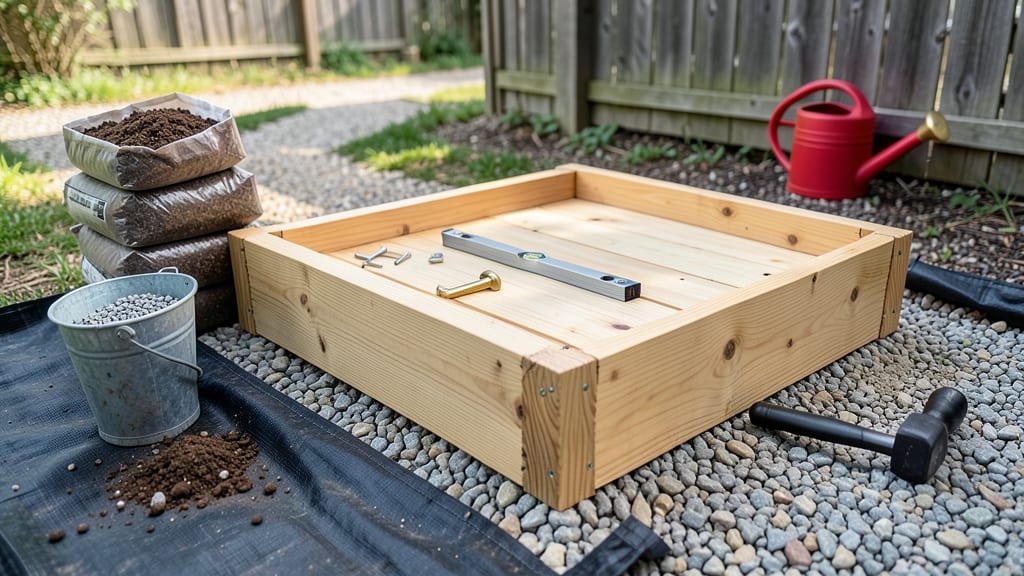
You can put a raised garden bed on concrete with proper weight distribution and stabilization, but the combined weight of the frame, soil, and plants must stay under the concrete’s load-bearing limit—usually 400–600 PSF for residential slabs. Stabilize with leveling pads, gravel bases, or adjustable feet to prevent cracking or sinking.
Concrete slabs are rigid but not infinitely strong, and a poorly supported raised bed can cause uneven settling or even cracks over time. 🌱 The key is balancing weight distribution: heavier materials like stone or metal frames require wider support bases, while lighter cedar or composite frames offer more flexibility.
I always recommend testing your slab’s load capacity first—check with a structural engineer if you’re unsure, as older homes or thinner slabs may have lower limits. Even with proper support, avoid placing beds near expansion joints where the concrete naturally shifts.
For stabilization, I’ve found gravel bases work best for most DIY projects—they spread weight evenly and allow drainage, while adjustable feet help level uneven slabs. If your concrete has cracks or minor damage, a thin layer of leveling compound before adding the base material can prevent future issues.
The goal is to mimic how beds would sit on soil: stable, breathable, and capable of handling seasonal weight shifts from watering and plant growth.
💡 In This Article
- Load-Bearing Limits for Concrete and Raised Garden Beds
- Best Stabilization Methods for Raised Beds on Concrete
Load-bearing limits for concrete and raised garden beds
Concrete slabs are designed to handle specific pressure, measured in pounds per square foot (PSF), which varies based on thickness and mix composition. Most residential slabs support 400–600 PSF, but this can drop significantly if the slab is old, cracked, or improperly reinforced.
A standard 4'x8' raised bed filled with 12 inches of garden soil weighs roughly 2,000–3,000 pounds—that’s 75–110 PSF per square foot of bed surface.
However, heavier materials like cedar frames (10–15 PSF) or metal frames (20–30 PSF) add to the total load, which must be distributed across the slab’s entire footprint.
The science here involves compressive strength and weight distribution. Concrete cracks when stress exceeds its tensile strength—typically 300–500 PSI for residential slabs. A concentrated load (like a heavy metal bed) can create localized stress points, while a wider base spreads the weight more evenly.
For example, a 6-foot-wide bed on a 4-foot-wide slab would concentrate stress, while the same bed on a 12-foot-wide slab would distribute it safely.
Soil density also matters: Loamy garden soil weighs about 80–100 pounds per cubic foot, while sandy soil is lighter (70–80 pounds), reducing total load.
To calculate your bed’s total load, multiply the frame’s weight by its area, then add the soil and plant weight. For instance, a 4'x8' cedar bed with 12" of soil and 200 pounds of plants would weigh roughly 2,500 pounds.
Divide this by the bed’s footprint (32 sq ft) to get 78 PSF—well within safe limits. But if you use a heavy metal frame or 18" of soil, the load jumps to 120–150 PSF, requiring wider support or lighter materials.
Always err on the side of caution: if your slab feels spongy or has visible cracks, consult a structural engineer before proceeding.
Another critical factor is moisture expansion. Concrete absorbs water and expands slightly, which can push against the bed’s base over time. If your slab isn’t properly sealed, seasonal moisture changes can cause the bed to shift or even lift slightly.
This is why gravel bases (with 3–4 inches of crushed stone) are ideal—they allow drainage and prevent water from pooling beneath the bed. Without proper drainage, soil moisture can seep into cracks, weakening the slab’s structure over time.
Think of it like a car’s suspension system: even distribution and flexibility prevent damage.
For visual clarity, here’s how different materials compare in terms of load impact:
- Cedar frames: 10–15 PSF (lightest option, but requires regular maintenance)
- Composite frames: 15–20 PSF (durable, rot-resistant, slightly heavier)
- Metal frames: 20–30 PSF (heaviest, but longest-lasting)
- Soil depth (12" vs. 18"): 75 PSF vs. 110 PSF difference
- Plants (mature garden): 20–50 PSF (varies by crop density)
Pro tip: If your slab’s load capacity is borderline, opt for a narrower bed (e.g., 3–4 feet wide) to reduce soil weight while keeping the same length. This cuts the total load by nearly half while maintaining usability. 💫