
Tools
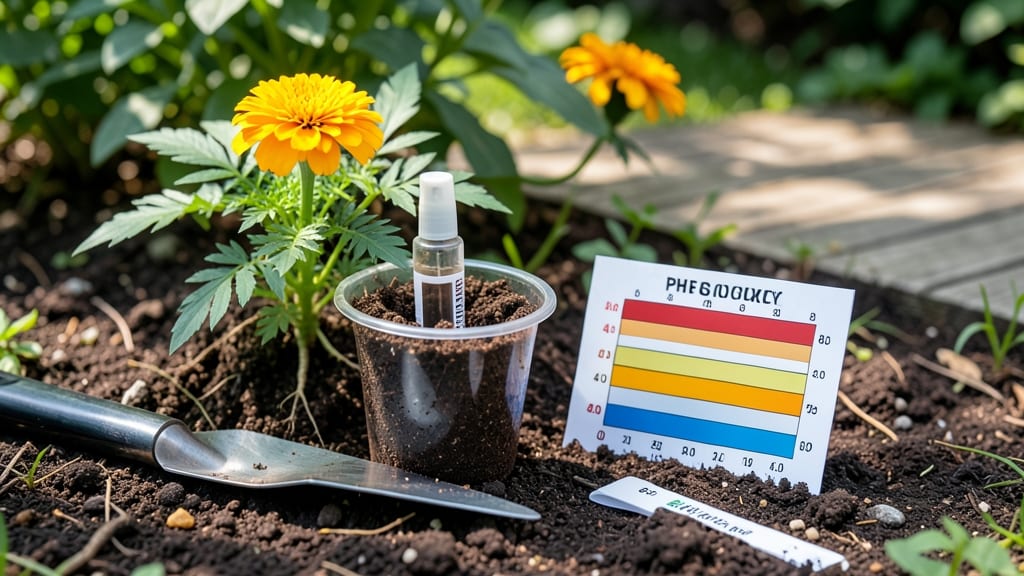
For garden soil pH, most vegetables and flowers thrive in a neutral range of 6.0 to 7.0, while acid-loving plants like blueberries need 4.5 to 5.5 and alkaline-tolerant plants like lavender prefer 7.0 to 8.0. Regular pH testing keeps your garden healthy and productive.
Soil pH directly impacts which nutrients plants can absorb—like phosphorus and calcium at neutral pH, or iron and manganese in acidic conditions. 🔥 A pH outside these ranges can lock out essential nutrients or even introduce toxic levels of aluminum or manganese.
For example, tomatoes and peppers struggle below 6.0, while rhododendrons and azaleas won't grow above 5.5. Testing every spring before planting gives you time to make adjustments with amendments like sulfur or lime.
Most gardeners find that a simple pH test kit (around $10) gives accurate enough results, though lab testing provides more precise data for large gardens. I always recommend testing multiple spots in your yard since pH can vary significantly even within a few feet.
Once you know your baseline, you can fine-tune your soil amendments for each plant type's specific needs.
💡 In This Article
- How Soil pH Affects Plant Nutrient Availability
- Adjusting Garden Soil pH: Step-by-Step Methods
How soil pH affects plant nutrient availability
Soil pH determines which nutrients become available to plants by altering their chemical forms. At a neutral pH of 6.0-7.0, essential nutrients like phosphorus, calcium, and magnesium are most soluble and accessible to roots.
For instance, phosphorus—critical for root development and flowering—becomes locked in insoluble forms when soil pH drops below 5.5 or rises above 7.5. This is why tomatoes, peppers, and most vegetables struggle in acidic soil: their roots can't access enough phosphorus, even if the soil appears rich in organic matter.
The availability of micronutrients shifts dramatically with pH changes. Iron and manganese, vital for chlorophyll production, become more soluble in acidic conditions (pH 5.5-6.5), which is why acid-loving plants like blueberries and hydrangeas thrive in these environments.
Conversely, alkaline soils (pH 7.0+) can cause iron deficiency in plants, leading to yellowing leaves—a condition called chlorosis. The soil's microbial community also responds to pH: beneficial bacteria and fungi that help break down organic matter prefer neutral to slightly acidic ranges (6.0-7.0).
Extreme pH levels create additional problems. Soil with a pH below 5.0 becomes toxic to most plants due to high concentrations of soluble aluminum and manganese, which damage root cells. Similarly, soils above pH 8.0 can cause deficiencies in zinc and copper, both essential for enzyme function.
The texture of the soil also changes—acidic soils often become compacted, while highly alkaline soils may develop a crusty surface that inhibits water penetration. These physical changes further stress plant roots, reducing their ability to absorb water and nutrients.
What's fascinating is how plants adapt to their soil's pH. For example, blueberries release organic acids through their roots to acidify the surrounding soil, creating a micro-environment that suits their needs.
This natural process shows how critical pH management is for garden success. Without proper pH balance, even the most nutrient-rich soil can fail to support healthy plant growth. 🌱
Testing your soil's pH isn't just about numbers—it's about understanding the invisible chemistry happening below ground. A simple test reveals whether your garden is primed for optimal nutrient uptake or needs adjustments to unlock its full potential.
For instance, if your soil tests at 5.0 but you want to grow roses (which prefer 6.0-7.0), you'll need to raise the pH gradually to avoid shocking plant roots with sudden chemical changes.
Consider this analogy: soil pH is like the pH of your digestive system. Just as your stomach needs to be acidic to break down food, plants need specific pH conditions to access the nutrients they need to grow.
Too high or too low, and the system fails—whether it's indigestion in humans or stunted growth in plants. The key is finding that sweet spot where both the soil and the plants can thrive together.