
Advice
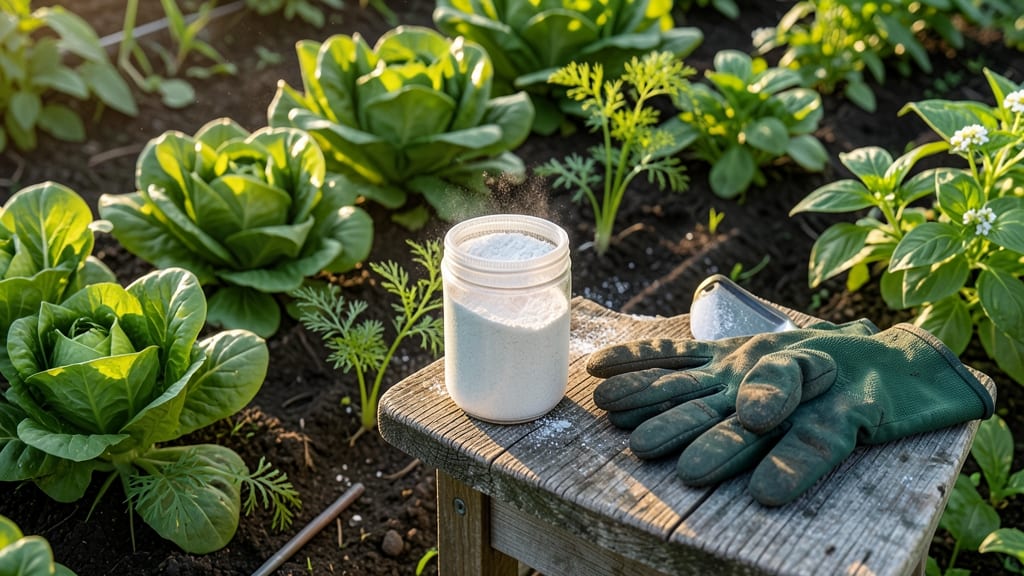
You can put diatomaceous earth in your garden, but use food-grade DE carefully—apply it lightly around plants to control pests like slugs, ants, and aphids while keeping it away from leaves to protect plant health. Always reapply after watering and test on a small area first.
Diatomaceous earth (DE) works by creating microscopic abrasions on soft-bodied insects, dehydrating them over 24-72 hours without chemicals. 🔥 Since it's non-toxic to humans and pets when used properly, it's a popular organic alternative—but only works outdoors where pests can't avoid it.
The key is precision: too much can harm beneficial insects like bees, and rain washes it away quickly, so timing matters.
For best results, apply DE in dry conditions during early morning or evening to preserve its effectiveness. Focus on soil edges and plant bases where pests hide, and avoid direct contact with foliage.
Always choose food-grade DE (never pool-grade) and store it in a sealed container away from moisture to maintain potency.
💡 In This Article
- How Diatomaceous Earth Works in the Garden
- Best Practices for Applying DE Around Plants
How diatomaceous earth works in the garden
Diatomaceous earth (DE) functions as a mechanical pest control by leveraging its microscopic, razor-sharp edges. When applied to soft-bodied insects like slugs, aphids, or ants, these edges create tiny abrasions in their exoskeletons, leading to rapid dehydration and death within 24-72 hours.
The particles are so fine—typically 10-100 microns in size—that they don't harm humans or pets when used correctly, but they're deadly to pests that come into direct contact. 🔥 This non-toxic mechanism makes DE a preferred choice over chemical pesticides for organic gardeners.
The effectiveness of DE depends on its amorphous silica content, which ranges from 80-90% in food-grade varieties. This silica acts like a desiccant, drawing moisture from insect bodies while leaving plant tissues unharmed.
However, its sharp edges become less effective when wet, which is why it's crucial to apply DE in dry conditions and reapply after rain or irrigation. The particles also break down over time due to exposure to sunlight and moisture, so frequent monitoring is key.
DE targets pests with exoskeletons lacking a waxy cuticle, such as slugs, snails, and soft-bodied insects. Harder pests like beetles or earwigs are less affected because their thick exoskeletons resist the abrasive action.
This selectivity means DE won't solve every pest problem but excels in controlling crawling insects that move through treated soil or foliage. Its non-repellent nature ensures pests remain unaware until it's too late, unlike some chemical repellents.
One of DE's advantages is its environmental safety when used responsibly. Unlike neonicotinoids or synthetic pyrethroids, DE doesn't accumulate in soil or water, and it breaks down into harmless silica and oxygen over time. However, its effectiveness diminishes if not reapplied every 7-14 days or after heavy rainfall.
For best results, combine DE with other organic methods like companion planting or beneficial nematodes to create a multi-layered pest defense system.
Consider this comparison: DE works like a natural sandpaper for insects, while chemical pesticides act like a poison. The former is safer for ecosystems but requires consistent application, while the latter provides immediate results but can harm beneficial insects and soil microbes.
For gardeners prioritizing long-term ecological health, DE's mechanical action aligns perfectly with organic gardening principles. 🌱
To maximize DE's impact, focus on areas where pests congregate—like plant bases, mulch lines, and under pots.
A light dusting (1/2 cup per 10 square feet) is usually sufficient, but avoid overapplying, as excessive DE can create a dusty environment that may irritate plants or beneficial insects like ladybugs and bees.
Always wear a dust mask when applying to protect your lungs from inhaling the fine particles.