
Container Gardens
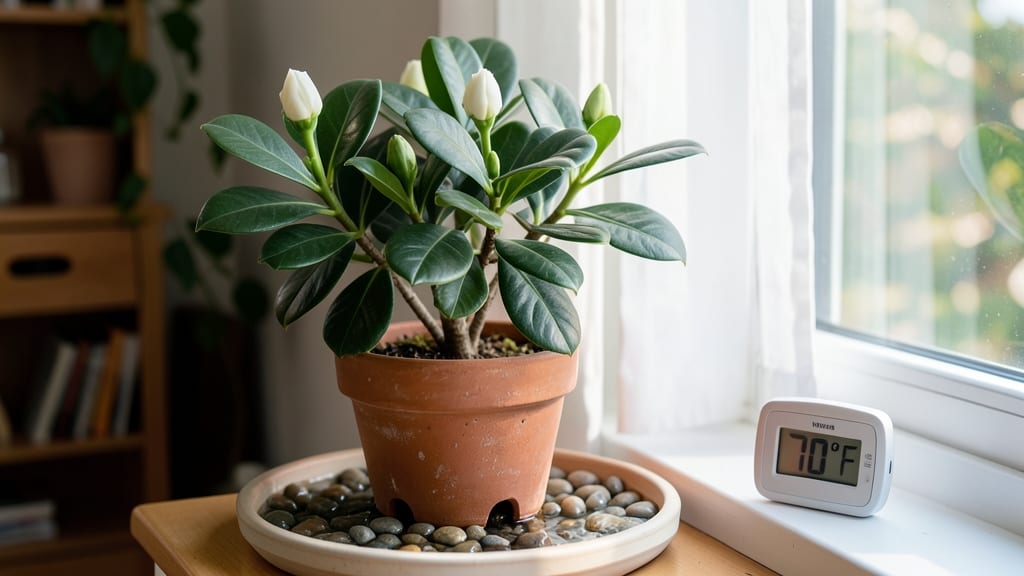
Gardenias can be grown indoors with proper care: place them near bright, indirect light, maintain 60-70% humidity, and prune regularly to encourage blooming. Their tropical needs require consistent warmth and well-draining soil.
Indoor gardening with gardenias is absolutely possible, but their tropical nature demands specific conditions to thrive. 🌿 These fragrant plants need bright, indirect sunlight to prevent leaf burn—think east or west-facing windows—but they'll also adapt to artificial grow lights if natural light is limited.
The humidity requirement is equally critical: dry indoor air can cause buds to drop before opening, so misting daily or using a pebble tray with water helps maintain that 60-70% range.
I've found that placing them near bathrooms (with occasional steam) or using a small humidifier works wonders for keeping them happy year-round.
What makes indoor gardenia care particularly rewarding is how responsive they are to consistent attention. When you combine the right light, humidity, and occasional pruning to shape their growth, you'll often see those signature white blooms appear within 6-12 months.
The key is patience—these aren't fast growers, but their sweet fragrance makes the effort completely worth it. Just remember to use well-draining soil mix and avoid overwatering, as soggy roots are their biggest enemy indoors.
💡 In This Article
- Indoor Gardenia Light and Humidity Requirements
- Step-by-Step Indoor Gardenia Pruning and Care Guide
Indoor gardenia light and humidity requirements
Gardenias evolved in tropical climates where they receive dappled sunlight—bright but filtered through tree canopies.
This explains why direct sun causes leaf burn: their leaves contain chlorophyll that converts light to energy, but intense rays (especially midday) generate harmful UV levels that break down leaf cells. 🌞 The ideal indoor spot is within 3-5 feet of an east or west-facing window, where morning/afternoon light provides 10,000-15,000 lux (about 1/3 the intensity of direct sun).
Artificial grow lights (full-spectrum LEDs) can supplement if natural light falls below 5,000 lux.
The humidity requirement ties directly to their natural habitat's 80-90% relative humidity. Indoors, dry air causes buds to drop due to osmotic stress—water leaves plant cells faster than roots can replace it, making buds shrivel before opening.
To combat this, maintain 60-70% humidity using a pebble tray (fill a tray with water and pebbles, place pot on top) or a humidifier near the plant. 💧 A simple DIY hack is grouping gardenias with other tropical plants to create a microclimate—transpiration from neighboring plants naturally increases moisture.
Temperature plays a hidden role in humidity management. Gardenias prefer 65-75°F during the day and 60-65°F at night, but cooler indoor air holds less moisture. This is why you might see condensation on leaves—a sign the air can't retain enough humidity.
If your home stays below 50°F, consider a small greenhouse dome or plastic tent to trap moisture. The goal is to mimic their native environment where warm, moist air prevents fungal diseases like powdery mildew while keeping leaves supple and vibrant.
Light quality matters just as much as quantity. Gardenias thrive under cool white or full-spectrum LED lights that replicate natural sunlight's spectrum. Blue wavelengths (400-500nm) drive photosynthesis, while red (600-700nm) stimulates flowering.
A 12-hour photoperiod (12 hours of light) triggers blooming—use a timer for artificial lights to maintain consistency. 🌱 What most people miss is that gardenias also need a 2-week "rest" period with 10-12 hours of darkness to set buds, similar to how they'd experience shorter days in their native winter.
Watch for these visual cues to adjust your setup: Yellowing leaves often signal overwatering or poor drainage, while dropping buds point to low humidity. Brown leaf edges typically mean air is too dry, while stunted growth suggests insufficient light.
Pro tip: Rotate your plant quarter-turns weekly to ensure even light exposure—gardenias grow toward the strongest light source, which can create lopsided growth if left unchecked.
For those with limited natural light, fluorescent grow bulbs (5,000-6,500K color temperature) placed 6-12 inches above the plant can work, but LED grow lights are more energy-efficient.
Invest in a light with adjustable spectrum settings to fine-tune the ratio of blue to red light based on your gardenia's growth stage. 💡 During winter, when indoor air is driest, increase humidity checks to twice daily and consider adding a 1-inch layer of sphagnum moss to the soil surface to retain moisture.