
Container Gardens
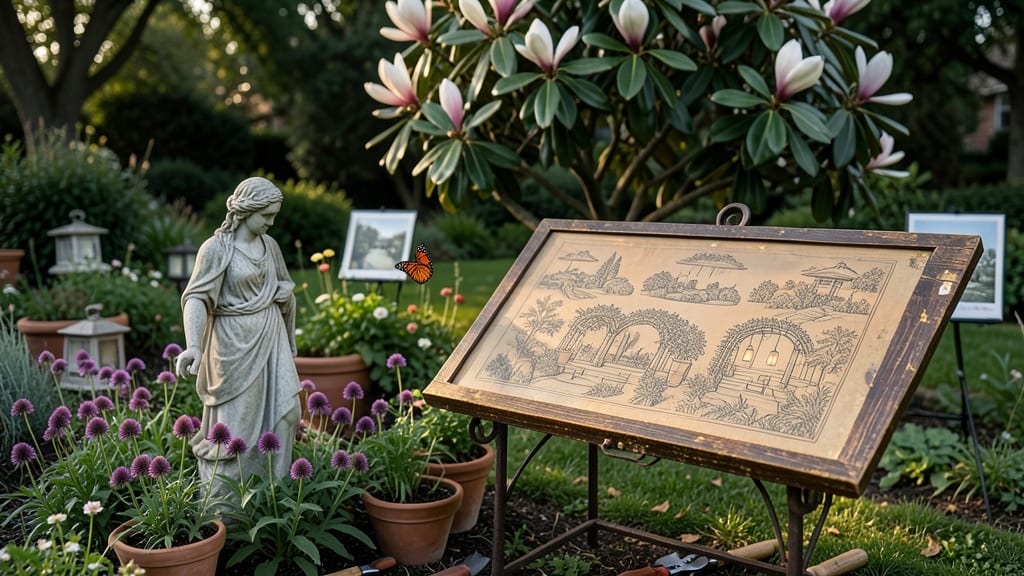
The history of Butchart Gardens traces back to 1904 when it started as a coal mine before Jennie Butchart transformed the limestone waste into a stunning floral paradise, creating Canada’s most celebrated botanical showcase.
The gardens' origins are a fascinating blend of industry and horticulture. 🌿 What began as a limestone quarry—where the Butchart family extracted stone for local construction—was repurposed when the mine's waste piles created nutrient-rich soil.
Jennie Butchart, inspired by her travels to Europe's grand gardens, turned these barren hillsides into meticulously designed landscapes. The first public gardens opened in 1904, featuring roses and perennials that still thrive today, proving her innovative approach to utilizing mining byproducts as fertile ground.
Over the decades, Butchart Gardens expanded from its original 10 acres to the sprawling 55-acre estate we know today. 🌸 The Sunken Garden, designed in 1916, became an iconic feature, while later restorations in the 1960s preserved Jennie's original vision.
What makes this history remarkable is how it transformed an industrial site into a living testament to early 20th-century gardening ingenuity.
💡 In This Article
- From Coal Mine to Botanical Masterpiece: The Butchart Gardens Evolution
- Visiting Butchart Gardens Today: Historical Highlights and Seasonal Tips
From coal mine to botanical masterpiece: the Butchart gardens evolution
The transformation of Butchart Gardens began with an unexpected resource: limestone mining waste. When the Butchart family opened their quarry in 1904, they discovered the crushed limestone created alkaline soil with a pH of 7.5-8.5, ideal for hardy perennials and roses.
Jennie Butchart, a self-taught horticulturist, recognized this waste as fertile ground for her floral experiments. 🌿 Unlike traditional gardens that required fertile topsoil, Butchart's approach turned industrial byproducts into a botanical advantage, proving that even "useless" materials could become the foundation of beauty.
Jennie's vision was shaped by her travels to Europe's grand gardens, particularly the formal designs of the Netherlands and the naturalistic layouts of England.
She combined these influences with practical Canadian gardening techniques, such as using 10-foot-high terraces to create dramatic visual layers while preventing soil erosion—a critical innovation for Victoria's rainy climate.
The Sunken Garden, completed in 1916, became the centerpiece of her work, featuring 1,500 annuals arranged in precise geometric patterns that still follow her original blueprints today.
The gardens' expansion in the 1920s introduced themed sections like the Italian Garden and Japanese Garden, each designed to showcase different horticultural philosophies. What's fascinating is how Jennie's methods anticipated modern sustainable practices.
She used composted mine waste as mulch, reducing the need for imported soil, and planted native species like Pacific Dogwood and Sword Fern that required minimal maintenance. This early form of ecological gardening ensured the gardens could thrive with minimal chemical inputs—a principle that modern horticulturists still admire.
By the 1960s, preservation became a priority as original plantings aged. The restoration team discovered Jennie's handwritten notes specifying exact plant varieties and their original positions, allowing them to recreate her vision with remarkable accuracy.
Today, the 1904 Rose Garden still features the same 50 rose varieties Jennie selected, including the 'Souvenir de la Malmaison' rose, which has been in continuous bloom since 1905. This level of historical fidelity is rare in public gardens, making Butchart a living museum of early 20th-century horticulture.
What makes this evolution even more remarkable is how the gardens adapted to changing tastes while maintaining their historical integrity. For example, the 1936 Japanese Garden was expanded in the 1980s to include a 100-foot-long koi pond, but the original stone lanterns and maple trees remain untouched.
This balance between innovation and preservation is what keeps Butchart Gardens feeling both timeless and fresh—like stepping into a different era while still experiencing modern horticultural excellence.
The gardens' success also stems from Jennie's business acumen. She recognized that public access would sustain the gardens financially, so she designed them to be both educational and entertaining.
The 1914 Wishing Well Garden, for instance, was positioned near the entrance to create an immediate visual impact, while the 1926 Rose Selections Garden offered visitors a chance to see rare varieties up close.
This combination of artistry and practicality ensured the gardens could thrive as both a private passion project and a public treasure.
Today, visitors can still see the original 1904 quarry walls that now frame the gardens, serving as a tangible reminder of their industrial origins.
The way these rough-hewn stones contrast with the delicate blooms creates a striking visual metaphor for Butchart Gardens' entire history—a place where industry and artistry have grown together into something truly extraordinary. 💫