
Vegetables
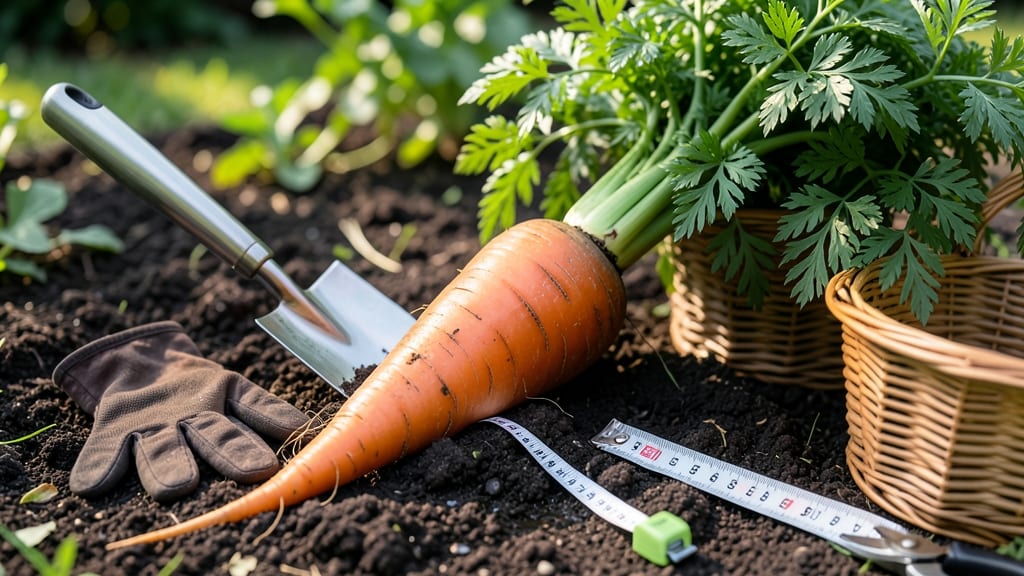
To grow the biggest carrots in your garden, focus on loose, deep soil free of rocks, consistent moisture, and proper spacing—plant seeds 2-3 inches apart in rows 12-18 inches apart. This creates ideal conditions for root expansion, and varieties like 'Mammoth' or 'Autumn King' can reach their full potential with 60-70 days of sunlight.
Gardeners who want to cultivate oversized carrots know that soil quality and spacing are non-negotiable. 🌱 The right soil—light, sandy-loam with plenty of organic matter—lets roots grow straight and deep without hitting obstacles.
I’ve found that adding compost before planting boosts nutrient availability, especially phosphorus and potassium, which directly fuel root development. Even spacing prevents overcrowding, so each carrot has room to swell to its full potential.
Thinning seedlings at the right stage is another game-changer.
When you remove weaker plants, you reduce competition for nutrients and water, letting the remaining carrots bulk up faster. 💛 I recommend thinning to 3-4 inches apart once the seedlings have two true leaves—this gives them the elbow room they need to grow thick and long.
💡 In This Article
- How Soil Composition Directly Affects Carrot Size
- Proven Spacing and Thinning Techniques for Giant Carrots
How soil composition directly affects carrot size
The texture of your garden soil determines whether your carrots grow straight and massive or stunted and gnarled. Carrots thrive in sandy-loam soil because it combines the best of both worlds: the drainage of sand and the nutrient retention of clay.
This ideal mix allows roots to penetrate deeply without suffocating in compacted earth. Think of it like building a skyscraper—you need a sturdy foundation (soil structure) to support the weight (carrot growth). 🌱
Nutrients like phosphorus and potassium are the powerhouses behind carrot development. Phosphorus promotes strong root systems, while potassium helps regulate water flow and disease resistance. A soil test reveals these levels—aim for 50-100 ppm of phosphorus and 150-300 ppm of potassium.
Organic matter (compost or well-rotted manure) boosts these nutrients while improving soil aeration. Without proper nutrients, even the best-spaced carrots will max out at average size. The pH should stay between 6.0 and 7.0—too acidic or alkaline, and nutrient uptake suffers.
Drainage is equally critical. Carrots hate soggy conditions, which lead to rot or forked roots. Sandy-loam drains water efficiently while holding enough moisture for consistent growth. Compacted soil acts like a brick wall—roots can't push through, causing them to grow sideways or split.
To test drainage, dig a hole and fill it with water; if it drains within 2-4 hours, your soil is perfect. If it pools longer, amend with sand or perlite. 💫
Here's what happens when soil composition goes wrong: In heavy clay, roots become misshapen from restricted growth; in pure sand, they grow fast but lack substance. The solution?
Amend your soil with 2-3 inches of compost before planting and mix in 10-20% coarse sand if your native soil is too dense. This creates the perfect balance for roots to expand freely, reaching their genetic potential.
Consider this comparison: A carrot in ideal sandy-loam soil can reach 12-16 inches long with a diameter of 2-3 inches, while the same variety in compacted clay might only hit 6-8 inches.
The difference isn't just size—it's texture too. Well-grown carrots have a crisp, sweet bite, while stunted ones taste woody and fibrous. 🥕
For maximum results, rotate crops annually to prevent nutrient depletion. Carrots are heavy feeders, so replenish the soil after harvest with compost or a balanced organic fertilizer. This ensures your next planting season starts with a fresh, nutrient-rich foundation.