
Pests
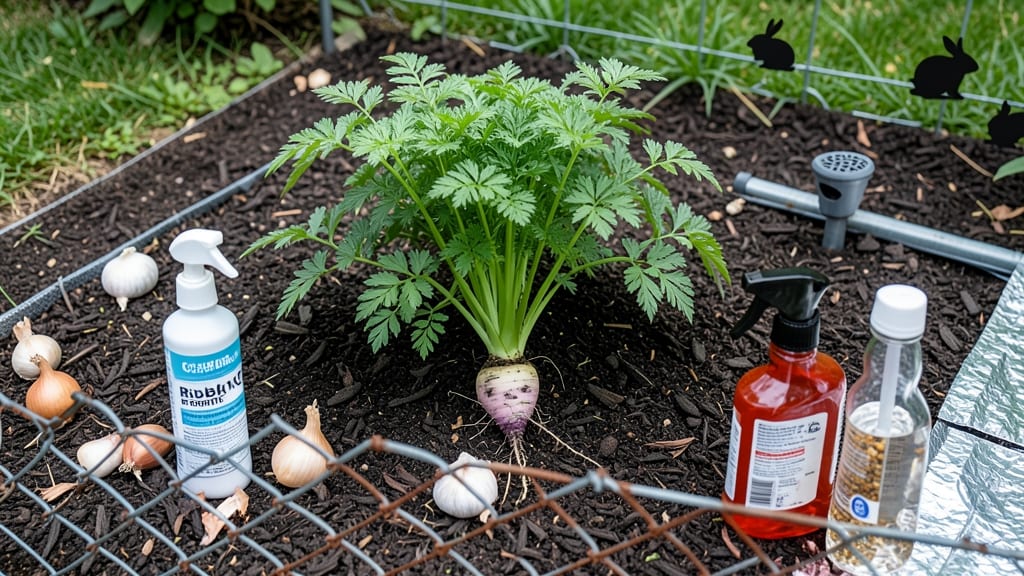
The best way to keep bunnies out of your garden combines three key strategies: install a 12-inch-deep barrier of chicken wire or hardware cloth, apply natural repellents like crushed garlic or hot pepper spray, and use motion-activated sprinklers for added protection. Staying consistent with these methods is what actually works long-term.
The reason bunnies keep returning to gardens is their natural foraging instincts—soft soil and fresh plants make your yard look like an all-you-can-eat buffet. 🌱 A buried fence alone won't stop them forever, which is why I always recommend combining it with repellents that target their senses.
For example, predator urine (like coyote or fox) creates psychological deterrence, while crushed garlic disrupts their sense of smell. The sprinklers add a final layer by startling them when they get too close.
What I've found works best is rotating repellents every few weeks to prevent bunnies from getting used to them. You can also plant natural deterrents like marigolds or lavender around your garden's perimeter—their strong scents act as a built-in barrier.
The key is making your garden less appealing than the surrounding areas, so they have no reason to hop in.
💡 In This Article
- Why Bunnies Target Gardens and How Barriers Work
- DIY Humane Repellent Recipes and Garden Layout Tips
Why bunnies target gardens and how barriers work
Bunnies are drawn to gardens primarily because of their natural foraging instincts—your plants look like an all-you-can-eat salad to them. 🌱 Their soft soil preferences come from the fact that they dig shallow burrows (typically 6-12 inches deep) and prefer areas with loose, easy-to-dig ground.
This is why raised beds or containers often become prime targets—they're easier to access than deep-rooted garden plots. The science behind their behavior involves their keen sense of smell (they can detect food from 30 feet away) and their habit of grazing for 6-8 hours daily.
Physical barriers work because bunnies are excellent jumpers (they can leap 3 feet vertically) but poor climbers. Chicken wire with 1-inch mesh is effective when buried 12 inches deep—this prevents them from digging underneath.
Hardware cloth (with 1/4-inch mesh) is even better because it's more durable and won't rust as quickly. The key is creating a continuous barrier—even a small gap can become an entry point. I've seen bunnies squeeze through spaces as narrow as 2 inches if they're motivated enough!
Repellents work by targeting their senses. Smell-based repellents like crushed garlic or hot pepper spray disrupt their olfactory system, making your garden smell unappetizing. Texture-based repellents, such as diatomaceous earth, create an abrasive barrier that irritates their sensitive noses and paws.
The effectiveness varies—some bunnies adapt to repellents after 2-3 weeks, which is why rotation is crucial. Motion-activated sprinklers add a psychological deterrent by startling them with a sudden burst of water when they get too close.
What most gardeners don't realize is that bunnies learn from each other. If one bunny successfully raids your garden, others will follow. This is why a layered approach is essential—combining barriers, repellents, and deterrents creates a multi-sensory obstacle course that's far more effective than any single method.
For example, I've had success using a 2-foot-tall fence with chicken wire buried 12 inches deep combined with predator urine applied every 2 weeks—this combo has kept bunnies away for over 3 seasons.
Another critical factor is timing. Bunnies are most active at dawn and dusk, so applying repellents during these hours maximizes their effectiveness.
They also prefer certain plants—like lettuce, clover, and tulips—over others, so strategically placing less appealing plants (like marigolds or lavender) around the perimeter can act as a natural deterrent. The key is making your garden less appealing than the surrounding areas, so they have no reason to hop in.
Finally, consistency is everything. Bunnies are persistent foragers, and if they find one weak spot in your defenses, they'll exploit it. I've seen gardens that worked perfectly for months suddenly get overrun because the homeowner stopped reapplying repellents during a busy summer.
The science backs this up—animals learn through repetition, so maintaining a consistent defense system is what actually keeps them away long-term.