
Tools
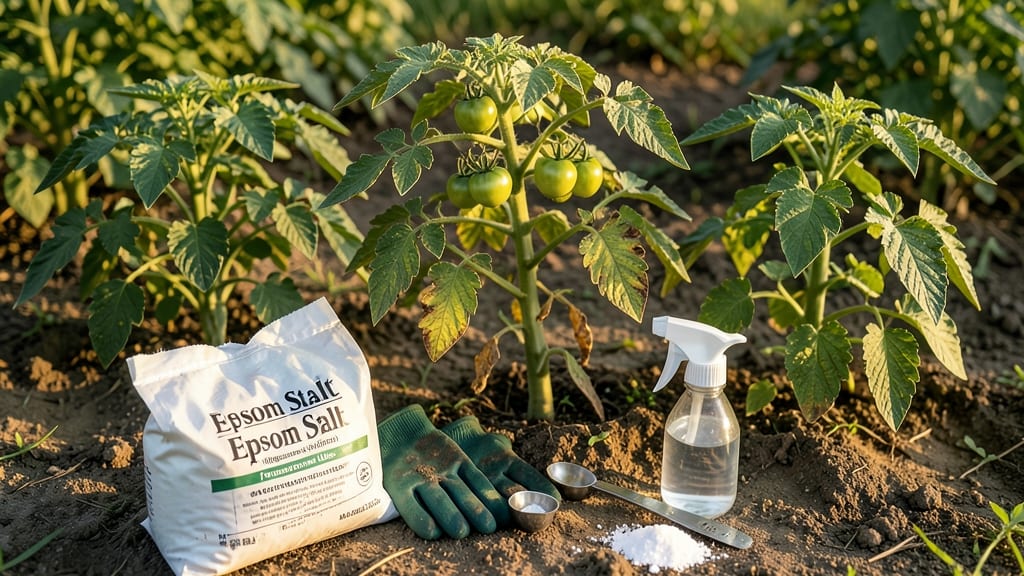
Using magnesium for garden improves soil fertility and plant vitality by supporting chlorophyll production, preventing yellowing leaves, and enhancing nutrient absorption in roots.
Magnesium isn't just another soil additive—it's a powerhouse for plant health, especially when your garden shows signs of stress like yellowing between leaf veins. 🌱 This essential mineral sits at the heart of chlorophyll, the pigment that gives plants their green color and fuels photosynthesis.
Without enough magnesium, plants struggle to convert sunlight into energy, leading to stunted growth or poor fruit development. I've seen dramatic improvements in tomato plants and peppers after adding magnesium-rich amendments, particularly in alkaline soils where magnesium tends to leach away faster.
Most gardeners overlook magnesium because they focus on nitrogen or phosphorus, but it's equally critical for unlocking other nutrients. For example, magnesium helps plants absorb calcium and potassium more efficiently, creating a ripple effect throughout the plant's system.
The best part? You don't need expensive products—simple fixes like Epsom salt (magnesium sulfate) or crushed dolomitic lime can work wonders when applied correctly.
💡 In This Article
- How Magnesium Deficiency Affects Plant Health
- Best Ways to Apply Magnesium to Garden Soil
How magnesium deficiency affects plant health
Magnesium deficiency starts with chlorophyll breakdown because this mineral sits at the center of the chlorophyll molecule, acting like a bridge that stabilizes the structure. When magnesium levels drop, plants can't produce enough chlorophyll, leading to that classic symptom: yellowing between leaf veins while the veins stay green.
This condition, called interveinal chlorosis, is often mistaken for nitrogen deficiency, but the key difference is that nitrogen deficiency causes uniform yellowing across entire leaves.
The problem worsens because magnesium is mobile within the plant—when deficient, it gets recycled from older leaves to newer growth, which is why you typically see symptoms first on lower leaves. 🌿 What most gardeners don't realize is that magnesium deficiency also disrupts photosynthesis efficiency by up to 50% in severe cases.
This happens because chlorophyll molecules without magnesium can't properly capture light energy, leaving plants energy-starved even in full sun. The result? Stunted growth, weak stems, and poor fruit development, especially in heavy feeders like tomatoes and peppers.
Here's where it gets interesting: magnesium deficiency creates a domino effect in nutrient uptake. Plants need magnesium to activate enzymes that help absorb phosphorus and nitrogen from the soil. Without enough magnesium, these nutrients sit unused in the soil, even if they're present in ample amounts.
This is why adding magnesium often reveals hidden deficiencies in other nutrients—your plants suddenly have the "spark" to utilize what was already there.
Soil pH plays a critical role in magnesium availability. In alkaline soils (pH 7.5+), magnesium binds tightly to soil particles and becomes less accessible to roots. This is why magnesium deficiencies are more common in areas with limestone-based soils. The good news?
Acidic soils (pH 6.0-6.5) hold magnesium more loosely, making it easier for plants to access. Testing your soil's magnesium levels—typically through a comprehensive soil test—can reveal whether you're dealing with a true deficiency or just poor availability.
Consider these visual symptoms as your early warning system:
- Yellow patches: Between leaf veins on older leaves (first sign)
- Purple stems: In tomatoes and peppers (phosphorus deficiency often follows)
- Weak growth: Despite adequate water and fertilizer
- Poor flowering: Even with proper nitrogen levels
What's fascinating is how quickly plants respond to magnesium correction. Within 2-3 weeks of proper magnesium application, you'll often see new growth with normal green coloration, proving how central this mineral is to plant vitality.
The key is catching it early—once magnesium deficiency causes permanent damage to leaf structure, recovery becomes much slower and less complete. 💫