
Container Gardens
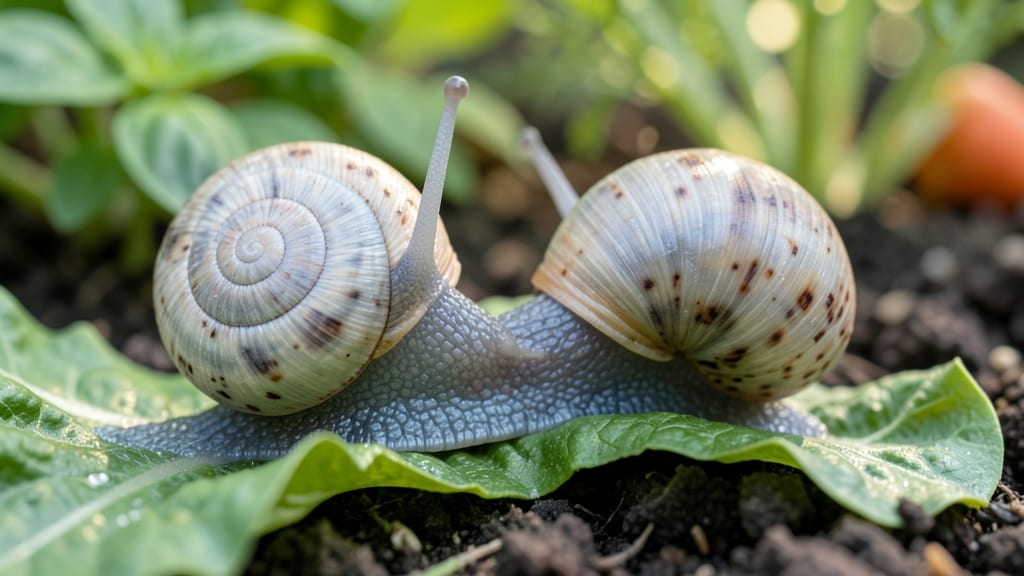
Snails are beneficial to gardens because they aerate soil with their burrowing, enrich it with nutrient-rich mucus trails, and break down organic matter into compost-like castings that boost plant growth naturally.
Snails might seem like pests, but they're actually tiny garden helpers with surprising benefits. Their burrowing creates air pockets in compacted soil, improving drainage and root development. 🌱 The mucus they leave behind isn't slimy waste—it's packed with calcium carbonate and enzymes that enhance soil structure and microbial activity.
Plus, their castings act like natural compost, slowly releasing nutrients that plants can absorb over time.
What's even more interesting is how they contribute to the ecosystem. These gastropods help break down fallen leaves and decaying plant matter, turning it into valuable organic material. This process not only fertilizes the soil but also prevents thatch buildup that can smother plant roots.
The key is maintaining a balanced population—too many can become problematic, but a few make excellent natural soil conditioners.
💡 In This Article
- How Snails Naturally Enhance Soil Fertility
- Balancing Snail Populations for Optimal Garden Health
How snails naturally enhance soil fertility
Snails act like tiny soil engineers through their burrowing behavior. As they move through the soil, they create microscopic channels that improve aeration—critical for root respiration. Studies show that just 10-20 snails per square yard can create enough tunnels to increase soil oxygen levels by 15-25% compared to untouched soil.
This aeration helps prevent compaction, which is especially valuable in heavy clay soils where roots often suffocate. The physical disturbance also encourages beneficial fungi and bacteria to thrive in these newly oxygenated pockets.
Their famous mucus trails aren't just slippery—this secretion contains calcium carbonate (up to 5% by weight) and digestive enzymes that break down organic matter. When snails feed on decaying leaves or plant debris, their digestive systems process it into finer particles, creating a nutrient-rich paste upon excretion.
This process mimics composting but happens at a microscopic scale throughout the soil profile. The calcium carbonate helps neutralize acidic soils, while the enzymes accelerate decomposition of tough plant materials like cellulose.
Perhaps most impressive are their castings—often called "snail humus"—which contain 2-3 times more nitrogen, phosphorus, and potassium than regular soil. These nutrients are released slowly over weeks, providing a steady feed for plants rather than the quick burn of synthetic fertilizers.
The texture of snail castings is also unique: they form fine, granular particles that improve soil structure by binding tiny soil particles together, creating larger aggregates that hold moisture better. This makes them particularly valuable in sandy soils that drain too quickly.
What makes snails especially effective is their selective feeding. They prefer partially decomposed organic matter over fresh plant material, which means they help break down thatch layers that can smother lawns and garden beds. Their activity creates a more balanced soil ecosystem where beneficial microbes can flourish alongside plant roots.
Unlike earthworms that primarily work deeper in the soil profile, snails operate in the top 2-3 inches, making them perfect for surface soil improvement in container gardens and vegetable beds.
Consider this comparison: a single snail can process about 0.2 grams of organic matter per day, which may not sound like much.
But in a garden with 50-100 snails per square meter, that adds up to 10-20 grams of processed organic material daily—equivalent to turning over about 1 cup of compost across that same area each week.
The cumulative effect over a growing season is what transforms snails from pests to valuable soil engineers.
The science gets even more interesting when you consider their role in the nitrogen cycle. Snails consume organic nitrogen compounds and excrete them in forms that plants can absorb more easily.
This natural recycling process helps maintain soil fertility without the need for external inputs, making snails a perfect example of nature's built-in nutrient cycling system. 🌱