
Container Gardens
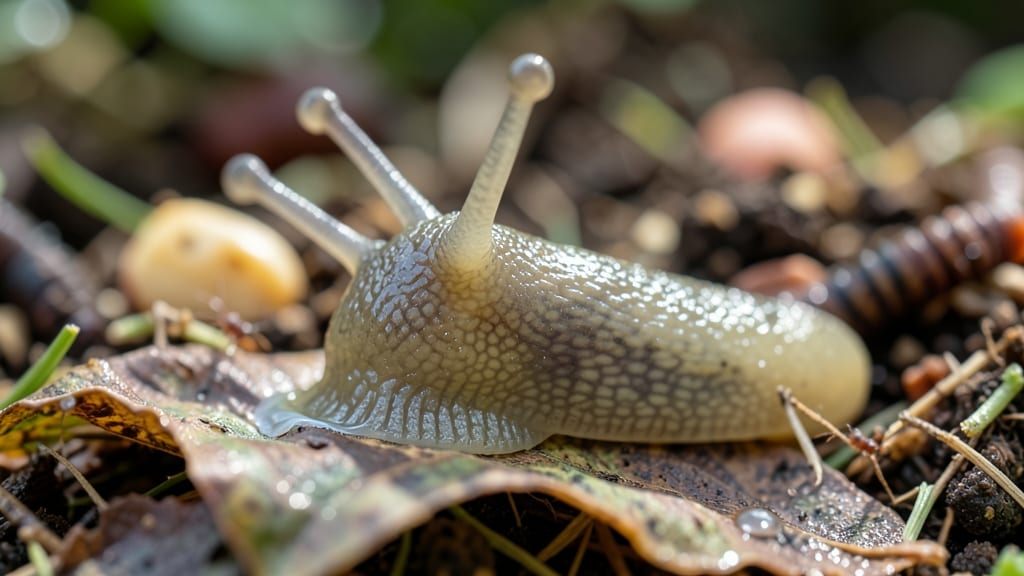
Slugs are beneficial to gardens when managed properly, as they decompose organic matter into nutrient-rich soil, enhance aeration, and provide food for wildlife. Yet their love for tender plants can quickly outweigh these benefits without control.
Slugs play an underrated role in garden ecosystems by acting as natural recyclers. Their feeding habits break down fallen leaves and plant debris into compost-like material, enriching the soil with essential nutrients. 🌱 This process also improves soil structure, allowing better water and air circulation for plant roots.
However, their voracious appetites for young seedlings and leafy greens often create more problems than benefits in most home gardens.
What makes slugs particularly tricky is their dual nature—they're both decomposers and garden pests. While they contribute to biodiversity by serving as prey for birds, frogs, and hedgehogs, their nighttime foraging habits can devastate vegetable beds and flower gardens.
The key lies in creating a balanced ecosystem where their benefits are maximized while their destructive tendencies are minimized through strategic garden management.
💡 In This Article
- How Slugs Improve Soil and Ecosystem Health
- Balancing Slug Benefits with Plant Protection Strategies
How slugs improve soil and ecosystem health
Slugs act as tiny ecosystem engineers by accelerating the decomposition of organic matter. Their saliva contains enzymes that break down cellulose and lignin in dead leaves, twigs, and plant debris into simpler compounds.
This process transforms what would otherwise take months into nutrient-rich humus within weeks. 🌿 For example, a single slug can process about 0.1-0.2 grams of organic material daily—equivalent to roughly 10-20 square inches of leaf litter in a wet garden bed.
Their feeding creates microscopic channels in the soil as they move through it, improving aeration and water penetration by up to 30%. These tunnels help beneficial microbes and earthworms colonize deeper soil layers, creating a more vibrant underground ecosystem.
Slugs also contribute to nutrient cycling by redistributing nitrogen and phosphorus from decomposing matter into the soil, making these essential elements more accessible to plants.
Beyond soil mechanics, slugs support biodiversity by serving as a crucial food source for wildlife. Birds like thrushes and blackbirds consume hundreds of slugs annually, while hedgehogs can eat up to 50 slugs per night during their active season.
This predator-prey relationship helps maintain ecological balance, preventing slug populations from spiraling out of control naturally. 🐦 Their presence also indicates a healthy garden ecosystem, as they thrive in environments with diverse microbial life and balanced moisture levels.
What's often overlooked is how slugs influence plant growth indirectly. Their decomposition activities create a microclimate in the soil that fosters beneficial fungi and bacteria. For instance, mycorrhizal fungi—essential for plant root health—grow more vigorously in soils enriched by slug activity.
This symbiotic relationship means plants in slug-active areas often show improved resistance to drought and disease, despite the visible damage to foliage.
However, their benefits become most apparent in naturalistic or permaculture gardens where their soil-enriching activities are harnessed without plant damage. In these systems, slugs help create the ideal conditions for companion plants that thrive in their enriched soil, like comfrey or nettle, which then support even more biodiversity.
The key is understanding that slugs are most beneficial when their populations are balanced within the ecosystem's carrying capacity.
Consider this comparison: A garden with 50-100 slugs per square meter might show visible soil improvements but minimal plant damage, while 200+ slugs per square meter would likely cause more harm than good. The difference lies in managing their numbers while allowing them to fulfill their ecological roles. 🌱