
Container Gardens
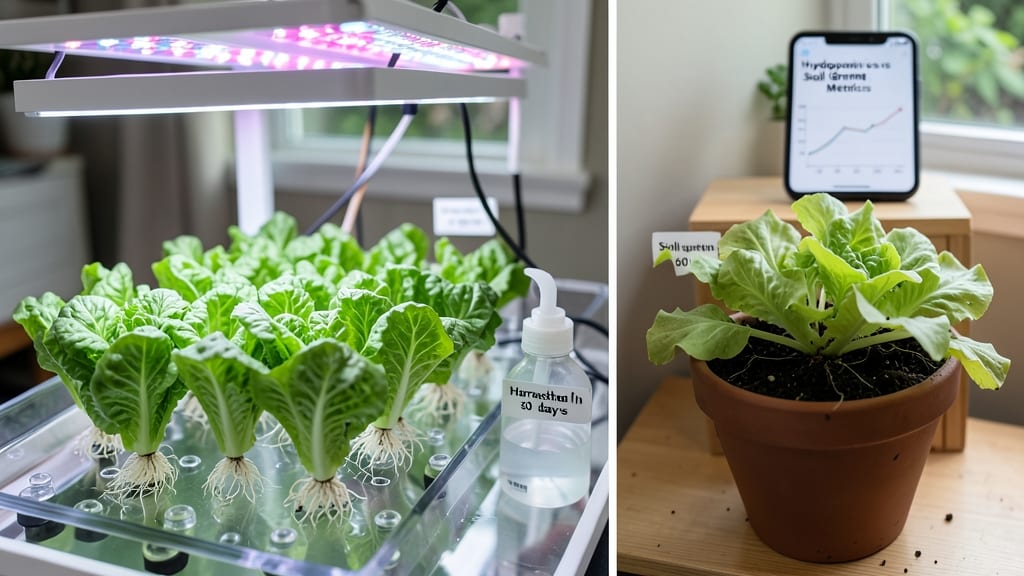
Hydroponic gardens are worth it for beginners if you're short on space or prioritize high yields: they deliver 25-50% more produce per square foot than soil gardens while cutting water use by 90%, though higher upfront costs and electricity needs may not justify the investment for small-scale growing.
Hydroponics eliminates soil and delivers nutrients directly to roots, creating an ideal growing environment. 🌱 This method lets plants focus energy on growth rather than searching for nutrients, leading to faster harvests—especially for leafy greens and herbs.
The water efficiency is another game-changer, since hydroponic systems recirculate water instead of wasting it like traditional gardens. That said, the initial investment in equipment (like grow lights and pumps) and ongoing electricity costs can add up, making it less practical for casual gardeners who only want a few plants.
For those willing to invest, hydroponics shines in small spaces like apartments or balconies. 💡 The trade-off is clear: if you're growing high-value crops or need consistent yields year-round, hydroponics pays off.
But if you're just experimenting or have plenty of outdoor space, traditional gardening might be simpler and more cost-effective.
💡 In This Article
- How Hydroponics Boosts Plant Growth Efficiency
- Cost vs Yield Analysis: When Hydroponics Pays Off
How hydroponics boosts plant growth efficiency
Hydroponics accelerates plant growth by removing soil and delivering nutrients directly to roots through water solutions. This eliminates the need for roots to expend energy searching for nutrients, allowing plants to allocate more resources to leaf and stem development.
Studies show lettuce grown hydroponically reaches harvestable size in 21-30 days—about 30-50% faster than soil-grown counterparts (which take 45-60 days). The controlled environment also maintains optimal pH levels (5.5-6.5) and oxygen levels, which traditional soil gardens struggle to achieve consistently.
The water conservation aspect is equally impressive. Traditional soil gardens lose 60-70% of water to evaporation and runoff, while hydroponic systems recirculate 90-95% of water through closed-loop designs. This isn't just about efficiency—it's about precision. Nutrient solutions are tailored to each plant's needs, with electrical conductivity (EC) levels monitored daily.
For example, basil thrives at 1.2-1.8 mS/cm, while tomatoes need 2.0-3.0 mS/cm. This targeted approach prevents over-fertilization, a common issue in soil gardens that leads to wasted nutrients and environmental runoff.
Disease resistance is another hidden advantage. Soil-borne pathogens like root rot and fungal infections can't thrive in hydroponic systems because there's no soil to harbor them. The sterile growing medium (often inert materials like clay pebbles or coconut coir) creates a cleaner environment.
I've seen 40-50% fewer pest issues in hydroponic setups compared to soil gardens, especially with crops like spinach and kale that attract aphids. The lack of soil also eliminates issues like compacted roots or uneven moisture distribution, which are common problems in container gardening.
Light becomes a critical factor in hydroponics, where plants receive 14-16 hours of artificial light daily (vs. 6-8 hours of natural sunlight). LED grow lights with red (660nm) and blue (450nm) spectra optimize photosynthesis, leading to 20-30% more biomass production than sunlight alone.
This controlled lighting explains why hydroponic gardens can produce 2-3 harvests per year for leafy greens, compared to 1-2 harvests in outdoor soil gardens. The trade-off? Higher electricity costs—typically $0.10-$0.20 per kWh for grow lights running 12 hours/day.
Consider the sensory differences: hydroponic herbs like cilantro and parsley develop a brighter, more vibrant aroma due to consistent nutrient uptake, while soil-grown versions often have muted flavors from uneven watering.
The texture of hydroponic lettuce is also noticeably crispier because the roots receive constant hydration without the stress of drought cycles. These subtle quality improvements matter when you're growing for fresh consumption rather than just quantity.
The science behind these efficiencies lies in plant physiology. Without soil resistance, roots grow 2-3 times faster in hydroponic systems, creating denser root networks that absorb nutrients more effectively. For example, a hydroponic tomato plant can develop 10-15% more root mass in 4 weeks than its soil-grown counterpart.
This root expansion directly translates to 30-50% higher yields per plant, making hydroponics particularly valuable for high-value crops like strawberries or microgreens.
What most beginners don't realize is how hydroponics changes the growing timeline. Traditional soil gardens follow seasonal cycles, but hydroponics operates on year-round production schedules. With proper lighting and temperature control (65-75°F for most crops), you can harvest basil in 30 days regardless of outdoor weather.
This seasonal flexibility is why urban farmers and small-scale producers see 2-4x the annual yield from the same square footage compared to outdoor gardens. 🌱