
Pests and Diseases
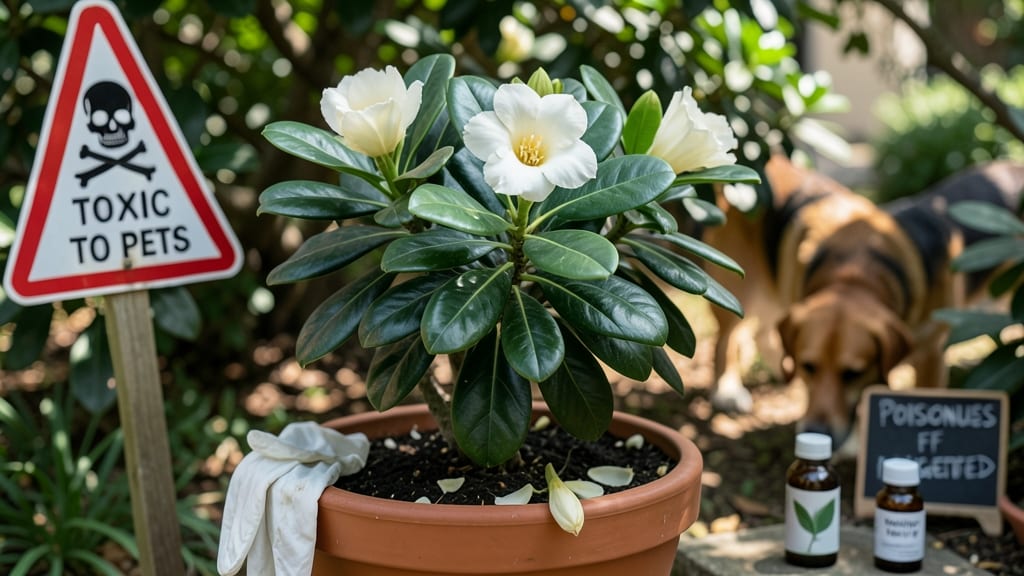
Gardenias are toxic to pets and humans, particularly their leaves and flowers, which contain grayanotoxins that can cause vomiting, diarrhea, and weakness. Keep them out of reach of children and animals, and avoid ingestion or prolonged skin contact.
Gardenias contain grayanotoxins, a group of compounds that disrupt nerve signals and digestive function. 🌸 These toxins are most concentrated in the leaves and flowers, which pets like dogs and cats are especially drawn to when they chew on plants.
Even small amounts can trigger symptoms within hours, so it's crucial to monitor exposure closely. Unlike some toxic plants that require large ingestions to cause harm, gardenias pose risks even with minimal contact.
While the fragrance makes gardenias popular for home gardens, their toxicity means they're not ideal for households with curious pets or young children. If you love their scent but want safer alternatives, consider non-toxic plants like African violets or roses, which offer similar beauty without the health risks.
Always wash your hands after handling gardenias to minimize skin absorption of toxins.
💡 In This Article
- Toxic Components in Gardenias and Their Effects on Health
- Safe Handling and Alternative Non-Toxic Garden Plants
Toxic components in gardenias and their effects on health
The toxicity of gardenias stems from grayanotoxins, a group of neurotoxic compounds that interfere with nerve signal transmission. These toxins specifically target sodium channels in cell membranes, preventing proper nerve impulses. 🔥 In humans, this disruption causes symptoms like nausea, dizziness, and muscle weakness.
The leaves and flowers contain the highest concentrations—up to 0.5% dry weight—while stems and roots have significantly lower levels.
Grayanotoxins work by binding to voltage-gated sodium channels, which are essential for transmitting electrical signals in nerves and muscles.
This binding prevents sodium ions from flowing into cells, disrupting the action potential that triggers muscle contractions and nerve impulses. 💫 For example, a dog chewing on gardenia leaves might experience drooling, vomiting, or even seizures within 6-12 hours, while humans typically face milder gastrointestinal distress after ingestion.
Symptoms vary based on exposure levels: small amounts may cause mild stomach upset, while larger ingestions can lead to severe neurological effects.
Pets, especially cats and dogs, are more vulnerable due to their lower body weight and tendency to chew plants. 🌟 In humans, skin contact with crushed leaves or flowers can also trigger irritation or allergic reactions, though ingestion poses a greater risk.
Not all parts of the gardenia plant are equally dangerous. The leaves and flowers contain the highest toxin concentrations, making them the most hazardous. The stems and roots have minimal grayanotoxin levels, so accidental ingestion of these parts is far less concerning.
However, the fragrant flowers and glossy leaves are particularly enticing to pets and children, increasing the risk of exposure.
Grayanotoxins are heat-stable, meaning cooking or drying gardenia parts doesn't eliminate their toxicity. This is why gardenia tea, made from the flowers, can still pose risks if consumed in large quantities. 💛 The toxins remain active even after processing, so caution is essential in both culinary and ornamental contexts.
Understanding these mechanisms helps explain why gardenias require careful handling. Their toxicity isn't just about ingestion—even prolonged skin contact or inhalation of crushed plant material can cause irritation. This is why gardeners should wear gloves when pruning and avoid handling the plant near food preparation areas.