
Tools
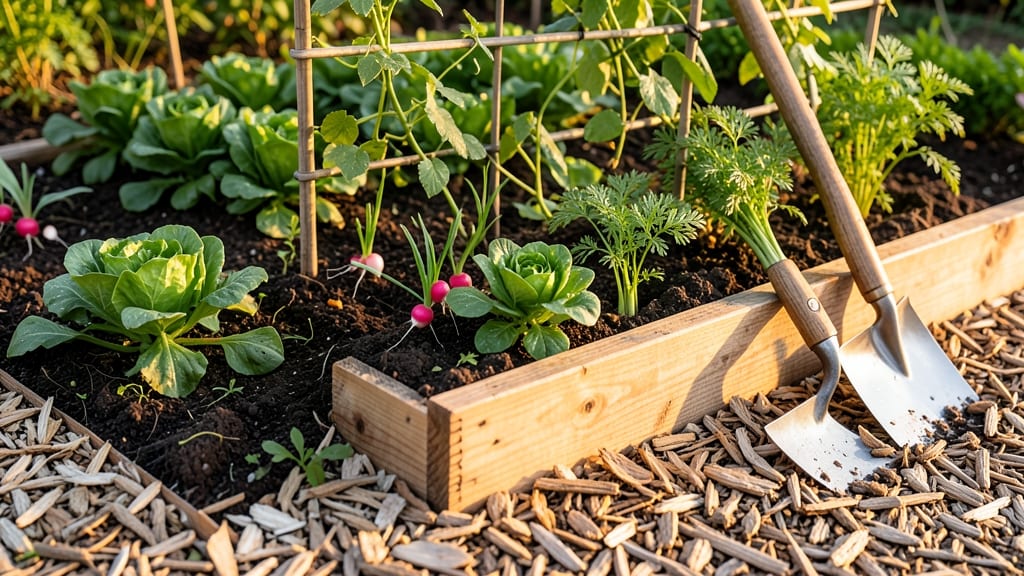
Wood chips on vegetable gardens create nutrient-rich mulch that enhances soil fertility, smothers weeds organically, and maintains consistent moisture levels while stabilizing ground temperatures. Always choose hardwood chips to prevent nitrogen depletion in your soil.
Wood chips work their magic through gradual decomposition, where microbial activity breaks down the cellulose and lignin into humus—nature's slow-release fertilizer. 🌱 This process improves soil structure over months, creating a crumbly texture that roots love while adding beneficial microbes.
The carbon-rich material also helps balance nitrogen levels, making it perfect for long-term garden health rather than quick fixes.
For best results, spread 2-4 inches of chips around plants (not touching stems) and refresh annually. Hardwood options like oak or maple decompose slower, providing steady benefits, while softwoods like pine should be avoided—they can acidify soil.
Applying in early spring lets chips establish before summer heat, while fall applications protect winter-sensitive plants.
💡 In This Article
- How Wood Chips Transform Soil Chemistry Over Time
- Best Wood Chip Types and Application Tips for Vegetable Beds
How wood chips transform soil chemistry over time
When wood chips hit your vegetable garden, they kickstart a slow but powerful transformation. The decomposition process begins with microbial activity breaking down cellulose and lignin—the tough, woody components of the chips.
Fungi and bacteria first target the softer cellulose, which decomposes within 6-12 months, while the more resistant lignin takes 2-5 years to fully break down. This gradual process creates a rich, humus-like material that improves soil structure and water retention.
The nutrient release timeline depends on the wood's carbon-to-nitrogen (C:N) ratio.
Hardwoods like oak (C:N ~500:1) decompose slowly, releasing nutrients over years, while softwoods like pine (C:N ~300:1) break down faster but can temporarily tie up nitrogen, starving your plants. 🌱 The microbial activity also boosts beneficial fungi and bacteria populations, creating a thriving ecosystem that supports root growth.
Over time, this process raises soil organic matter by 1-3% annually, enhancing its ability to hold moisture and nutrients.
Wood type dramatically affects soil pH levels. Hardwood chips from oak or maple remain neutral (pH ~7), making them ideal for most vegetables. In contrast, softwood chips from cedar or pine can lower pH to 5.0-5.5, creating acidic conditions that may inhibit nutrient uptake.
The decomposition process also releases small amounts of potassium and phosphorus, though these are minor compared to the long-term benefits of improved soil structure and microbial activity.
This chemical transformation happens most effectively in a 2-4 inch layer, where the top chips protect the soil from temperature extremes while the lower layers decompose. The mulch also creates a microclimate that retains 30-50% more moisture than bare soil, reducing watering needs by upstrong>20%.
The gradual breakdown prevents sudden nutrient spikes that could burn plants, making it a safer alternative to synthetic fertilizers.
One often-overlooked benefit is how wood chips regulate soil temperature. In summer, they can keep soil 5-10°F cooler than exposed ground, protecting shallow roots. During winter, they act as insulation, preventing freeze-thaw cycles that damage soil structure.
This thermal stability creates ideal conditions for microbial activity year-round, accelerating the nutrient cycling process.
For maximum benefits, combine wood chips with compost. The compost provides initial nitrogen to balance the carbon-rich chips, while the chips create a stable environment for the compost to decompose. This synergy creates a self-sustaining soil improvement system that requires minimal maintenance beyond annual top-ups.