
Planting
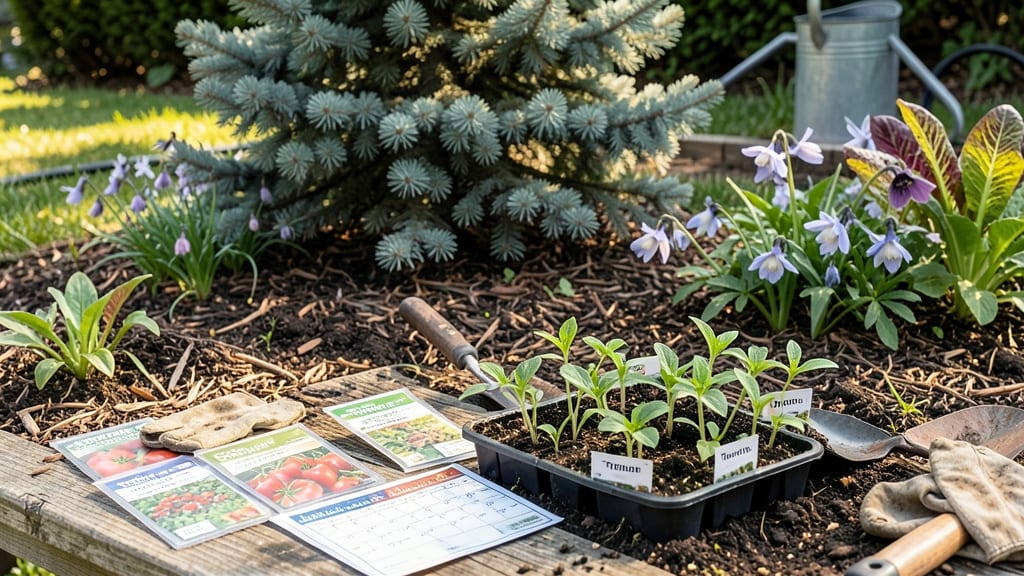
Planting a garden in Colorado depends on elevation—not just the calendar—because frost dates shift dramatically from the Front Range to the Western Slope.
Picture this: You’re eager to sow your first seeds in early April, only to wake up to a surprise frost that turns your tender seedlings into crispy snacks.
That’s why timing matters—get it wrong, and your harvest vanishes; get it right, and you’re feasting on homegrown veggies by summer.
Colorado’s diverse climates mean lowland areas like Pueblo can plant earlier than Denver, while high-altitude spots near 10,000 feet might need to wait until Memorial Day. Below, I’ll break down the exact frost dates by elevation zone so you can avoid common mistakes and maximize your garden’s potential.
You’ll learn how to adjust planting dates for your specific location, which crops thrive at different altitudes, and pro tips for extending your growing season—whether you’re in the Rocky Mountains or the Eastern Plains.
Colorado’s frost dates by elevation zone: key planting windows
Colorado’s elevation zones create dramatic differences in frost dates—what works in Grand Junction (4,400 ft) can fail at Denver (5,280 ft), and both struggle in Steamboat Springs (6,700 ft).
The last spring frost can arrive as early as April 15 in lowland areas but linger until June 1 in high-altitude gardens. Understanding these windows ensures your warm-season crops like tomatoes thrive while cool-season crops like spinach survive.
Most Coloradoans fall into three key elevation bands: 2,500–5,000 ft (Front Range cities), 5,000–7,500 ft (mountain foothills), and 7,500–10,000 ft (high plains).
Each zone has a 10–20 day difference in frost dates, meaning tomatoes planted too early in Aspen (8,000 ft) will bolt from cold snaps, while peppers struggle to mature in Pueblo (4,700 ft) if seeded late.
Here’s how to use frost dates to plan your garden by elevation, with USDA zone correlations and real-world examples from Colorado’s most common growing areas.
In low-elevation zones (2,500–3,500 ft), like Grand Junction, you can plant tomatoes and peppers as early as April 15 for a 180-day growing season. Meanwhile, Denver gardeners (5,280 ft) should wait until May 1 to avoid late spring frosts that can kill tender seedlings.
At 8,000 ft in Steamboat Springs, even hardy crops like potatoes need to wait until June 1 to ensure survival.
Cool-season crops like spinach, carrots, and kale have the opposite rule: plant them 4–6 weeks before your last frost to harvest before summer heat sets in. In Pueblo (4,700 ft), that means March 15 for spinach, while in Aspen (8
How to adjust planting dates for Colorado’s microclimates
Colorado’s dramatic elevation changes—from 2,500 feet in the San Luis Valley to over 10,000 feet in mountain gardens—create wildly different planting windows. A tomato seedling planted in Denver (5,280 ft) in mid-April might freeze, while the same plant thrives in Grand Junction (4,400 ft) by late March.
The key? Adjusting your schedule with microclimate tools and soil prep tailored to your elevation.
I’ve learned the hard way that hardening off seedlings takes longer at higher elevations, and cold frames become essential above 6,000 feet. Even a 500-foot elevation gain can shift your planting window by 2-3 weeks.
Let’s break down how to fine-tune your schedule using row covers, season extenders, and a soil prep checklist for each zone.
Use row covers in high-altitude zones
Extend spring planting by 3-4 weeks above 7,000 feet with lightweight frost blankets. Remove covers when daytime temps hit 50°F to prevent overheating.
Harden off seedlings for 10-14 days longer
High-altitude gardens need gradual acclimation. Move seedlings outdoors for 2 hours/day at first, increasing to full sun over 2 weeks in zones above 6,500 feet.
Plant cold-hardy crops 2 weeks earlier
Spinach, peas, and kale tolerate 28°F temps. In Denver (Zone 5b), start these by March 15 under row covers for harvests by May.
Use cold frames for fall extensions
Protect leafy greens and root vegetables until November 1 in Front Range gardens. A clear plastic cold frame adds 5-10°F of protection.
Avoid planting warm-season crops before soil warms
Tomatoes and peppers need 60°F soil. In Grand Junction (Zone 7a), wait until April 15; in Leadville (Zone 4a), delay until May 20.
Before planting, prepare your soil differently by elevation. At low elevations (3,000–5,000 ft), focus on drought-resistant amendments like compost and mulch to retain moisture. Above 7,000 feet, prioritize organic matter to improve cold soil drainage—add aged manure or leaf mold 4–6 weeks before planting.
I’ve seen high-altitude gardens fail because growers ignored soil temperature. Use a soil thermometer to confirm 50°F+ for warm-season crops. In Denver, this often means waiting until late May for peppers, while Grand Junction can plant by mid-April.
Always check Colorado State University’s frost maps for your exact location.
One common mistake? Planting fast-maturing crops like radishes too late in the season. They’ll bolt before harvest. Instead, sow them in early spring (March–April) and again in late summer (August) for a fall crop. For slow growers