
Picking
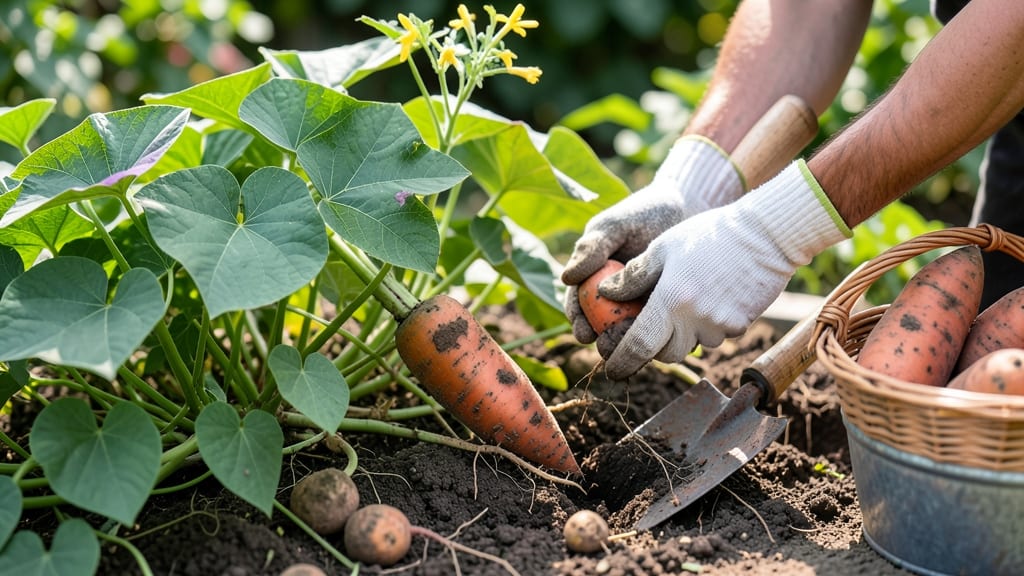
To pick sweet potatoes from the garden at the perfect time means catching them when they’re sweet, firm, and fully developed—before the vines die back or frost ruins your harvest.
Sweet potatoes left too long in the ground turn starchy and tough—while harvesting too early means small, underdeveloped tubers. Timing is everything, and these visual cues will help you know exactly when to dig up your harvest.
You’ll learn how to use the skin slip test (the gold standard for harvest readiness) and watch for key signals like vine yellowing and leaf wilting. These signs tell you when your 🍠 are ready to pull—before frost or pests get ahead of you.
From regional adjustments for warm climates to short-season zones, I’ll break down the exact conditions that mean it’s time to harvest—so you end up with a pantry full of perfectly sized, flavorful tubers.

How to use the skin slip test for perfect sweet potato harvest timing
The skin slip test is the most reliable way to determine when your sweet potatoes are ready for harvest. Unlike guessing by days or vine color, this method checks the tuber's skin resistance—a clear sign of maturity.
When done correctly, it ensures you harvest at peak sweetness and texture, avoiding both underdeveloped tubers and woody, overripe ones.
This test works by gently pressing your thumbnail into the tuber's skin. If it resists and doesn’t dent easily, your sweet potatoes are ready. If the skin slips or dents too easily, they need more time in the ground.
Mastering this technique saves you from harvesting too early or leaving tubers vulnerable to frost damage.
Before you begin, gather these tools: a sharp knife (for digging), a small trowel, and a glove (to protect your hands from prickly vines). Work on a dry, sunny day when the soil is slightly loose, making it easier to handle tubers without bruising them.
Timing matters because sweet potatoes left in the ground too long develop hard, fibrous skins and lose their natural sweetness. Meanwhile, harvesting too soon means small, underdeveloped tubers with poor storage life. The skin slip test bridges this gap by focusing on the physical maturity of the tuber itself.
Here’s how to perform the test step by step—this method is foolproof once you practice it a few times.
If your sweet potatoes fail the skin slip test, don’t panic. Variety differences play a role—some, like Beauregard, mature faster than Jewel or Georgia Jet.
Also, drought stress or extreme heat can trick the test by making skins tougher prematurely. In these cases, wait an extra week before retesting.
Another common misread happens when tubers are overwatered or planted in heavy clay soil. These conditions can delay skin hardening, making the test unreliable. If you suspect this, focus on vine yellowing as a secondary cue while waiting for the skin to firm up.
Once you’ve mastered the skin slip test, you’ll never second-guess your harvest timing again. This method works in all climates, from short-season zones to extended growing areas, making it the ultimate tool for perfectly timed sweet potato harvests every season.
Pro tip: Test a few tubers from different parts of the bed to account for uneven maturity. This ensures you harvest the entire crop at its peak, whether you’re planning to eat them fresh, store them long-term, or share with neighbors.
Sweet potato vine and leaf signals that reveal harvest readiness
While the skin slip test is the most reliable way to judge sweet potato harvest readiness, your plant's vines and leaves send clear visual signals too. These secondary indicators help confirm timing—especially when you're juggling multiple varieties or facing unpredictable weather.
Pay attention to these three key signs to avoid harvesting too early (small tubers) or too late (woody, fibrous roots).
First, watch for vine yellowing and leaf wilting—this natural dieback occurs when the plant redirects energy to tuber maturation. Healthy vines turn a straw-colored yellow before drying completely, signaling the tubers are ready.
However, sudden yellowing with crispy leaves could mean drought stress or leaf scorch, not harvest readiness. Always check soil moisture first!
Next, examine the stem hardening. Mature stems feel woody and firm to the touch, almost like a small branch. This physical change happens as the plant prepares for dormancy.
If stems are still soft and green, your tubers likely need more time. Pro tip: Gently pinch a stem—if it snaps cleanly (not mushy), it’s a good sign!
Here’s how to distinguish normal aging from pest/disease damage that might delay harvest:
For short-season climates, prioritize leaf dieback over stem hardening—frost can kill vines before stems fully mature. In longer growing seasons, wait until 90% of leaves have yellowed and dried.
A quick trick: Dig up one tuber to test—if it’s 2-4 inches wide with firm skin, your whole patch is ready!
Finally, time your harvest to avoid frost damage. Sweet potatoes cannot tolerate frost, so dig them up 1-2 weeks before the first expected frost in your area.
If vines are still green when frost hits, cover plants with row fabric to buy time—but know the tubers may not reach full potential. Always prioritize leaf signals over calendar dates for the best flavor and storage life.
Remember: Patience pays off! Rushing harvests lead to small, watery tubers, while waiting too long means woody, inedible roots. Trust your eyes—and your fingers—for the perfect harvest timing. 🍠