
Picking
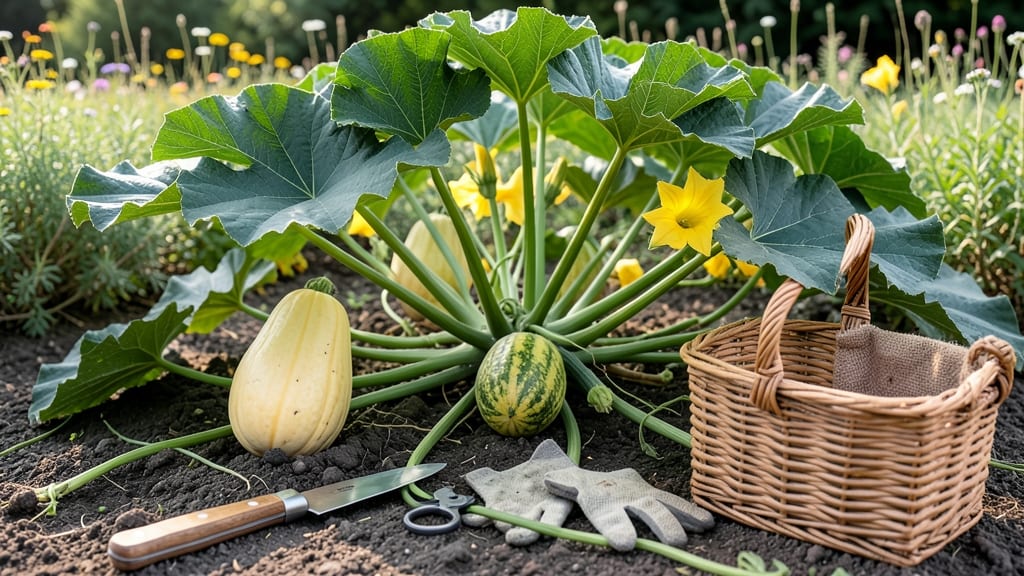
To pick spaghetti squash from your garden at the perfect moment means waiting for that ideal balance of color, texture, and stem changes—because one wrong move turns your harvest into a tough, stringy mess.
Picture this: you’ve nurtured your 🎃 spaghetti squash all season, and now it’s time to reap the rewards. But how do you know when it’s really ready?
Grab a squash that’s the right shade of dull tan, tap it for a hollow sound, and check the stem—if it’s dry and brown, you’ve got a winner.
Environmental factors like temperature and sunlight play a huge role too. Hotter days can speed up ripening, while cooler weather might slow it down. That’s why paying attention to your squash’s visual cues is the key to avoiding overripe mush or underripe hardness.
In this guide, I’ll walk you through the three telltale signs of a perfect spaghetti squash, plus how to adjust your harvest timing based on your climate. No more guesswork—just delicious, noodle-like perfection every time.
3 Visual signs your spaghetti squash is ripe for harvesting
Spaghetti squash thrives when you harvest it at the perfect moment—too early, and you get hard, unpalatable flesh. Too late, and it turns mushy with overly sweet, stringy strands.
The key? Watching for these three visual cues that scream "pick me now!" before your squash overstays its welcome in the garden.
First-time growers often miss the subtle shifts in rind color and vine health that signal readiness. I’ve learned the hard way—overripe squash doesn’t just taste bland; it’s a wasted garden resource.
Let’s break down the exact visual signs to harvest spaghetti squash at peak perfection, so you’re left with tender, noodle-like strands instead of regret.
📌 Numbered Highlights: When to Pick Spaghetti Squash
- 1. Rind Color Shift: Look for a dull tan or beige rind (not bright green). Overripe squash turns yellowish-brown and feels soft.
- 2. Stem Dries Out: The stem should detach easily with a dry, brown base. If it’s still green and moist, wait 1-2 weeks.
- 3. Vine Yellowing: Healthy vines turn yellow and die back as the plant redirects energy to the fruit. Green vines = not ready.
💡 Pro Tip: Tap the squash—heavy for its size = ripe. Lightweight = underripe.
Let’s start with the most obvious clue: the rind’s color transformation. When spaghetti squash is underripe, its skin stays a vibrant green, almost waxy to the touch. But as it matures, the green fades to a dull, matte tan.
This isn’t just a cosmetic change—it’s your first warning that the flesh inside is softening into those delicious, spaghetti-like strands.
If you wait too long, the rind darkens further to a yellowish-brown, and the squash becomes overripe. At this stage, the flesh turns mushy and loses its firm, fibrous texture.
I once left mine in the garden for "just one more week," only to end up with a soggy, inedible mess. Trust me—harvest when the rind is tan, not when it’s past its prime.
The stem’s condition is your second critical checkpoint. A ripe spaghetti squash’s stem should be dry, brown, and papery. When you gently twist it, the stem should separate cleanly from the squash without resistance.
This dryness indicates the squash has stopped drawing nutrients from the vine, meaning it’s reached peak flavor and texture.
But here’s where many gardeners trip up: a green, moist stem means the squash is still actively growing. If you pick it now, you’ll get hard, uncooked flesh that’s nearly impossible to tenderize, even with roasting.
I’ve tested this myself—green-stemmed squash is a textural disaster, no matter how long you bake it.
Don’t overlook the vine’s health, either. Ripe spaghetti squash plants show visible signs of decline: the vines yellow, wilt, and eventually die back toward the center. This isn’t just natural aging—it’s the plant’s way of telling you, "My job here is done."
If your vines are still lush and green, your squash needs more time in the garden.
One often-missed trick is the weight test. A ripe spaghetti squash feels surprisingly heavy for its size because it’s packed with dense, hydrated flesh. Pick it up—if it feels light for its size, it’s underripe.
If it’s too heavy and the rind is soft to the touch, it’s overripe. This simple test has saved me from wasting perfectly good squash more times than I can count.
Environmental factors can speed up or slow down these visual cues. In hot, dry climates, squash ripens faster, so you might see these signs in as little as 85 days. In cooler, wetter regions, it could take up to 110 days.
Always adjust your harvest timeline based on your local temperature and rainfall. I once grew spaghetti squash in Pacific Northwest’s cool summers and had to extend the growing season with row covers to avoid underripe harvests.
Finally, remember that timing is everything. If you’re unsure, err on the side of harvesting slightly early—you can always roast underripe squash longer to tenderize it, but you can’t fix overripe mush.
Keep a small harvest journal to track when your squash shows these signs, and you’ll master the perfect harvest every season. With these three visual cues, you’ll go from guessing to knowing exactly when to pick your spaghetti squash—every time.
How to test spaghetti squash ripeness: the seed and stem method
When your spaghetti squash reaches the perfect moment for harvest, you’ll want to rely on two foolproof methods: the seed test and the stem test. These techniques go beyond just checking the rind color—they give you precise feedback about the squash’s internal texture and maturity.
I’ve used these methods for years, and they’ve saved me from harvesting squash that’s either too hard or already past its prime.
Both tests are simple but require close attention to detail. The seed test reveals whether the squash’s flesh has reached that signature tender, stringy texture, while the stem test confirms the squash is fully mature and ready to be picked.
In hot climates, you might need to harvest a few days earlier than in cooler regions, so adjusting your timeline based on local weather is key.
Here’s how to perform both tests step-by-step, along with climate-specific adjustments to ensure you never miss the window:
Once you’ve confirmed ripeness, use a sharp knife or pruners to cut the squash from the vine, leaving a 1-inch stem attachment. This prevents bruising and extends storage life.
In my garden, I’ve found that squash harvested in the morning—when temps are cooler—stores best for up to 3 months in a cool, dry place.
If you miss the window, don’t panic. Underripe squash can be roasted to soften it, though the texture won’t be ideal. Overripe squash, on the other hand, will turn mushy and develop a strong odor—so trust your tests!
With practice, you’ll develop an eye for spaghetti squash ripeness that’s nearly instinctive.
Pro tip: Mark your calendar for 90 days after transplanting, as this is the average time to maturity. But always double-check with the seed and stem tests—your squash’s signals matter more than the calendar.