
Picking
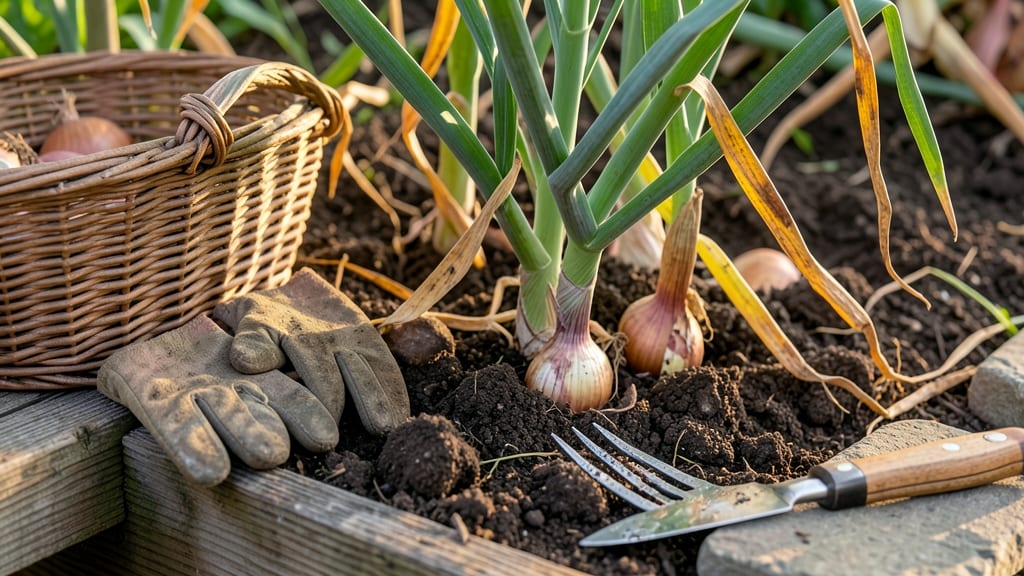
Picking onions from your garden at the right time ensures sweet, flavorful bulbs instead of tough, pungent ones—so timing is everything.
Ever pulled up an onion only to find it still small and green, or worse, split open after sitting too long in the ground? The difference between a perfect harvest and a wasted crop often comes down to knowing exactly when to dig.
Onions 🧅 send you clear signals when they’re ready: the tops turn yellow and flop over, the bulbs grow firm and round, and the neck begins to dry.
But regional climate—like USDA Zone 6a—can shift those cues, so I’ll break down the visual clues and timing tricks that work for spring and fall harvests.
In this guide, you’ll learn how to spot the three key signs of readiness, avoid common mistakes that ruin onions mid-season, and store your harvest for months. Let’s get those bulbs out of the ground at the perfect moment!

3 Clear visual signs your onions are ready for harvesting
Harvesting onions at the perfect moment transforms your garden into a treasure trove of flavorful bulbs. But how do you know when those onion tops are signaling it's time?
The key lies in three visual cues that reveal whether your onions are ready to pull or still need time in the soil. Ignoring these signs can lead to underdeveloped bulbs or tough, pungent flavors—neither of which you want in your kitchen.
As a gardener who's spent years perfecting my onion harvests, I've learned that rushing the process or waiting too long can ruin your crop. The good news? These three harvest indicators are easy to spot once you know what to look for.
Mastering them will give you sweet, mild onions that store beautifully and pack maximum flavor. Let's dive into the telltale signs that your onions are begging to be harvested.
🌱 3 Visual Signs Your Onions Are Ready to Harvest
🟡 Top Third of Leaves Turns Yellow and Papery
The top third of leaves should yellow and dry out completely. This signals the bulb has finished growing and nutrients are redirecting downward. Green tops mean they're still growing.
🧅 Bulb Reaches Golf-Ball Size (2-3 Inches Diameter)
Gently dig around the soil to check for firm, round bulbs. They should feel solid when squeezed but not rock-hard. Small bulbs (under 1.5 inches) need more time in the ground.
✂️ Neck Thins and Becomes Papery
The stem connecting bulb to leaves should shrink to ½-inch thick and feel dry. This "neck" acts as a natural seal for storage. A thick, green neck means the onion isn't fully mature.
Pro tip: For spring onions (green onions), harvest when the green shoots reach 6-12 inches tall, regardless of bulb size. These are best used fresh rather than stored long-term. The same visual cues apply to shallots, which are simply a smaller, sweeter onion variety.
Timing matters because onions continue to grow even after their tops yellow. If you harvest too early, you'll get small, pungent bulbs that store poorly. Wait too long, and the bulbs may split or develop hollow centers.
The 30-60 day window after tops yellow is your perfect harvest window for storage onions.
Regional differences affect timing too. In hot climates (Zones 8-10), onions may mature faster due to longer daylight hours, while cooler zones (Zones 3-6) often need the full growing season.
I've found that fall-planted onions in Zone 6a often mature 2-3 weeks earlier than spring-planted ones because they experience natural drying from autumn weather.
One common mistake I see is gardeners waiting until the entire plant looks dead. By then, the bulbs have often split or rotted. The key is to harvest when you see just the top third yellowing, not when the whole plant is brown.
This gives you that sweet spot between maturity and overripeness.
For long-day onions (like Yellow Sweet Spanish), these signs appear around 100-120 days after planting. Short-day varieties (like Texas Early White) may mature in as few as 80 days in warm climates. Always check your seed packet for variety-specific timing, as some modern hybrids have different maturity profiles than heirlooms.
Remember: The best time to harvest is on a dry, sunny morning after the dew has evaporated. This gives your onions the best chance to dry properly before curing.
Wet bulbs left in the soil overnight can develop fungal issues, ruining your entire harvest. I've learned this the hard way—always harvest in the morning!
Onion harvesting mistakes that ruin your crop (and how to avoid them)
Even experienced gardeners sometimes make critical mistakes when harvesting onions that turn sweet, flavorful bulbs into bitter, pungent disappointments. The key is timing—harvest too early, and you’ll get small, weak onions.
Leave them too long, and they’ll split or rot in the ground. Let’s break down the most common errors and how to avoid them.
One of the biggest mistakes is pulling onions too early because the tops still look green. Many gardeners assume that if the leaves are upright, the bulb is ready—but that’s not always true.
The tops can stay green even when the bulb is still small and underdeveloped. Always check the bulb size and neck condition before you dig.
Another frequent error is leaving onions in the ground too long, especially as summer heat sets in. Overripe onions become soft, spongy, and prone to disease. If you’ve missed the ideal harvest window, don’t panic—just act fast to salvage what you can.
But if you’re planning ahead, mark your calendar for the perfect harvest window (usually 90-120 days after planting).
⚠️ WARNING: Common Onion Harvesting Mistakes
⚠️ Harvesting Too Early
Pulling onions when tops are still green leads to small, weak bulbs that won’t store well. Always wait for 1/3 of the tops to yellow and dry before harvesting.
⚠️ Leaving Bulbs in the Ground
Overripe onions split or rot in hot, humid weather. Harvest before bulbs exceed 3 inches in diameter to avoid waste.
⚠️ Improper Drying Techniques
Washing or storing onions with damp necks causes mold and spoilage. Always cure bulbs in dry, shaded conditions for 2-3 weeks before storage.
Improper drying is another silent killer of onion harvests. Many gardeners rush to wash or store their onions right after pulling them, but this traps moisture in the neck and bulb, leading to mold.
Instead, let onions cure properly in a dry, well-ventilated area for 2-3 weeks before storing. This step is non-negotiable for long-term storage.
If you’re growing short-day onions (like Texas Sweet or Red Creole), timing is even more critical. These varieties bolt—produce flowers—if exposed to too much heat or long daylight.
Once you see flower stalks emerging, your harvest window has closed. For these types, aim to harvest before stalks appear to avoid bitter flavors.
Finally, don’t ignore regional climate factors. In hot, humid areas like the Southeast, onions mature faster and may need harvesting 2-3 weeks earlier than in cooler climates.
Pay attention to your local frost dates too—if a hard frost is coming, harvest before temperatures drop below 30°F, even if the bulbs aren’t fully cured.
By avoiding these common mistakes—checking bulb size, timing your harvest, and curing properly—you’ll enjoy sweet, flavorful onions all season long. Happy digging! 🧅