
Picking
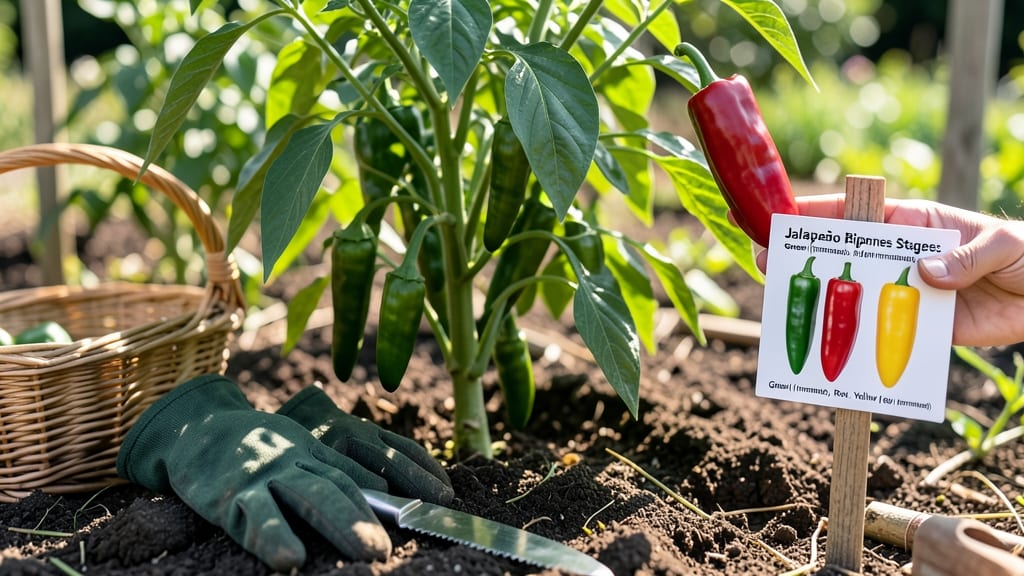
Picking jalapeños from your garden at the right time ensures maximum heat and flavor—because those bright green pods turn into something completely different if you wait too long.
You might think all jalapeños are ready when they’re green, but that’s not the full story. The truth is, color, size, and firmness all play a role in determining peak ripeness—and harvesting too early or too late can ruin the spice you’ve been waiting for.
In this guide, I’ll break down the exact stages to watch for, from deep green to red, and how environmental factors like temperature and sunlight speed up or slow down ripening. You’ll also learn how to test for readiness beyond just looking at the pepper.
Whether you prefer your jalapeños green and tangy or fully ripe and sweet, these tips will help you time your harvest perfectly for the best heat and yield every season.

Jalapeño ripeness stages by color: when to harvest for best heat
Harvesting jalapeños at the right color stage determines both their heat intensity and flavor profile. Unlike many peppers, jalapeños offer a spectrum of ripeness—from mild green to fiery red—that directly impacts your dish's final kick. Understanding these visual cues ensures you never miss peak harvest time.
The journey from immature green to fully ripe red spans just a few weeks, but each stage delivers a distinct spice experience. Green jalapeños pack a milder heat (2,500–5,000 SHU), while red varieties can surge to 8,000–10,000 SHU.
The key? Recognizing subtle color shifts and texture changes that signal readiness.
| Stage | Color | Size | Heat (SHU) | Best For | Harvest Tip |
|---|---|---|---|---|---|
| Immature | Pale green | 1–2 inches | 2,500–3,000 | Avoid—bitter, underdeveloped | Wait 2+ weeks |
| Optimal Green | Deep glossy green | 3–5 inches | 2,500–5,000 | Pickling, salsas, grilling | Harvest before reddening |
| Light Green | Yellow-green | 3–5 inches | 3,500–6,000 | Fresh dishes, roasting | Pick within 3–5 days |
| Fully Ripe | Bright red | 3–5 inches | 8,000–10,000 | Hot sauces, drying | Harvest immediately |
The deep green stage is where most home gardeners harvest jalapeños for balanced heat and crisp texture. Look for pods that are 3–5 inches long with a slightly waxy sheen.
At this point, the pepper’s cell walls soften, but it hasn’t yet developed the sugar-rich sweetness of a red jalapeño.
If you’re aiming for maximum heat, wait until the pepper turns bright red. This shift signals a 20–30% increase in capsaicin, the compound responsible for spice. However, red jalapeños also become softer and thinner-skinned, making them ideal for drying or sauces rather than fresh snacking.
One common mistake is confusing light green/yellow-green jalapeños with fully ripe ones. These transitional peppers (3,500–6,000 SHU) offer a middle-ground heat and are perfect for roasting or fresh salsas. To test readiness, gently squeeze the pepper—if it yields slightly but doesn’t dent, it’s ready.
Temperature plays a critical role in ripening speed.
In hot climates (USDA Zone 9+), jalapeños may turn red in 3–4 weeks, while cooler zones (Zone 7–8) could take 6–8 weeks. Morning sunlight and consistent watering accelerate color development, but avoid overwatering, which can dilute flavor and delay ripening.
Pro tip: Harvest every 2–3 days during peak season to encourage continuous production. Use a sharp knife or pruning shears to cut peppers at the stem—this prevents stem damage to the plant.
If you’re unsure about color, check the size and firmness first; a 3-inch pepper with slight give is always a safer bet than waiting for red.
For storage longevity, harvest green jalapeños and store them in the f
How to test jalapeño ripeness beyond color: texture and size clues
While jalapeño color is the first clue, true ripeness hides in texture and size—two often-overlooked factors that determine heat and flavor. A deep green pepper might still be tough or underripe, while a red one could be overripe if left too long.
Mastering these tactile tests ensures you harvest at peak spice and tenderness.
Start by checking the pod size. Mature jalapeños typically measure 3-5 inches in length—anything smaller (2 inches) is premature. Compare to a standard US quarter for reference: a ripe pepper should be noticeably larger. Size correlates directly with capsaicin development, the compound responsible for heat.
Next, test skin firmness with gentle pressure. A ripe jalapeño yields slightly under light thumb pressure but doesn’t dent easily. Overripe peppers feel soft or mushy, while underripe ones remain rock-hard. This tactile check works even for green or red varieties—don’t rely solely on color!
| Maturity Indicator | Visual Clues | Tactile Clues | Ideal Harvest Time |
|---|---|---|---|
| Underripe | Pale green/yellowish, <2 inches | Very firm, no give | Wait 1-2 weeks |
| Perfectly Ripe | Deep green/red, 3-5 inches | Slightly firm, yields to pressure | Harvest immediately |
| Overripe | Dull red/brown, wrinkled | Soft, mushy texture | Use for cooking only |
Don’t ignore the stem separation test—this is your secret weapon. Gently twist the pepper at its base: if it snaps cleanly without tearing, it’s ready. A stubborn stem means it needs more time. Pro tip: Check stems early morning when peppers are hydrated for accurate results.
Environmental factors like temperature and sunlight accelerate ripening. Jalapeños ripen 30-50% faster in 80°F+ weather but slow dramatically below 65°F. In cooler climates, prioritize size and firmness over color—peppers may stay green longer but still reach maturity. Always harvest before first frost to preserve heat levels.
Now you’re equipped to harvest jalapeños at their peak—whether you prefer green (milder) or red (hotter) varieties. Remember: frequency matters. Pick every 2-3 days to encourage continuous production, and always use clean pruners to avoid disease. Your garden’s fiery rewards are just a touch away!