
Picking
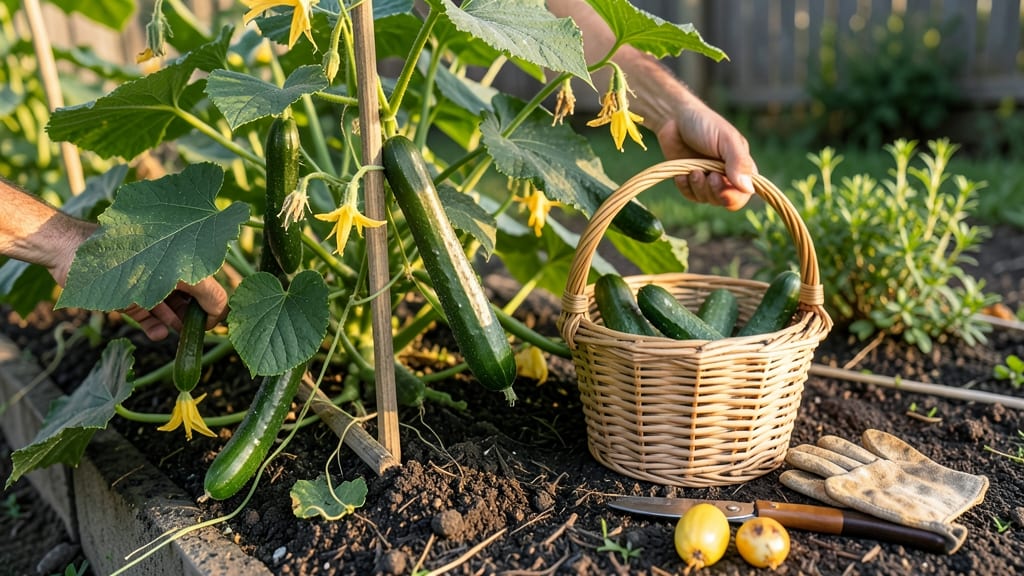
To pick cucumbers from your garden at the perfect moment means crisp, sweet 🥒 harvests that taste like summer—before they turn bitter or tough.
Ever bitten into a cucumber that was too hard or seedy? That’s a classic sign you picked it too late—or too early. The difference between a garden gem and a disappointment comes down to just a few simple cues.
In this guide, I’ll show you how to spot the ideal size, color, and firmness for your cucumbers, plus how often to harvest for maximum production. No more guesswork—just juicy, flavorful 🥒 every time.
You’ll also learn how to check for pests or disease before picking, store your harvest properly, and even save overripe cucumbers for cooking. Let’s get started!

How to determine cucumber ripeness by size, color & texture
Knowing exactly when to pick cucumbers from your garden transforms your harvest from bland to bursting with flavor. The difference between a crisp, tender cucumber and a bitter, seedy one often comes down to size, color, and texture cues—and ignoring these can mean wasted effort.
Whether you're growing slicing varieties like 'Straight Eight' or pickling types like 'Boston Pickling,' mastering these visual and tactile clues ensures you never miss peak ripeness again.
Start by checking the length and diameter of your cucumbers. Most slicing varieties reach 6-8 inches at ideal harvest time, while pickling cucumbers stay smaller—typically 2-4 inches. However, bush varieties may mature faster than vining types, so always reference your seed packet for variety-specific guidelines.
Skipping this step often leads to cucumbers that grow too large, develop tough skins, or become overly seedy.
Color is your next clue—uniformity is key. Slicing cucumbers should be a deep, even green, while pickling varieties often have bumpy, textured skin. Watch for yellowing or dark spots, which signal overripeness or disease.
Some heirloom varieties, like 'Lemon Cucumber,' may turn yellow when ripe, so always check your plant's description. A quick way to test is to hold the cucumber up to a bright light—if you see uneven color or discoloration, it's time to harvest.
The texture test is where many gardeners go wrong. A ripe cucumber should feel firm but yield slightly when gently pressed with your thumb. If it feels rock-hard, it's underripe; if it's mushy or wrinkled, it's past its prime.
For pickling cucumbers, this slight give is even more critical—they should be harvested just before full size to maintain crispness. Pro tip: Run your fingers along the stem end—if it feels soft or the stem detaches easily, that's your cue to pick.
Don’t overlook the stem check, a foolproof method for determining ripeness. Gently bend the stem near the cucumber—if it snaps cleanly, it's ready. If the stem resists or breaks with effort, the cucumber needs more time.
For bush varieties, the stem may detach entirely when ripe, making it easy to spot overripe cucumbers still clinging to the vine. This method works best in the morning after watering, when cucumbers are at their firmest.
Variety-specific differences can't be stressed enough. Slicing cucumbers like 'Marketmore' should be harvested when they reach 7-9 inches, while pickling types like 'Calypso' are best picked at 3-4 inches.
Some Asian varieties, such as 'Suyo Long,' can grow up to 2 feet long and are typically harvested at 12-18 inches for optimal texture. Always check your seed packet or plant tag for guidance—this small step prevents countless mistakes in the garden.
Frequency of picking also affects ripeness. Harvest every
Common mistakes that ruin cucumber harvests (and how to avoid them)
Even experienced gardeners accidentally let cucumbers go bad by ignoring subtle signs of overripeness. Yellowing skin, wrinkled textures, and bitter flavors are classic red flags you might miss if you're not checking your plants regularly.
The problem? Once cucumbers pass their prime, they won't recover—no amount of refrigeration can fix the tough, seedy mess that follows.
Another silent harvest killer is harvesting too infrequently. Cucumbers produce faster when you pick them regularly—every 2-3 days for slicing varieties, 3-5 days for pickling types.
Skipping this schedule stresses the plant, leading to fewer fruits and bitter-tasting overripe cucumbers. I've seen entire vines collapse from neglect, leaving gardeners with a meager harvest.
Environmental factors also play a huge role. Extreme heat (above 90°F) or high humidity can accelerate spoilage, making cucumbers go from perfect to ruined in days. Even well-watered plants struggle when temperatures spike, causing cucumbers to develop hard, bitter seeds and leathery skins.
I once lost a 20-plant harvest in a heatwave because I didn't adjust my picking schedule.
⚠️ When to Pick Cucumbers: Don't Wait for These Warning Signs!
You're harvesting too late if you see:
- 🟡 Yellowing skin (especially near stem)—this means sugars convert to starch, making them bitter
- 🤏 Wrinkled or soft spots—a sign of water loss and overripeness
- 🌡️ 90°F+ heat stress—cucumbers grow 3x faster in heat but spoil just as quickly
- 🪰 Hard, seedy centers—this cannot be reversed even if the outside looks okay
✅ DO THIS INSTEAD: Pick when cucumbers are 6-8 inches long, dark green, and firm with slight give. Use a sharp knife to avoid damaging vines.
One of the biggest mistakes is harvesting only the largest cucumbers. Smaller cucumbers (4-6 inches) often ripen faster and stay crisp and sweet.
I now pick every variety at its ideal size—slicing cucumbers at 7-9 inches, pickling types at 2-3 inches—to maximize both quantity and quality. This simple habit has doubled my harvest in just one season.
Don't forget to check for pests and diseases before harvesting. Powdery mildew or cucumber beetles can ruin a perfect cucumber overnight.
I inspect each cucumber by running my fingers along the skin—any rough patches or holes mean it's time to toss it (or use it in cooked dishes where texture doesn't matter). A quick neem oil spray before harvest can prevent future issues.
Finally, heat and humidity are your worst enemies. Cucumbers left on vines in 90°F+ weather develop hard, bitter seeds within 24-48 hours. My fix? I now harvest every morning during peak summer months and store them in shaded crates with damp towels to slow spoilage.
This keeps them fresh for 5-7 days instead of 2.
Remember: Consistency is key. A daily 10-minute check of your cucumber plants prevents bitterness, wrinkling, and waste. When you train yourself to harvest at the right size and frequency, you'll enjoy crisp, sweet cucumbers all season long—no regrets! 🌱